

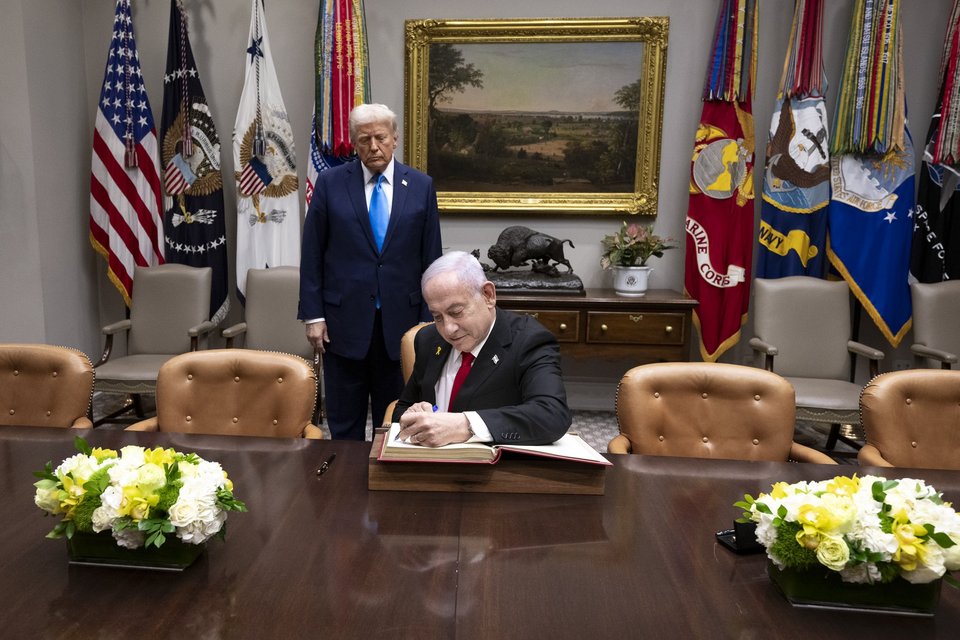
Trump tells Israel’s leader he may be left to fight Iran alone.
Donald Trump warned Benjamin Netanyahu that Israel could find itself fighting Iran without American support if it keeps escalating, marking the most public rift between the two leaders since the U.S.-Israel conflict with Iran began in February.
“I said, ‘Bibi, you better be careful, or you will be on your own very soon,'” Trump told Axios on Monday, describing a phone call with the Israeli prime minister.
The warning came as both Israel and Iran announced they would pause attacks after a weekend exchange of strikes that shattered the April ceasefire. But the substance and tone of Trump’s message signaled something deeper than a routine diplomatic request for restraint.
According to the Axios interview, Trump told Netanyahu that the United States would not continue to underwrite Israeli military operations against Iran if Netanyahu insisted on striking back. The message was blunt: stop escalating, or the security guarantee that Israel has relied on for decades may not hold.
In public, Trump struck a more balanced tone. On Truth Social, he wrote that both countries were “looking to do an immediate CEASEFIRE” and that “final negotiations on ‘Peace’ are proceeding, subject to ignorance or stupidity getting in its way.” He told the BBC that Netanyahu had not defied his wishes by striking Iran. “They had already gone, they were already on their way.” But the careful wording did little to obscure the fracture.
The weekend’s escalation began Sunday when Israel bombarded Beirut. Iran, which has long insisted that any peace deal must include a halt to fighting in Lebanon, responded with a wave of missiles at northern Israel. Trump called Netanyahu on Sunday evening asking him not to retaliate. Israel struck Iran early Monday anyway, hitting air defense systems and a petrochemical plant in Mahshahr. Iran retaliated by targeting a similar facility in Haifa and two Israeli airbases. No deaths were reported on either side.
Netanyahu, in a televised statement, acknowledged the tension but pushed back. He said he had told Trump that “Israel has a full right to self-defense, and we are exercising it as required.” He described the fire at the front as “contained” but warned that if Iran made “the mistake of resuming attacks against us, we will respond with full force.”
Israel’s ambassador to Washington, Yechiel Leiter, tried to smooth over the rift, telling Fox News that “sometimes, lovers have a spat.” He said Netanyahu had “decided” to “lower the temperature” at Trump’s request, but insisted the U.S. president understands “full well” that Israel cannot “absorb ballistic missiles into our country without responding.”
Iran’s Foreign Ministry spokesperson, Esmaeil Baghaei, assigned blame squarely on Washington. “The U.S. is directly responsible,” he said. “They are party to the ceasefire negotiations. Therefore, any act in violation of the ceasefire, be it through the interception of vessels in the Strait of Hormuz, the targeting of southern Lebanon by Israel, or any other event, will cause the United States to be directly responsible.”
Iran’s First Vice President Mohammad Reza Aref said the operation against Israel, dubbed “Nasr” or victory, showcased “a new level of deterrence from mighty Iran” and that Israel had been “forced to beg once again” for a ceasefire.
Behind the public posturing, the diplomatic machinery keeps turning. The April ceasefire paused all-out warfare but never fully held. Flare-ups in the Gulf and Lebanon continued throughout May and early June. Trump’s push for a final deal — one that would end the conflict and address Iran’s nuclear program — now faces its most serious test.
Trump’s warning to Netanyahu complicates the picture. If the United States is seen as distancing itself from Israel’s security, it could embolden Iran and its proxies. If it is seen as indulging an ally that keeps escalating, it could undermine the credibility of American deterrent commitments across the region.
Neither outcome is good. But for the first time since February, Trump has drawn a line that Netanyahu cannot ignore.
— George, 1ban.news