

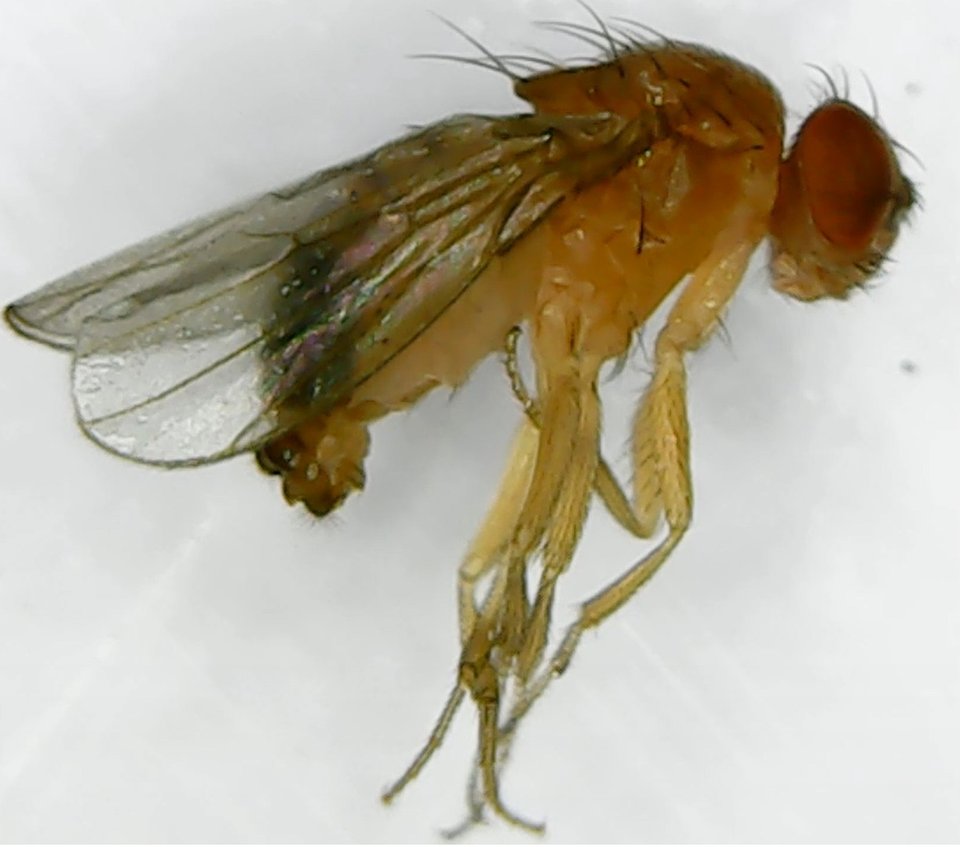
Sleep Need Leaves a Molecular Signature at the Synapse
A team led by Stephan Sigrist at Freie Universität Berlin has mapped the molecular landscape of sleep-driven synaptic remodeling with synapse-resolved proteomics and phosphoproteomics, revealing that elevated sleep pressure triggers a coordinated, compartment-specific shift toward dephosphorylation at the presynaptic terminal. The study, published in Proceedings of the National Academy of Sciences, provides the most detailed molecular dissection to date of how structural plasticity at the presynaptic active zone couples to the biochemistry of sleep need.
A genetic model of sleep pressure
The Sigrist group has spent more than a decade establishing that the presynaptic active zone directly encodes sleep need in fruit flies. The key player is Bruchpilot (BRP), the fly homolog of the ELKS-family scaffold protein that organizes neurotransmitter release sites. Previous work showed that sleep loss drives BRP accumulation at active zones, and that adjusting brp gene copy number from one to four produces a near-linear gradient of sleep pressure, measured by the probability of dozing, P(Doze).
In the new study, Piao and colleagues collected flies at Zeitgeber Time 6 — the midpoint of the daytime, when genotype sleep differences are most pronounced — and performed subcellular fractionation to isolate a synaptosome fraction enriched for distal synaptic compartments, alongside a head homogenate fraction representing the whole-cell proteome. Quantitative label-free mass spectrometry was applied to both fractions, yielding 5,453 protein isoforms from 2,967 unique proteins in the synaptosome.
What the proteomics revealed
Proteins whose abundance scaled with BRP levels in the synaptosome fraction included RNA-binding proteins involved in translation control (Fmr1, U2af50, sqd, Hrb87F) and circadian and locomotor regulators (Gawky, Lark, Nocte). Notably, these correlations were absent in the head homogenate fraction, suggesting their regulation is locally confined to synaptic regions.
Sleep-associated proteins were significantly enriched among the upregulated proteins across all genotypes. This included Quiver/Sleepless (Qvr/SSS), a GPI-anchored Ly-6 family protein that promotes sleep by stabilizing the Shaker potassium channel, along with several other Ly-6 family members (Bero, Bou, CG9338, Witty, Crim, Atilla). Conversely, stress-response Turandot family proteins and complement-like thioester-containing proteins TEP2 and TEP4 were negatively correlated with BRP levels, consistent with suppression of immune-stress pathways under high sleep pressure.
The phosphoproteomic finding: global presynaptic hypophosphorylation
The central discovery emerged from phosphoproteomic analysis. When phosphopeptide abundances were normalized to corresponding protein levels to isolate phosphorylation state from protein abundance, a dramatic shift appeared. In flies with four BRP gene copies, 18 percent of detected phosphopeptides in the synaptosome fraction were downregulated, while only 1.5 percent were upregulated. The magnitude of phosphorylation changes far exceeded proteomic changes.
Cumulative phosphorylation state analysis, which sums the log2 fold-change of all significantly regulated phosphopeptides per protein, confirmed the trend. In the synaptosome fraction, 71 proteins were classified as hypophosphorylated in 4xBRP flies versus just 16 in 3xBRP. Phosphorylation changes in the head homogenate fraction were comparatively mild.
Critically, the hypophosphorylation signature was compartment-specific. Cellular component enrichment analysis showed that annotations related to presynaptic endocytosis, synaptic vesicle localization, and synaptic membrane were overrepresented among hypophosphorylated proteins. No postsynapse-specific Gene Ontology terms were detected. This presynaptic restriction was validated using phospho-tag SDS-PAGE, which showed that Synapsin, an evolutionarily conserved presynaptic protein, exhibited a dramatic reduction of heavily phosphorylated species in 3xBRP synaptosomes despite unchanged total protein levels.
Of 3,456 high-confidence phosphosites identified in the synaptosome, 535 (15.5 percent) were significantly and negatively correlated with BRP levels across the dosage series. Only 13 sites scaled positively. The affected proteins were enriched in GO terms for presynapse, distal axon, presynaptic active zone, and synaptic vesicle localization, with no postsynaptic terms detected.
Mechanism: PKA suppression and PP1 enhancement
The authors used GPS v5.0 kinase prediction combined with STRING interactome filtering to identify upstream regulators. Nine kinases emerged as enriched among the hypophosphorylated sites, with PKA the most prominent.
The catalytic subunit of PKA carries a conserved threonine residue (Thr-200, corresponding to mammalian Thr-198) in its activation loop whose phosphorylation is essential for enzymatic activity. This site was linearly dephosphorylated with increasing BRP levels. Functional validation using the PKA-SPARK activity reporter, which forms fluorescent puncta upon kinase activation, showed a linear reduction in PKA activity in the mushroom body across 1x, 2x, and 3xBRP flies. Western blotting with a phospho-PKA substrate antibody confirmed reduced PKA target phosphorylation in synaptosomes from 3xBRP and 4xBRP animals.
The sleep-promoting effect of elevated BRP was functionally dependent on this signaling. Reducing the gene dosage of the PKA regulatory subunit (PKA.R1), which increases PKA activity, fully suppressed the elevated sleep of 3xBRP flies.
On the phosphatase side, the authors identified Spinophilin (Spn), a regulatory subunit that targets Protein Phosphatase 1 (PP1) toward specific substrates. Eleven phosphosites on Spn decreased linearly with BRP levels. Four of these — Ser-669, Ser-673, Ser-687, and Ser-694 — lie within the actin-binding domain and are evolutionarily conserved. Phosphorylation of this region is known to disrupt Spn’s F-actin binding and subcellular localization. The authors propose that Spn hypophosphorylation enhances its F-actin affinity, increasing PP1 targeting to presynaptic compartments.
Consistent with this model, heterozygosity for either PP1-87B or PP1alpha-96A, the two PP1alpha catalytic subunits, significantly suppressed the elevated sleep of 3xBRP flies. In contrast, heterozygosity for the PP1beta subtype flw had the opposite effect, increasing sleep, indicating subtype-specific roles. PP1 and Spn have previously been linked to sleep promotion in mice, suggesting an evolutionarily conserved phosphatase axis.
Significance and limitations
These findings provide a molecular framework for the synaptic homeostasis hypothesis of sleep, which proposes that wakefulness drives net synaptic strengthening and sleep restores baseline. The work identifies reversible phosphorylation as a posttranslational mechanism that could serve both as a readout of sleep pressure and as a means of adjusting presynaptic release properties.
The study builds on a decade of work from the Sigrist lab. A 2020 Current Biology paper first showed that active zone plasticity directly encodes sleep need in fruit flies. A 2024 PNAS study demonstrated brain-wide cholinergic presynapse changes after sleep deprivation. The current work adds the phosphoproteomic dimension, revealing that structural active zone expansion is accompanied by a coordinated phosphorylation shift.
The authors acknowledge several limitations. Direct presynapse-specific manipulation of PKA or PP1 is not currently feasible, limiting subcellular mechanistic resolution. Samples were collected at a single circadian time point (ZT6), leaving interactions between circadian and homeostatic regulation unexplored. The synaptosome approach lacks cell-type resolution, and the large material requirements precluded parallel omics analysis of sleep-deprived flies. Future studies will need to determine whether the hypophosphorylation signature generalizes across mammals.
Bottom line
Elevated sleep pressure in fruit flies triggers a compartment-specific, coordinated shift toward dephosphorylation at the presynapse, driven by reduced PKA activity and enhanced PP1 targeting via Spinophilin. This posttranslational signature provides a direct molecular link between structural active zone plasticity and sleep homeostasis.
Source: Piao C, Dutkiewicz EP, Kollipara L, Sickmann A, Huang S, Sigrist SJ. “Active zone plasticity couples sleep need to presynaptic hypophosphorylation.” Proceedings of the National Academy of Sciences 123(24):e2524065123, 2026. DOI: 10.1073/pnas.2524065123.