

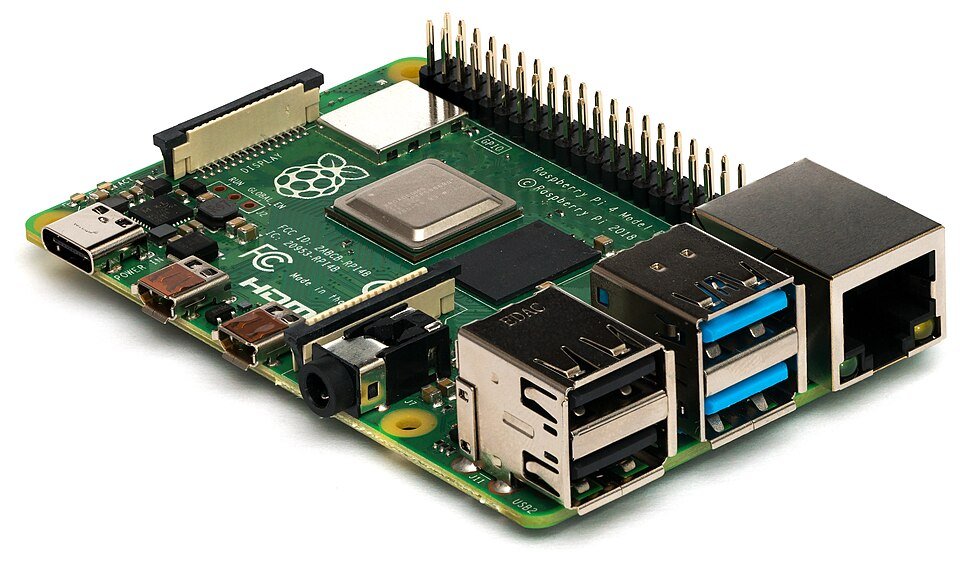
The Raspberry Pi 5 now ships with 16 GB of RAM, making it the most memory-rich single-board computer the foundation has ever produced. It is also the most expensive. The 16 GB variant sells for $305 on the official Raspberry Pi store and $350 from retailers like Adafruit, a trajectory that has seen the top-end Pi 5 price rise nearly 190 percent from its original $120 launch MSRP. The driver is a shortage the Raspberry Pi Foundation did not create: the global scramble for LPDDR4 memory capacity as AI companies stockpile chips for inference clusters.
What the 16 GB Model Means
The 16 GB Raspberry Pi 5 is functionally the same board as its 2 GB, 4 GB, and 8 GB siblings, powered by the Broadcom BCM2712 quad-core Arm Cortex-A76 processor. The extra memory matters for workloads that the original Pi was never designed for: running small language models locally, hosting multiple virtual machines, and serving as a low-power desktop replacement under heavier multitasking. On Linux distributions like Ubuntu or Raspberry Pi OS, 16 GB frees users from worrying about swap on an SD card.
The full current lineup sits at:
- 2 GB: $65
- 4 GB: $85
- 8 GB: $125
- 16 GB: $305 (official) to $350 (retail)
The Price Journey
The 16 GB Pi 5 launched in late 2024 at $120. By December 2025, a first wave of memory-driven price increases pushed it to $145. A second wave in February 2026 brought it to $205, a cumulative 70 percent rise over original MSRP at the time. Now in June 2026, the official price has reached $305, and resellers like Adafruit charge $350.
Raspberry Pi co-founder and CEO Eben Upton has been transparent about the cause. In the foundation’s February blog post, he wrote that “price rises have accelerated” and that the cost of some memory parts had more than doubled over the preceding quarter. The price increases apply across the 2 GB, 4 GB, 8 GB, and 16 GB SKUs of both the Pi 5 and Pi 4 families, as well as their Compute Module counterparts. The 1 GB variants and older products using LPDDR2 memory are unaffected.
LPDDR4 memory prices have risen roughly 90 percent since the fourth quarter of 2025, driven by fab capacity diverted to high-bandwidth memory and other AI-adjacent products. The memory used in the Pi 5 specifically has gone up 700 percent, according to one HN commenter citing industry pricing data.
Who Still Buys a $305 Pi?
The price escalation raises an uncomfortable question for the Raspberry Pi ecosystem. The foundation’s mission has always been about affordability and accessibility: a computer anyone could buy for the price of a dinner out. A $305 board sits in a different category entirely.
At these prices, the Pi 5 16 GB starts competing with refurbished business desktops and entry-level laptops. A MacBook Neo 8 GB starts at $600, and as one Hacker News commenter noted, “the Pi has slowly become too expensive for weird one-off projects and also price competitive with a cheap Mac by the time you add all the stuff you need to use it as a cheap computer.”
For industrial and embedded buyers, the calculus is different. The Compute Module 5 16 GB remains a viable option for edge AI and digital signage where reliability and Linux support matter more than absolute cost. But the hobbyist market that built the Raspberry Pi brand is feeling the squeeze.
The Memory Outlook
Upton has called the current situation “ultimately a temporary one” and said the foundation looks forward to unwinding the price increases once memory supply normalizes. How long that takes depends on whether LPDDR4 fab capacity returns as the AI memory market matures, or whether the next generation of LPDDR5 and LPDDR6 memory makes the older standard permanently scarce.
In the short term, Microcenter has been selling the 16 GB Pi 5 for $289 in-store, suggesting some retail channels can absorb the margin differently. But across the broader reseller market, $300 to $350 is the new reality for the top-tier Pi.
For a foundation that once sold a $5 computer, the 16 GB Pi 5 at $350 is a milestone of a different kind. It proves the board can handle workloads its designers never imagined. It also proves that even the most affordable computing is not immune to the gravitational pull of the AI economy.