

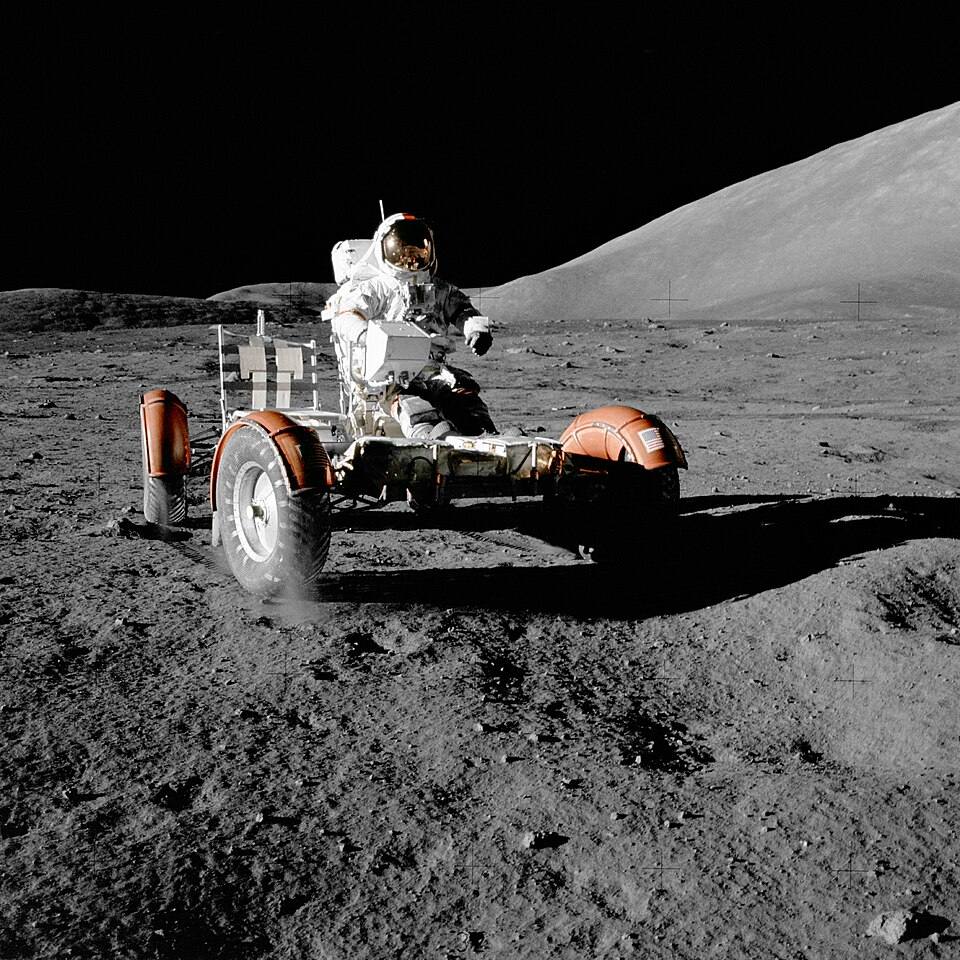
A clock on the Moon runs about 56 microseconds per day faster than an identical clock on Earth. That is not a theoretical curiosity, it is a practical problem for a future in which dozens of countries, private companies, and possibly hundreds of people are operating on and around the Moon. Without a shared time standard, a 56-microsecond-per-day drift produces positional errors of hundreds of meters, making coordinated navigation, communication, and emergency response effectively impossible.
Two competing approaches are now emerging. The White House Office of Science and Technology Policy has directed NASA to deliver an implementation strategy for Coordinated Lunar Time (LTC) by December 31, 2026. China, meanwhile, has already built and released LTE440, Lunar Time Ephemeris, developed by researchers at the Purple Mountain Observatory in Nanjing. The software converts relativistic physics into a single calculation and maintains accuracy within tens of nanoseconds over 1,000 years.
The technical problem
The 56-microsecond-per-day difference between lunar and terrestrial time is a consequence of general relativity: the Moon’s weaker gravity causes time to pass slightly faster there relative to Earth. For a single astronaut on a single mission, the discrepancy is negligible. For a lunar GPS system, it is catastrophic. As NASA’s SCaN division has noted, a timing error of 56 microseconds per day accumulates to a positional error of roughly 168 football fields over a single Earth day.
NASA’s LTC approach would place atomic clocks on the lunar surface and compute a weighted average, tied to Coordinated Universal Time (UTC) with relativistic corrections. China’s LTE440 takes a different approach: pure software-based relativistic conversion from Earth time, designed to anchor a GPS-style navigation network around the Moon.
The political problem
The physics is undisputed. The disagreement is political, not scientific. NASA is developing LTC through the Artemis Accords framework, which has 67 signatories but notably excludes China, Russia, and India. China is developing its lunar time standard through the International Lunar Research Station (ILRS) consortium, co-led with Russia, which includes 10 partner countries.
The stakes are economic. A PwC report cited by the Financial Times projects cumulative revenues of $94 billion to $127 billion from the lunar economy over the next 25 years, spanning mining, tourism, in-situ resource utilization, and infrastructure. Companies such as SpaceX and Blue Origin are waiting for clear standards before making major investments. Whoever sets the timekeeping standard first could lock in market dominance for their broader navigation and communications protocols.
Why it matters now
The problem is not theoretical. China operates the only active lunar relay satellites, Queqiao-1 and Queqiao-2, which already form the basis of a competing lunar GPS system. Both China and the United States are planning crewed landings before 2030. Without a unified time standard, spacecraft from different nations cannot coordinate precisely, increasing collision risk in an increasingly crowded cislunar environment. During emergencies, an astronaut needing evacuation, an orbital rendezvous gone wrong, incompatible time systems could delay or prevent coordinated rescue.
The historical parallel often cited is the standardization of railway time in 19th-century Britain, when towns maintained their own local times alongside London time, making scheduling chaotic and occasionally dangerous. The difference is that this time, the competing standards are being developed by rival geopolitical blocs, and the domain is not a single island but an entire planetary body and its surrounding space.
Source: Brown, T. What time is it on the moon? The US and China disagree. Space.com (2026). Link