

Brent crude has fallen below $73 a barrel, touching its lowest level since before the Iran war erupted on February 28. The drop is the clearest economic signal yet that the four-month conflict is winding down.
The benchmark slid to $72.24 on June 25 before stabilizing, marking a stunning collapse from the war-time peak of nearly $117 a barrel hit in late March. For comparison, Brent was trading at roughly $72 on February 27, the day before hostilities began between the United States and Iran over the latter’s nuclear program. Today’s price effectively erases every dollar of the war premium that had rattled global energy markets, central banks, and transport-dependent industries for the past four months.
The trajectory tells the story of the conflict in miniature. When the first strikes landed in late February, Brent jumped from $72 to $88 within 48 hours. It crossed $100 by mid-March as Iran retaliated by threatening the Strait of Hormuz and briefly struck a Saudi Aramco facility with a drone swarm. The peak of $116.84 came on March 28, when news broke that Iran had laid naval mines across the strait’s shipping lanes. Prices spent April and May oscillating between $95 and $108 as the conflict settled into a grinding stalemate of artillery exchanges, proxy skirmishes in Iraq and Yemen, and periodic attacks on commercial shipping. The slide below $80 only began in earnest after the MOU was signed on June 10.
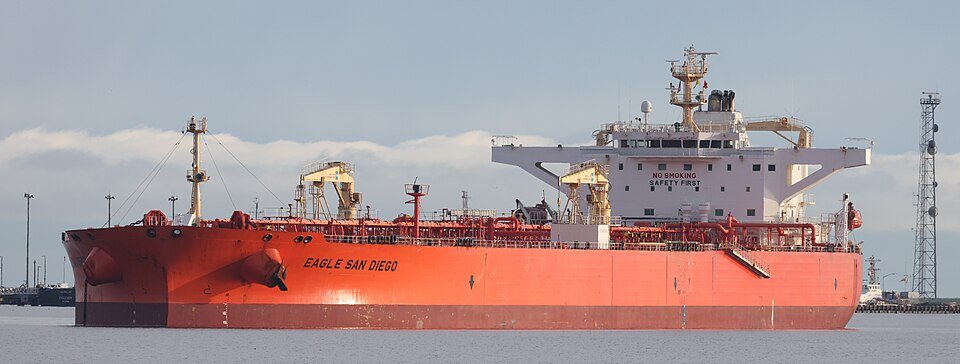
The trigger for this latest plunge is unmistakable: the Strait of Hormuz is reopening. Under the terms of the 60-day memorandum of understanding signed between Washington and Tehran, the Islamic Republic has allowed vessels to resume passage through the strategic chokepoint between the Persian Gulf and the Gulf of Oman. Tanker traffic carrying crude oil, liquefied natural gas, and fertilizer is now flowing through the strait again, restoring a waterway that handles roughly one-fifth of the world’s petroleum consumption and about a quarter of global LNG trade.
As part of the MOU, the United States has partially lifted sanctions on Iranian oil exports. The relief is calibrated and explicitly temporary, designed to create breathing room for what both sides hope will become a comprehensive nuclear agreement. But its market impact has been immediate and dramatic. Iranian crude, much of which had been sitting in floating storage or flowing through opaque ship-to-ship transfers to circumvent sanctions, is now re-entering official market channels. Analysts estimate an additional 500,000 to 800,000 barrels per day could reach global buyers within weeks.
“The fears of a long-lasting global energy crunch induced by the Iran conflict are slinking away,” said Susannah Streeter, head of money and markets at Wealth Club. “The chokehold on the Strait of Hormuz has been released, tanker traffic is flowing more freely, and supply concerns are fading.”
The speed of the reversal has wrong-footed even the most bearish Wall Street forecasts. Goldman Sachs had projected Brent averaging $90 in the fourth quarter of 2026, and some of its analysts were still recommending long positions as late as May. Citi’s scenario analysis in April envisioned Brent at $110 in Q2, $95 in Q3, and $80 in Q4. No major bank modeled a return to pre-war levels by late June. The rapid unwinding has triggered a wave of margin calls and forced liquidations among hedge funds that had been betting on sustained high prices.
For consumers, the commodity move is beginning to show up at the pump. Petrol prices in the United States, the United Kingdom, and parts of the European Union have started to edge downward this week, with the average American gallon falling below $3.80 for the first time since February. In Asia, Japan and South Korea have reported declining import costs for crude, which should feed through to household energy bills over the coming weeks. The moves are fueling hopes that the cost-of-living crisis that deepened during the conflict, already elevated from post-pandemic inflation and the Ukraine war, may finally be easing. Central banks watching inflation expectations will welcome the signal, though the pass-through from crude to retail fuel remains uneven across markets and typically lags by several weeks.
The caution, however, is written into the calendar. The US-Iran MOU is a temporary arrangement, valid for just 60 days. During that window, negotiators must hammer out a lasting deal covering nuclear enrichment limits, sanctions architecture, the fate of Iran’s ballistic missile program, and regional security guarantees involving Iran’s proxies in Lebanon, Yemen, Syria, and Iraq. If talks collapse, the Strait of Hormuz could be re-sealed within hours, and oil prices could surge back toward $100 or higher just as quickly as they fell.
Markets are clearly betting on peace. The contango structure in the futures curve has flattened, and options markets show a heavy skew toward puts rather than calls, reflecting a consensus that the risk premium has been permanently reduced. But the diplomatic work is far from done, and the history of US-Iran negotiations is littered with promising openings that ended in acrimony, walkouts, and renewed confrontation. For now, the world is enjoying a moment of energy relief. Whether it lasts depends on whether both sides can turn a 60-day truce into a durable settlement.
–