

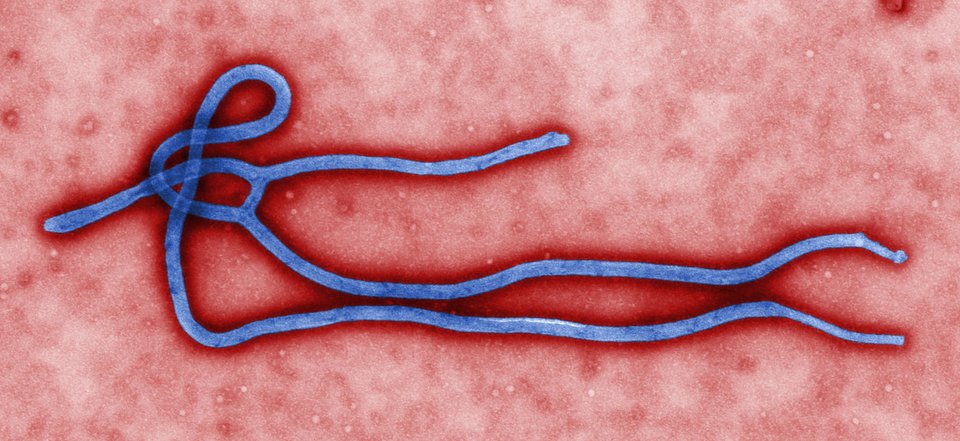
CDC Model Warns Bundibugyo Ebola Outbreak Could Reach 20,000 Cases Without Rapid Intervention
Published: June 7, 2026, 15:44 UTC
The ongoing Bundibugyo ebolavirus outbreak in Central Africa has already become the largest outbreak of this virus strain in history. Now a new modeling study from the US Centers for Disease Control and Prevention, published as an MMWR Early Release on June 5, warns that the situation could escalate dramatically — to 20,000 cases or more — if containment efforts are not rapidly scaled.
The projections are stark. At current isolation rates, which CDC officials describe as “on the lower end,” the model finds a 65% probability that the outbreak will exceed 20,000 cases within three months. At a moderate 50% isolation rate, that probability drops to 17%. At a high 70% isolation rate, it falls to just 1%.
“These projections are a call to action,” said Dr. Satish Pillai of the CDC’s Division of Global Health Protection, who oversaw the modeling effort. “Every week of weak containment increases the probability of a very large outbreak.”
As of June 5, the outbreak had reached 507 confirmed cases (488 in the Democratic Republic of the Congo and 19 in Uganda) with 88 confirmed deaths. The true number is likely higher, as 119 additional suspected cases are under investigation and the CDC model infers the virus spilled over from an animal reservoir in mid-to-late February 2026 — meaning the virus circulated undetected for roughly three months before the outbreak was officially declared on May 15.
This is the 17th Ebola outbreak in the DRC and the first major outbreak of Bundibugyo virus (BDBV), a distinct species of Orthoebolavirus first identified in 2007. It is now the third largest Filovirus outbreak ever recorded, after only the 2014-2016 West Africa epidemic (Zaire ebolavirus, 28,000+ cases) and the 2018-2020 Kivu outbreak (Zaire ebolavirus, 3,400+ cases).
Unlike those outbreaks, however, there is no approved vaccine or specific treatment for Bundibugyo virus. The WHO has recommended against using the rVSV-ZEBOV vaccine (Ervebo), which is highly effective against Zaire ebolavirus, citing insufficient evidence of cross-protection against BDBV.
The Model
The CDC team, led by epidemiologist Eric Q. Mooring, built a stochastic branching process model — a type of simulation that tracks individual transmission chains rather than population-level averages. The model was calibrated to three different estimates of total deaths as of May 24 (50, 100, or 200 deaths) and projected 90 days forward to August 22, 2026.
Under the most optimistic calibration (50 deaths by May 24), with a 20% isolation rate:
- 65% probability of exceeding 20,000 cases
- 85% probability of exceeding 10,000 cases
- 69% probability of exceeding 4,000 deaths
At 50% isolation, the probability of exceeding 20,000 cases drops to 17%. At 70% isolation, it falls to 1%.
The model was coded in Rust and calibrated using a Python pipeline, adapting a framework the team previously used for the 2025 Marburg virus disease outbreak in Ethiopia.
What Makes This Outbreak Different
Several factors make the current outbreak particularly dangerous.
Armed conflict in eastern DRC — including fighting between the DRC government and Rwanda-backed M23 rebels, as well as attacks by the ADF (Allied Democratic Forces, affiliated with ISIS) — has severely complicated the public health response. Healthcare workers have been attacked: a burial team was assaulted in Bunia on June 1, and another was attacked in Katana on June 4. Six healthcare workers, including two doctors, have died from the virus.
Patient flight is a recurring problem. On May 23, 18 suspected patients escaped an isolation center in Mongbwalu. On May 30, three patients fled a center in Beni. On June 4, 11 more patients escaped isolation in Ituri province. When patients flee, they can seed new transmission chains in communities that were not previously affected.
Contact tracing is severely limited. The International Rescue Committee estimates that only 20% of contacts are being located and monitored — far below the 80-90% typically considered necessary to contain a filovirus outbreak.
Late detection also worked against responders. Initial diagnostic tests using rapid antigen tests only detected Zaire ebolavirus, missing BDBV entirely. It was not until May 14, roughly three months after the spillover, that the correct virus was identified through sequencing.
The Response
The World Health Organization declared a Public Health Emergency of International Concern (PHEIC) on May 16. The Africa CDC declared a continental-level public health emergency. Uganda has closed its border with DRC and banned handshakes and hugs.
On June 1, the Coalition for Epidemic Preparedness Innovations (CEPI) announced $62 million in funding to fast-track three BDBV vaccine candidates: an rVSV-based candidate from IAVI, an mRNA candidate from Moderna, and a ChAdOx1-based candidate from the University of Oxford and the Serum Institute of India. None of these candidates had entered clinical trials before the outbreak.
The US government announced $112 million in bilateral assistance for PPE, screening, contact tracing, and diagnostics. A travel ban restricts entry for non-US passport holders who have visited DRC, Uganda, or South Sudan in the prior 21 days.
The Caveats
CDC modeling projections must be treated with caution. During the 2014-2016 West Africa epidemic, early CDC models substantially overestimated the final outbreak size — by as much as 50-fold in some cases — because they did not account for the rapid scaling of international response efforts.
“The models are a useful tool for understanding the range of possibilities, but they are not predictions,” said Jennifer Nuzzo, director of the Pandemic Center at Brown University. “The outcome depends entirely on what we do next.”
The model itself is a branching process, which assumes each case generates a fixed number of secondary cases based on average transmission rates. It does not account for the potential impact of a mass vaccination campaign, because no vaccine is yet available. If the CEPI candidates can be moved into clinical trials rapidly, the trajectory could change.
What Happens Next
The next 30 days are likely to be decisive. If isolation rates can be pushed toward 70% — through expanded contact tracing, improved community engagement, and safer isolation facilities — the model suggests the outbreak can be controlled. If they remain at current levels, the region could face the largest filovirus outbreak in a decade.
The key variable is not viral biology. It is human behavior, armed conflict, and the speed of the international response.
Source: Eric Q. Mooring, William T. Koval, Isobel Routledge, et al. “Modeled Scenario Projections for the Ebola Disease Outbreak Caused by Bundibugyo Virus, 2026.” CDC MMWR Early Release, Vol. 75, June 5, 2026. URL: [https://www.cdc.gov/mmwr/volumes/75/wr/mm7522e1.htm](https://www.cdc.gov/mmwr/volumes/75/wr/mm7522e1.htm)
Related coverage: See our June 2 article on CEPI’s $62M fast-track of three BDBV vaccine candidates.