

Could Meteor Storms Derail NASA’s First Moon Landing Since Apollo?
Published: June 7, 2026, 14:59 UTC
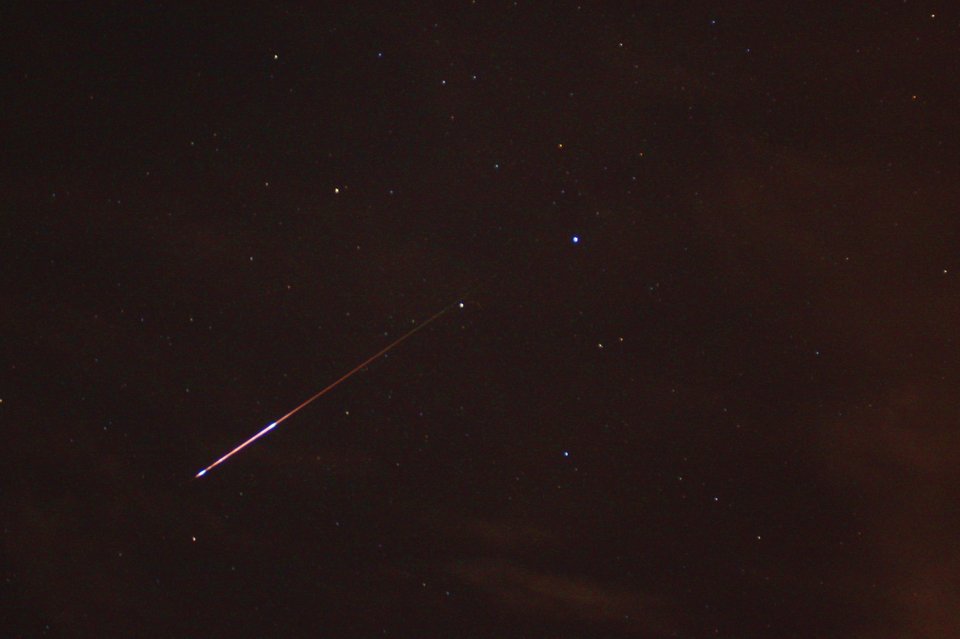
NASA’s Artemis 4 mission — the first crewed lunar landing since Apollo, currently slated for early 2028 — could face scheduling trouble from an unexpected source: a predicted Perseid meteor outburst on August 12, 2028.
The risk is laid out in a Space.com report by Anthony Wood, which examines how meteoroid storms pose a growing operational concern as NASA ramps up sustained crewed presence beyond low Earth orbit. Four major outbursts have been identified over the next decade that could force mission delays or launch window adjustments.
The Threat at Hypervelocity
Approximately 48.5 tons of naturally occurring space debris enters Earth’s atmosphere every day. Most of it is harmless, burning up as shooting stars. But in the vacuum of cislunar space, away from Earth’s protective magnetic shield, even tiny particles become lethal.
Micrometeoroids travel at an average of 22,000 miles per hour (about 35,400 km/h) relative to spacecraft. At that speed, a grain of sand-sized particle hitting Orion’s hull releases devastating kinetic energy — enough to penetrate the spacecraft’s pressure vessel or damage the heat shield tiles critical for atmospheric reentry.
“Weekly meteor showers always increase risk in low Earth orbit modestly, but a major outburst, let alone a full meteor storm, is a category unto itself,” the article notes.
Orion’s Armor
Orion was designed from the start with micrometeoroid and orbital debris (MMOD) protection as a hard requirement. Project engineer Heckwolf, quoted in the piece, explains that material selection and thicknesses were optimized specifically for impact resistance. Hypervelocity impact testing has been used to validate the design, confirming the physics of impact events and characterizing Orion’s survivability against real-world impact scenarios.
Still, the protection is not absolute. A hole punched through Orion’s heat shield tiles on a trans-lunar trajectory would compromise the thermal protection system during reentry. The mission trajectory and launch window are subject to recurring meteoroid environment risk assessments, but only the most severe events rise to the level of a launch decision variable.
Four Red Marks on the Decade
American Meteor Society Fireball report coordinator Robert Lunsford identifies four possible meteor outbursts in the next ten years:
- Perseids — August 12, 2028
- Leonids — November 17, 2033
- Leonids — November 18, 2034
- Leonids — November 19, 2034
Artemis 4 is currently slated for early 2028. Any unforeseen delay could push the mission window backward, potentially into direct conflict with the August 2028 Perseid outburst. If that happens, a mission delay would be the reasonable call — and NASA has done it before.
Precedent for Caution
The agency has a documented history of scrubbing launches to avoid meteor storms. In 1993, the STS-51 Discovery mission was postponed to avoid the Perseid peak. In 2000, an uncrewed science mission out of Vandenberg Space Force Base was rescheduled to sidestep a Leonid outburst.
NASA’s flagship observatories also take evasive action. The James Webb Space Telescope and Hubble routinely rotate their large primary mirrors away from meteor radiant directions during major showers to reduce exposed cross-section.
Bill Cooke, head of NASA’s Meteoroid Environments Office, provides the quantitative baseline: of the more than 1,000 known meteor showers, only a handful exceed the sporadic background by more than 5%. The Geminids are the canonical example. That 5% threshold is the dividing line between ordinary and anomalous. Most launch windows will see a risk assessment of “acceptable” — but when a forecast storm or outburst overlaps a crewed surface mission or an EVA, the calculation flips.
A Problem for China Too
The article also references the Shenzhou-20 viewport crack discovered last November by astronaut Chen Dong. That incident forced the crew to use a different return craft and triggered renewed scrutiny of window glass thickness, damage tolerance, and inspection cadence across China’s crewed program — a reminder that meteoroid and debris risk is never theoretical, whether in low Earth orbit or on the way to the Moon.