

Published: June 02, 2026, 15:14 UTC
There are stories where the news is the decision. Then there are stories where the news is that the discussion is happening at all. This is the latter — and it may be the more consequential of the two.
The Financial Times reported on June 2 that the United States is holding confidential discussions within NATO about deploying nuclear weapons to additional European member states beyond the six countries that currently host American atomic bombs. Among the nations expressing interest are Poland and several Baltic states — countries that spent the Cold War under Soviet domination and now sit on NATO’s eastern flank, just miles from Russia’s border.
No agreement is imminent. No weapons are being moved. No silos are being dug. But the fact that these conversations are taking place inside the alliance marks a sea change in Western nuclear posture — a quiet but unmistakable rewriting of the architecture that has governed Europe’s security for three decades.
The Current Posture
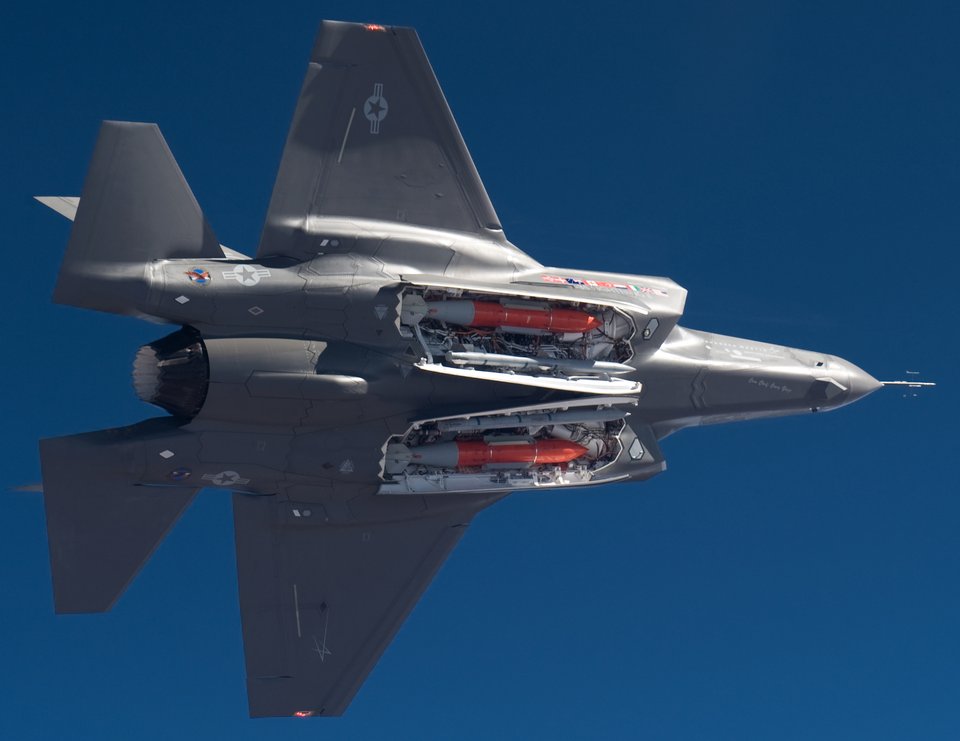
Since the end of the Cold War, US nuclear weapons in Europe have been slowly, steadily drawn down. At the peak of the Cold War, the US maintained roughly 8,000 nuclear warheads on the continent. Today, that number is estimated at around 100 — a mix of B61 gravity bombs stored at six bases across Belgium, Germany, Italy, the Netherlands, Turkey, and the United Kingdom.
These weapons form the backbone of NATO’s “nuclear sharing” arrangement, under which allied aircraft are certified to deliver US nuclear bombs in a conflict. It is a system designed during an era when the primary threat was a conventional Soviet invasion of Western Europe — and it was deliberately structured to keep the weapons as far from the Soviet border as possible, to avoid provocation and escalation.
That logic has now been inverted.
The New Geography of Deterrence
Poland and the Baltic states — Estonia, Latvia, and Lithuania — joined NATO between 1999 and 2004. For years, they have pressed the alliance to station more permanent military assets on their soil. They have watched Russia’s invasions of Georgia in 2008 and Ukraine in 2014 and 2022. They have heard Moscow’s rhetoric about restoring “historic spheres of influence.” And they have drawn the obvious conclusion: geography is destiny, and their geography is precarious.
Hosting US nuclear weapons would be the ultimate guarantee — a tripwire so unmistakable that no Russian leader could doubt that an attack on the Baltics would mean war with the United States. But it would also represent a radical escalation in NATO’s posture, planting American nukes on the very border of a nuclear-armed adversary that has repeatedly warned against exactly this scenario.
France’s Parallel Track
The American discussions are not happening in a vacuum. France has been pursuing a parallel expansion of its own nuclear umbrella. Under President Emmanuel Macron, Paris has extended its “vital interest” doctrine to cover an expanding circle of European partners. Nine countries have now signed on to French nuclear protection arrangements — a startling number that was unimaginable just a few years ago.
The Franco-American nuclear expansion is happening simultaneously, but not necessarily in coordination. France’s moves are partly driven by a desire to assert European strategic autonomy — to build a deterrent posture that does not depend on Washington. But the combined effect is unmistakable: Europe’s nuclear map is being redrawn from both sides of the Atlantic.
Taken together, the US and French initiatives suggest that the post-Cold War taboo against expanding nuclear deployments in Europe has collapsed. Countries that once saw hosting nuclear weapons as a liability now see it as a lifeline.
The Trump Factor
The timing is not coincidental. The discussions come amid deepening European anxiety about the reliability of American security guarantees under the Trump administration. The president’s transactional approach to alliances, his stated admiration for Vladimir Putin, his skepticism of NATO, and his reported desire to withdraw troops from Europe have all contributed to a pervasive sense in European capitals that the United States may not honor its Article 5 commitments in a crisis.
For Poland and the Baltics, that anxiety is existential. They remember what happened to Ukraine after it gave up its nuclear weapons in exchange for security guarantees that proved worthless. They do not intend to make the same mistake.
Hosting American nukes would serve two purposes simultaneously: it would bind the United States more tightly to their defense (since no president would abandon American servicemen guarding nuclear weapons), and it would send an unmistakable message to Moscow that their sovereignty is non-negotiable.
The Russian Reaction
Russia’s response to the reports has been predictably furious. The Kremlin has long declared that any deployment of NATO nuclear assets closer to its borders would cross a “red line” and trigger “countermeasures.” What those countermeasures would look like is the subject of intense debate — ranging from the deployment of additional Russian nuclear forces in Kaliningrad (the Russian exclave sandwiched between Poland and Lithuania) to the stationing of nuclear-capable missiles in Belarus, to a broader breakdown of what remains of arms control architecture.
The Intermediate-Range Nuclear Forces (INF) Treaty is already dead. New START is fraying. The Comprehensive Nuclear-Test-Ban Treaty remains unratified by the United States. The entire arms control framework that was built over decades to manage the US-Russia nuclear relationship is crumbling, and a new deployment in Eastern Europe would likely deliver the final blow.
Escalation Dynamics and the “Use or Lose” Problem
One of the most destabilizing aspects of forward-deployed nuclear weapons is what strategists call the “use or lose” problem. If tactical nuclear weapons are stationed close to the front lines of a potential conflict — as they would be in Poland or the Baltics — there is immense pressure on the defending side to use them early in a crisis, before they are overrun or destroyed. This compression of decision-making time dramatically increases the risk of rapid, uncontrolled escalation.
This is not a theoretical concern. During the Cold War, NATO war games repeatedly demonstrated that the alliance’s reliance on forward-deployed tactical nukes created dangerous pressure toward early use. The 1983 Able Archer exercises nearly triggered a real Soviet nuclear alert precisely because Moscow feared that NATO’s exercises were a cover for a real attack.
By reversing the post-Cold War retreat, NATO would be reintroducing these dynamics on a border that is far more contested — and far closer to Moscow — than the inner-German border ever was.
What the Allies Think
The discussions are confidential, and the alliance is far from consensus. Several existing nuclear host nations are uneasy about the expansion, fearing that it would dilute the credibility of the deterrent or create a two-tier alliance in which some members are more nuclear-protected than others. There are also practical concerns: hosting nuclear weapons requires extensive security infrastructure, trained personnel, dual-capable aircraft, and secure communications — all of which take years and billions of dollars to establish.
Some NATO members, particularly those in Western and Southern Europe, are concerned that expanding nuclear deployments would make a future war with Russia not less likely, but more so. They argue that the current posture already provides effective deterrence and that moving weapons eastward would be an unnecessary provocation that hands Moscow a propaganda victory and a justification for its own buildup.
Supporters counter that the status quo is no longer sufficient. Russian doctrine has evolved to emphasize the use of tactical nuclear weapons to escalate a conventional war it is losing — the so-called “escalate to de-escalate” strategy. Having nuclear assets forward-deployed, they argue, would allow NATO to match Russian escalation at every rung of the ladder.
The Orwellian Shape of Things to Come
There is an Orwellian quality to the current moment. For decades, the goal of Western policy was to reduce the role of nuclear weapons, to push them away from the front lines, to de-emphasize their political salience. That project is now in full reverse.
The non-proliferation regime, long a cornerstone of US foreign policy, is being undermined by the very nation that built it. By expanding nuclear deployments to new states, the US signals that nuclear weapons remain the ultimate currency of power and the only reliable guarantee of security. What message does that send to Iran? To South Korea? To Japan?
The Financial Times report is just one data point, but it fits a broader pattern. Europe is rearming. Defense budgets are rising across the continent. Nuclear weapons are once again being discussed as tools of statecraft rather than relics to be retired. The taboo that held since the end of the Cold War — that nuclear weapons should be kept as far from Russia as possible — is being tested, and it may not survive.
None of this means nuclear weapons will appear in Poland next week or next year. The political, military, and diplomatic obstacles remain enormous. The allies are divided. The Russians are furious. The legal and logistical challenges are daunting.
But the conversation is happening. That alone would have been unthinkable a decade ago. Today, it is the subject of confidential briefings in Brussels and anxious front-page reports in London. And once a conversation like this starts, it is very difficult to stop.