

Published: June 02, 2026, 15:44 UTC
Researchers Sound Alarm on LEO Pollution, Demand Regulations Before It’s Too Late
A growing coalition of atmospheric scientists and space researchers is calling for urgent international regulations to protect low Earth orbit from an emerging threat: pollution from the booming number of satellites and the exotic materials they leave behind when they burn up in the atmosphere.
Presenting at the 2026 European Geosciences Union (EGU) General Assembly in Vienna in early May, researchers laid out a body of evidence showing that the megaconstellation era is already leaving a chemical footprint in Earth’s upper atmosphere — and no regulatory framework exists to manage it.
“This is a topic of increasing importance and concern for researchers,” said Eloise Marais, a professor of atmospheric chemistry at University College London, speaking at the conference. “We are seeing this in the absence of regulation needed to prevent harm.”
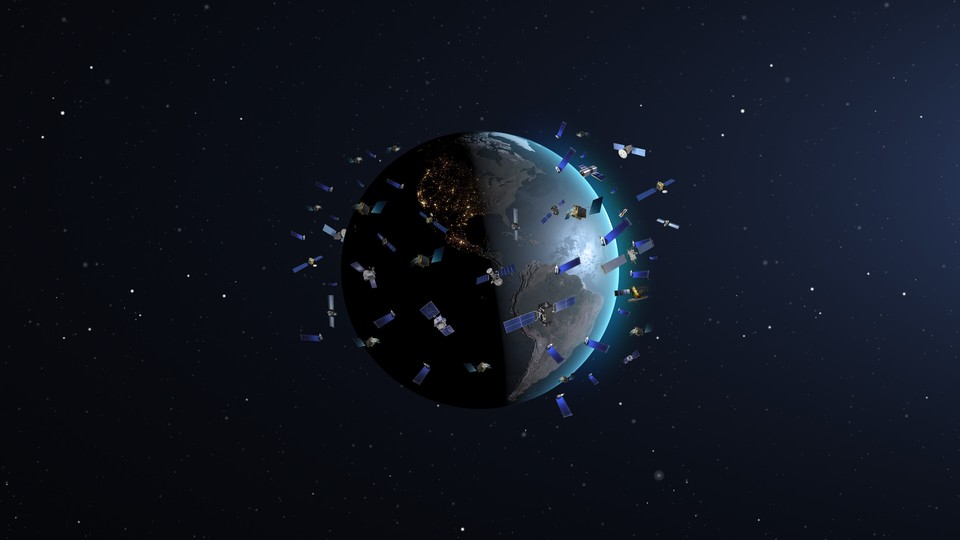
The core problem is simple: thousands of satellites are being launched into low Earth orbit every year, and when they reach end of life, they are deorbited to burn up in the atmosphere. Unlike the relatively benign reentry of older spacecraft built mostly of aluminum, modern satellites contain a cocktail of exotic materials — including titanium, beryllium, copper, lithium, and various composites — whose atmospheric chemistry effects are poorly understood.
Measuring the Invisible Plume
Several research teams presented new methods for detecting and tracking these anthropogenic particles in the upper atmosphere.
The Leibniz Institute of Atmospheric Physics showcased a novel three-channel laser scanning system that probes the upper atmosphere for trace metals specifically linked to spacecraft debris. The system can distinguish between natural meteoric dust and human-made particles from reentering hardware — a distinction that is becoming increasingly important as satellite constellations grow.
Meanwhile, researchers are deploying in-orbit mass spectrometers designed to capture and analyze tiny particles while still in space, using them as tracers for debris and reentry contamination. These instruments offer a real-time picture of how spacecraft materials disperse through the orbital environment before eventually making their way into the atmosphere.
Perhaps most ambitious is the European Space Agency’s CAIRT concept — the Changing-Atmosphere Infra-Red Tomography mission. This limb-imaging satellite would provide global, high-resolution measurements of aluminum oxide aerosols in the stratosphere, offering the first comprehensive survey of how reentry byproducts are distributed worldwide. Aluminum oxide is a particular concern because it forms when satellite aluminum structures vaporize during reentry, and the particles can persist in the stratosphere for years, potentially affecting ozone chemistry and reflecting or absorbing sunlight.
From Wild West to Managed Orbit
The term “Wild West” was used repeatedly at the EGU sessions to describe the current regulatory environment. There are no binding international rules governing what materials can be used in satellite construction, no limits on the total mass of hardware that can be deorbited, and no monitoring requirements for atmospheric emissions from reentry.
The researchers’ call for regulation is not merely precautionary. Satellite population growth has been exponential: SpaceX’s Starlink alone has launched over 7,000 satellites, and rival constellations from Amazon’s Project Kuiper, China’s Qianfan (Thousand Sails), and others are adding thousands more. Industry projections suggest that 100,000 or more satellites could be in orbit by the end of the decade.
Even if only a fraction of that number reenter the atmosphere each year, the cumulative mass of vaporized spacecraft materials entering the stratosphere would dwarf natural meteoric inputs. Studies presented in Vienna estimated that by 2030, the annual mass of satellite-derived metals deposited in the upper atmosphere could exceed that from micrometeoroids — a threshold that would mark a fundamental human alteration of an atmospheric system.
Beyond the Science: Policy Gaps
The scientific findings are expected to feature prominently at a National Academies gathering scheduled for July 2026, where researchers, policymakers, and industry representatives will discuss the state of orbital environmental governance.
Currently, no single international body has a clear mandate to regulate the atmospheric impact of satellite reentry. The International Telecommunication Union allocates orbital slots and radio frequencies but has no environmental remit. The United Nations Committee on the Peaceful Uses of Outer Space (COPUOS) sets broad guidelines but lacks enforcement power. Individual nations license their own satellites, creating a patchwork of standards.
The researchers are calling for a coordinated approach that could include material-use restrictions, deorbit mass limits, atmospheric monitoring requirements, and environmental impact assessments as a condition of launch licensing.
“It’s not about stopping space activity,” Marais emphasized. “It’s about doing it responsibly. We have a chance now, before the problem becomes irreversible, to put sensible guardrails in place. Once hundreds of thousands of satellites are up there, the chemistry of the upper atmosphere will already have changed.”
A Defining Moment for Space Governance
The parallels to Earth-bound environmental regulation are difficult to ignore. For decades, industry argued that emissions into the atmosphere were negligible, only for cumulative effects to become severe. The difference this time is that scientists are raising the alarm while there is still time to act — before the orbital environment becomes so saturated that mitigation is no longer feasible.
The question now is whether policymakers will heed the warning. The July National Academies gathering in the United States could be a turning point, but the problem is fundamentally global. Low Earth orbit is a shared resource, and pollution there does not respect national borders.
For the space industry, the writing may be on the wall. A transition from the current free-for-all to a regulated orbital environment seems increasingly inevitable. The only remaining questions are how quickly regulations will come, how stringent they will be, and whether they will arrive before the chemistry of our upper atmosphere is permanently altered.