

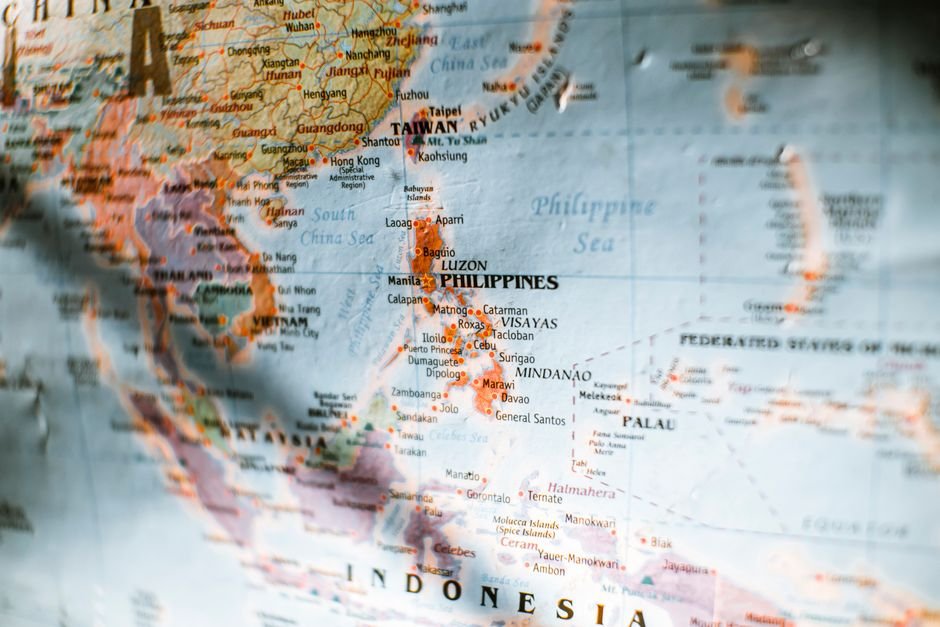
China announced on Tuesday that one of its frigates will hold a joint exercise with an Indonesian frigate in waters east of Taiwan in mid-August. On its face, the drill is small and technical: the Chinese guided-missile frigate Honghe and the Indonesian KRI John Lie will practice communication and replenishment at sea, the sort of routine work navies do together. The Chinese Defense Ministry gave no dates, no coordinates, no route. It did not need to. The location was the announcement.
Never before has Beijing publicly announced a drill with a foreign navy in that stretch of sea, and never before has another country’s warship joined a Chinese exercise there. That makes the drill a quiet landmark in the slow transformation of the sea east of Taiwan from open water into a place where Beijing sets the terms.
The timing explains the move. Tokyo and Manila recently announced talks to settle their maritime disputes in that same region, and Beijing responded by tightening its grip: coast guard vessels and government ships pressing claims, and, for the first time, Chinese personnel questioning foreign commercial boats in the area. The exercise with Indonesia is the next step in the same sequence. It is how China says that the waters east of Taiwan are not a place for others to arrange, and that it can find partners there even as its rivals confer.
Why Jakarta said yes
Indonesia is the interesting choice. Jakarta is not a Chinese client. It has its own frictions with Beijing, including the long-running standoff over fishing in the Natuna Sea, and it prizes the strategic independence that lets it deal with both Washington and Beijing without belonging to either camp. It is precisely that independence that makes the drill significant. Indonesia is a founding member of ASEAN, a country the United States courts, and the largest Muslim-majority nation on Earth. It does not need China’s approval for anything. It chose to send a frigate east of Taiwan anyway.
Read Jakarta’s calculation and it makes sense. Indonesia sees no reason to fight China over Taiwan, a quarrel it regards as Beijing’s business. It wants Chinese investment, Chinese nickel processing, and a quiet western Pacific. Drilling with the People’s Liberation Army Navy is a way of telling Washington, without saying a word, that the bloc-building around Taiwan will not include everyone, and that Beijing’s claim to those waters is, in Jakarta’s view, a legitimate matter for China to manage with its neighbors, not a crisis to be met with a united front.
The context makes the gesture heavier. Since Nancy Pelosi’s visit to Taipei in 2022, China has normalized the once-extraordinary: war games encircling the island, warships and warplanes routinely crossing the Taiwan Strait median line. Taiwan, for its part, is practicing how to break a blockade, including exercises to escort the tankers and gas carriers that keep the island alive, and officials warn that sealing off the island would starve the wider region of energy. A joint exercise by two foreign navies east of Taiwan is a small addition to this picture, but it is an addition in the wrong direction for everyone who hoped the neighborhood would close ranks.
The skeptics will say a replenishment drill with one Indonesian frigate changes nothing. They are right, in the narrow sense. No blockade was announced, no alliance was formed, and Indonesia will keep balancing. But firsts matter in the Taiwan Strait, where every first is later cited as precedent. The first time China drilled with a foreign navy east of Taiwan is a precedent Beijing will use again, with other navies, in other years. The question is not what one frigate does in mid-August. It is who comes with the next one.
Sources: The Hindu, Reuters, Bloomberg, China Daily