

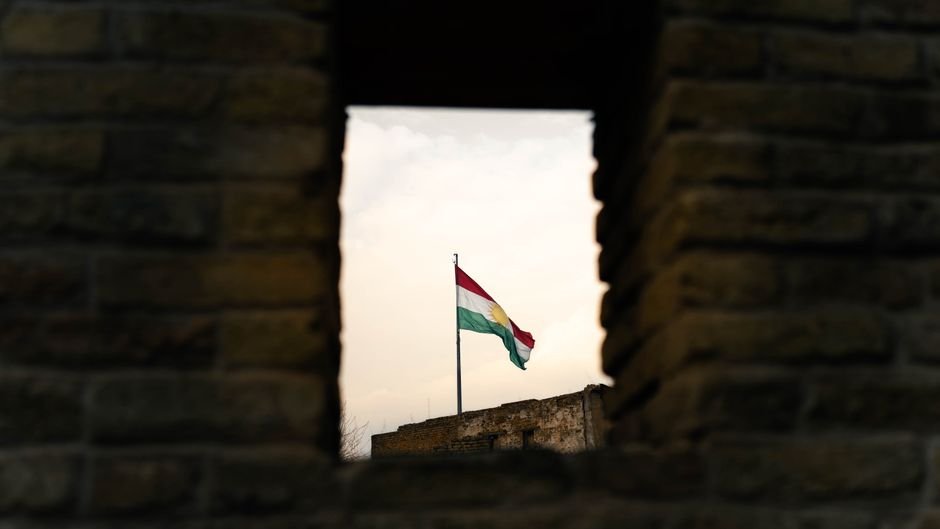
For five months, the Kurdistan Region of Iraq has done what its government promised: it stayed out of the war. It refused to take sides between Washington and Tehran and refused to let its territory be used to strike Iran. It kept its head down and hoped the conflict would pass it by. Instead, the conflict has devoured it. The region has absorbed well over a thousand drone and missile strikes since the fighting opened in late February, its trade has collapsed, and the numbers keep getting worse.
Prime Minister Masrour Barzani put the damage in plain terms on Sunday, speaking to Al Jazeera. He said the region had been targeted more than 1,000 times by missiles and drones, fired directly from Iran or from inside Iraq by some of the militias, that the attacks on Kurdistan were unjustifiable, and that there had been casualties and heavy damage to infrastructure.
The economic figures are the quiet part of the catastrophe. Trade across the region is down more than 70 percent from before the war. Losses up to April were estimated at 1.5 trillion Iraqi dinars (about $1.14 billion), a figure the KRG says it handed to the Iraqi government. Oil production, which Baghdad and Erbil had agreed should run at 200,000 barrels a day, has fallen to roughly 30,000. Non-oil revenues, the money that pays the region’s civil servants, are down about 70 percent. Even real estate, the Kurdish economy’s favorite store of value, has lost 15 to 20 percent of its price. The KRG was already in a chronic fiscal crisis before any of this. The war did not create the hole; it widened it into a crater.
The attackers are known, and unpunished
Everyone knows who is doing the bombing. Jabbar Yawar, a former senior Peshmerga official who now works as a security analyst, named them for Al Jazeera: Iraqi Hezbollah, the Sayyid al-Shuhada and Imam Ali Battalions, and al-Nujaba, all Iran-backed militias firing from the Nineveh Plains and from ground near Kirkuk and Salah al-Din. The KRG says it gave the names to Baghdad, under two governments, and nothing was done. The strikes have landed on army posts and energy plants, on the camps of Iranian Kurdish opposition parties, and on residential districts. Within hours of the first US-Israel strikes on Iran, American assets in the region were themselves under fire, because the militias treat any American presence in Iraq as a target.
Kurdistan has no way to defend itself. Neither Erbil nor Baghdad possesses comprehensive air defenses, so the drones and missiles arrive with impunity. The United States, which once protected the region as a matter of policy, is now the reason it gets bombed: the bases are there, and the militias shoot at them.
The economic mechanism is just as brutal. Iraq exports most of its oil through the Strait of Hormuz, and the strait is closed. Baghdad has declared force majeure on oilfields developed by foreign companies. Former electricity minister Luay al-Khatteeb puts total exports between 250,000 and 300,000 barrels a day, under a tenth of the pre-war flow, and warns that public-sector salaries will be in jeopardy if the fighting drags on. Since roughly 90 percent of Iraq’s budget comes from oil, the whole country is sliding toward insolvency, and the Kurdistan Region, which depends on budget transfers it often does not receive, slides first.
Barzani is not asking for charity. He said Erbil is ready to help Baghdad carry the load, then added the obvious: the lost production cannot be replaced from the region’s own fields. He also noted that oil companies only agreed to come back after Baghdad promised to protect them, a promise made in a mid-June agreement between the two governments, and a promise that has not stopped the rockets.
The deeper story is the failure of a strategy. The Kurds chose neutrality because they had the most to lose, and they are the ones who lost. When a war has a firing range on your border and militias inside your country that answer to the other side, keeping your head down is not a policy, it is a hope. The region that was once the safest, most prosperous corner of Iraq has become its most bombed, and the war destroying it was never its war to begin with. The Kurds are not paying for anything they did. They are paying for where they live.
Sources: Al Jazeera, The New Region, Foreign Policy