

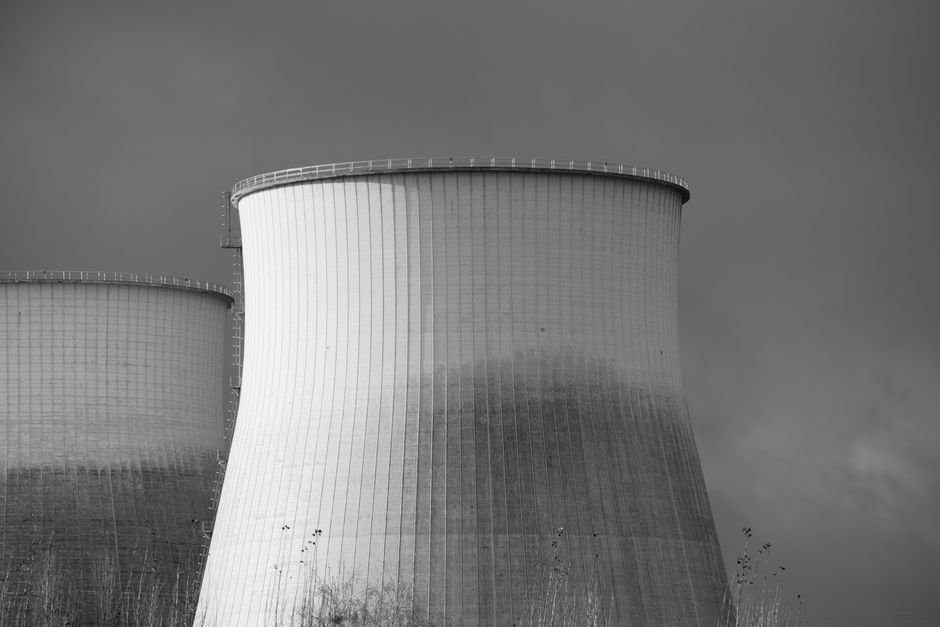
On Monday night three of the six reactors at Gravelines, France’s biggest nuclear site, went offline. A fourth dropped to half power, and a sixth was already out for maintenance. Only one unit of six kept running at full capacity. The cause was not a grid failure, a cyberattack, or a safety breach. It was jellyfish, a swarm of them, clogging the seawater pumps that cool the reactors. Score: Jellyfish 3, nuclear plant 0.
The operator, EDF, said the situation had no impact on the safety of the facilities, of personnel, or of the environment. Reactors are built to fail safe, and a clogged intake is a nuisance, not a meltdown. But the incident is the second time in two years that jellyfish have taken Gravelines down, and the pattern behind it is the real story. The machines humanity built to conquer the sea keep losing to the sea itself.
Gravelines is not a small plant. Sitting on the Channel coast near Dunkirk, it is the largest nuclear site in Western Europe, six 900-megawatt reactors that between them supply a meaningful slice of French electricity. A year ago the same plant was knocked off the grid when jellyfish blocked the seawater intakes. Now they have done it again, and this time the jellyfish took out half the plant’s capacity in one evening. Sweden had the same problem in 2013, when a bloom closed a reactor complex for three days. Japan had a jellyfish incident in 1999 that cut output sharply. The list is growing, and the reason is not bad luck.
The ocean is changing the rules
Marine biologists point to the usual suspects: overfishing removes the fish that eat jellyfish and their larvae; plastic pollution gives the blooms surfaces to multiply on; warming seas extend their breeding season. A warmer, emptier, dirtier ocean is a jellyfish ocean. Nuclear plants were built on an assumption that the sea around them would stay the same, with cold, clean water always available to carry away the heat of fission. That assumption is now failing in installments: heatwaves shut down French reactors in June and July this year, droughts threaten the river-cooled plants, and the jellyfish are eating the coastal ones. On Sunday, two days before the jellyfish strike, France was already running a 15.6 percent shortfall in nuclear production, according to AFP calculations from EDF data.
The deeper point is the one the industry does not like to make. Nuclear power was sold as the climate-proof option, the baseload that keeps running when the sun goes down and the wind stops. That pitch depends on geography: a reactor needs a river or a sea to cool it, and the river or sea must stay within a narrow band of temperature and biological behavior. Climate change attacks that band from every direction at once. The water gets too hot. The water gets too scarce. And the water gets full of jellyfish, which are nature’s way of saying the ecosystem is out of balance and the predators are gone.
EDF will clean the filters, blast the intakes, and bring the reactors back, probably within days. The grid will cope, because France has overbuilt nuclear capacity and can import from neighbors. But the bill for this particular defeat is not the repair cost. It is the growing list of ways the ocean can stop the machines we put in it, none of which require a missile or a hacker. The jellyfish that took out three reactors on Monday did not intend anything. That is what makes them unstoppable. They are not an enemy. They are a symptom, and the symptom keeps scoring. Three nil, and the sea has the momentum.
Sources: South China Morning Post, Euronews, Reuters