

Are Ukrainian drones exposing genuine gaps in Russian air defenses, or are the vulnerabilities being exaggerated?
When nearly 1,000 Ukrainian drones swarmed Moscow on June 18 in the largest attack on the Russian capital since the war began, the images that emerged were striking. Thick plumes of black smoke billowed from the Kapotnya oil refinery, just nine miles from the Kremlin. Social media captured failed interceptions, airport evacuations, and a city on edge. The refinery, which supplies 40% of the Moscow region’s fuel, halted production for days.
The attack reignited a fierce debate about whether Russian air defenses, once regarded as among the most formidable in the world, are now a shattered shield or simply a system under manageable strain.
The facts on the ground suggest the answer lies somewhere in between.
Russia still shoots down the vast majority of incoming drones. Official figures put the interception rate over Moscow at above 90% on June 18. Mayor Sergei Sobyanin reported that roughly 180 drones were downed approaching the capital alone. On paper, those numbers look like a functioning defense.
But military effectiveness is not measured in interception percentages alone. Even a small number of penetrating drones can cause disproportionate damage when aimed at critical infrastructure. The Kapotnya refinery strike demonstrated that Russia’s layered defense network, while still dense around Moscow, has developed exploitable seams.
Ukrainian aviation expert Anatoliy Khrapchynskyi, a former air force officer, attributes the breach to two compounding factors: the systemic degradation of Russia’s defense architecture and the rapid technological evolution of Ukraine’s strike capabilities.
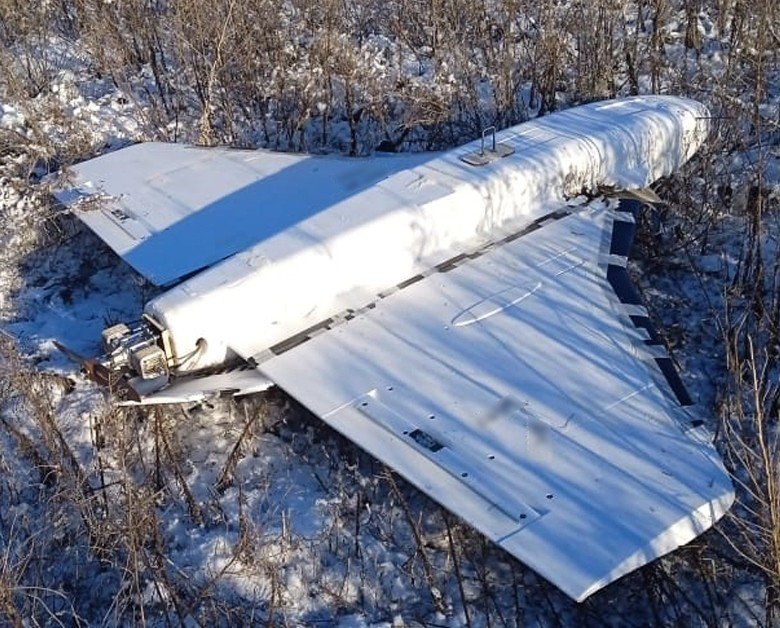
Russian air defense systems like the Pantsir-S1 and S-400 were designed to track large, metallic targets such as cruise missiles and fighter jets. Modern Ukrainian drones are built largely from composite materials, plastic, and even plywood. Their small radar cross-section makes them difficult to detect, especially at low altitudes. Moscow’s high-rise urban density compounds the problem, allowing drones to mask their approach behind buildings.
Ukraine is exploiting these blind spots with a suite of evolving tactics. It uses decoy drones to saturate Russian radar and exhaust interceptor stockpiles, a calculation rooted in basic economics. Russian interceptor missiles often cost ten times more than the Ukrainian drones they are chasing. Over prolonged campaigns, that asymmetry bleeds Russia’s inventories.
On the June 18 attack, Ukraine deployed its new “Bars” jet-powered hybrid drone-missile system, which is significantly faster than the propeller-driven drones Russian defenses have grown accustomed to intercepting. Ukraine also operates the Sky Fortress network, a dense array of over 14,000 acoustic sensors that detect drones by sound signature. Russia, lacking a comparable system, remains heavily dependent on radar that struggles with low-flying, small targets.
Ukrainian forces have also begun using AI-assisted terminal guidance on some long-range drones, allowing them to navigate and strike targets even when GPS and radio frequencies are jammed. This directly counters Russia’s formidable electronic warfare capabilities, which Moscow has extensively deployed along front lines and around strategic sites.
Russia is not standing still. The Kremlin has invested heavily in electronic warfare systems designed to blind drone communications and spoof navigation signals. Russian developers have fielded new countermeasures against Ukrainian drone interceptors and are scaling production of fiber-optic guided drones that cannot be jammed. Moscow has also tightened civilian airspace restrictions around the capital, banning light aircraft below 5,200 meters in a wide zone around the city.
Kremlin spokesman Dmitry Peskov insisted the air defense system showed “high performance indicators” during the June 18 attack and urged the public to watch footage of Russian strikes on Ukrainian cities instead. The downplay strategy was itself telling. Independent Russian analysts noted that the Kremlin appeared more rattled by the documentation of the attack than by the attack itself.
Pro-Kremlin military bloggers expressed alarm at the defense gap but were pessimistic about meaningful reform. Analyst Ivan Filippov observed that while ultranationalist voices want a more effective war, the structural and bureaucratic obstacles to overhauling air defense are immense.
Ruslan Leviev of the Conflict Intelligence Team offers a sobering counterpoint: the June 18 attack changed little militarily. Russia still intercepted over 90% of drones heading for Moscow. The problem is not that Russian defenses are collapsing, he argues, but that the sheer quantity of drones being produced by both sides exceeds what any industrial supply chain can sustain. The attack was designed for political impact, timed ahead of State Duma elections scheduled for September.
That political dimension matters. Ukraine is not trying to defeat Russia’s air defense network in a single battle. It is probing for gaps, forcing Russia to expend high-value interceptors on cheap drones, and keeping the psychological pressure on Moscow’s population. Each successful penetration chips away at the perception of impenetrability that Russia has cultivated around its capital.
The deeper strategic reality may be Russia’s size. It is simply impossible to build an unbroken air defense dome over a country spanning eleven time zones. Moscow and Saint Petersburg receive the bulk of protection, but that creates gaps elsewhere. Ukraine has proven willing to find and exploit them.
The answer to whether Ukrainian drones are really exposing gaps in Russian air defenses is yes, but with important qualifications. The gaps are real and growing, driven by outdated radar technology, interceptor shortages, and the sheer scale of Ukraine’s drone production. But Russia is adapting through electronic warfare, airspace restrictions, and new counter-UAS systems. The contest is not settled. It is an accelerating technological arms race in which both sides are learning, adjusting, and striking back.