

Published: June 02, 2026, 00:52 UTC
WindBorne Systems released the sixth version of its WeatherMesh AI model on June 1, claiming it now outperforms the European Centre for Medium-Range Weather Forecasts (ECMWF) — the gold standard of global weather prediction — on key accuracy metrics. The model updates its forecast every hour at a resolution of 3 km (1.9 mi) over Europe and the continental United States.
The data flywheel
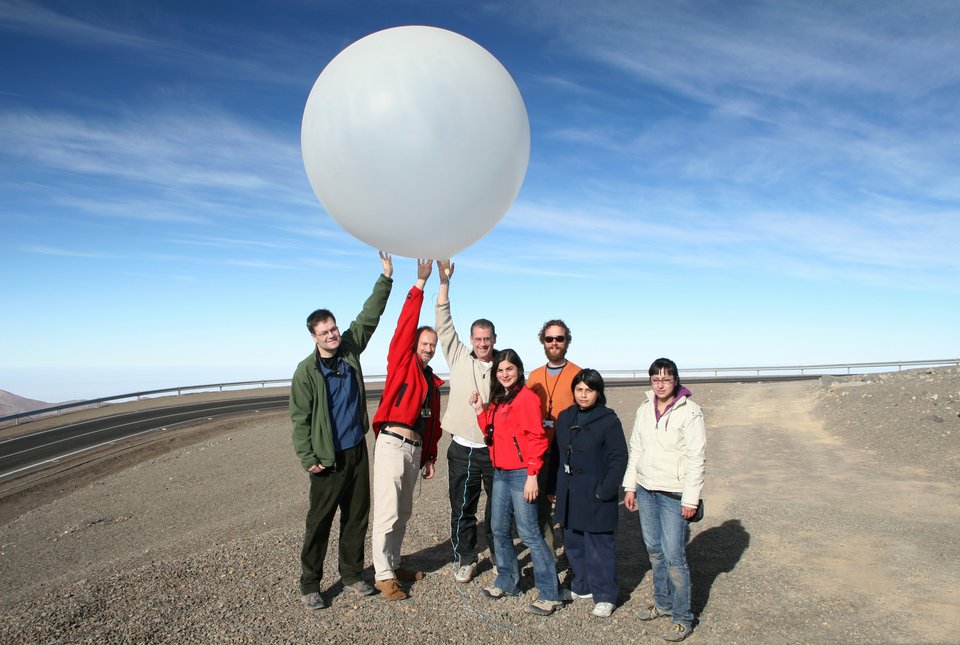
WindBorne was founded in 2019 by a group of Stanford students who started by building a better weather balloon. The company now operates a constellation of approximately 400 autonomous, long-duration balloons launched from 15 sites worldwide, each collecting real-time measurements of temperature, pressure, wind speed and direction, and humidity.
The balloons are the differentiator. Most AI weather models — including Google DeepMind’s GraphCast — train exclusively on reanalysis datasets produced by government agencies like ECMWF and NOAA. WindBorne feeds its own balloon data directly into the model through a technique called data assimilation, the same process ECMWF uses to turn disparate sensor readings into a coherent picture of the atmosphere. The company’s head of AI, Joan Creus-Costa, told TechCrunch that direct ingestion of proprietary balloon data is the key reason for WeatherMesh-6’s improvement over version 5, which itself had already set accuracy records.
“When we started doing data assimilation, we were still very heavily reliant on ECMWF,” CEO John Dean told TechCrunch. “I predict today, if we removed ECMWF’s initial conditions, we would actually still do pretty good.”
Performance that challenges the orthodoxy
Traditional numerical weather prediction runs physics-based simulations on supercomputers — a process that takes hours and costs millions in compute. WeatherMesh, by contrast, can run on a gaming laptop. The model’s transformer-based architecture processes live operational data alongside historical reanalysis to generate forecasts at hourly timesteps, compared to the 6-to-12-hour resolution of traditional models.
Chief product officer Kai Marshland told TechCrunch the model is “as accurate five days out as a traditional forecast is the day before,” particularly on surface temperature measurements — a metric that directly affects agriculture, energy, and disaster preparedness.
The business of better weather
WindBorne has raised $25 million in venture funding at a reported valuation of $85 million (2024). The company sells its balloon data to NOAA, the U.S. Air Force, and the Navy, and offers its forecasts to investors and commodity traders in agriculture and energy markets.
But CEO Dean is careful not to overcommit to commercial products. “I’m not trying to invest a massive team into building a SaaS product, if the way people want consumer information two years from now is through an agent, right?” he told TechCrunch, pointing to the rapid shift toward AI agents as the interface layer for information retrieval.
The company had a close call last year when a United Airlines jetliner struck one of its balloons. The aircraft suffered minor damage and no one was hurt — partly because WindBorne complies with U.S. regulations limiting sensor package size. The company now uses the global aviation surveillance system ADS-B to steer balloons away from flight paths.
A forecasting inflection point
WindBorne’s progress suggests the model architecture itself is no longer the bottleneck in AI weather prediction. The challenge is data — specifically, the vast gaps in atmospheric sensing. The World Meteorological Organization estimates 85% of the atmosphere is inadequately measured. WindBorne’s balloon network, which can gather up to 150 times more data per dollar than traditional dropsondes, is one of the few efforts attempting to close that gap at scale.
If Dean’s prediction about ECMWF independence holds, AI weather models may soon no longer be dependent on government reanalysis at all — flipping the current dependency and raising the question of who owns the most accurate picture of the planet’s atmosphere.
Sources: TechCrunch (June 1, 2026); WindBorne Systems (Feb. 13, 2024); IEEE Spectrum (May 2026)