

US-Iran Peace Deal ‘Never Been Closer,’ Mediators Say
After 105 days of war, a final text exists. Whether anyone trusts it enough to sign is another question.
For the first time since the United States and Israel went to war with Iran on Feb. 28, the outline of an actual peace deal exists on paper. Pakistan’s prime minister, acting as mediator, says a “final, agreed upon text” has been reached. Iran’s foreign minister says an agreement has “never been closer.” President Trump claims he has made a “great settlement” and expects to sign it within days.
The question, after three and a half months of fighting, thousands of dead, and a global economy rattled by the closure of the Strait of Hormuz, is whether this time is different from all the other times Trump has declared victory before the ink was dry.
The architecture of the deal, as described by Iranian and Pakistani officials, is a two-stage process. Stage one is a memorandum of understanding: a halt to fighting, including Israel’s ongoing offensive in Lebanon, with commitments from both sides not to resume attacks. The Strait of Hormuz, the world’s most vital oil chokepoint, would reopen. Iran would be allowed to sell oil freely.
Stage two tackles the hard stuff: the future of Iran’s nuclear program, the lifting of sanctions, and the unfreezing of Iranian assets held abroad. The United States has demanded that Iran agree to no uranium enrichment for at least 20 years; Iran has offered 10. Negotiators are reportedly converging around 15 years as a compromise.
Saudi state media Al Arabiya, citing sources familiar with the draft, reported that the initial truce period would run 60 days, during which detailed negotiations would take place. The UAE has agreed to unlock billions of dollars for Iran as part of the arrangement, according to Reuters.
The mediator, Pakistan’s Prime Minister Shehbaz Sharif, put out the strongest statement yet on Friday. “We can confirm that a final, agreed upon text of the peace deal has been reached between the United States and Iran,” Sharif said. “Next steps are being finalized.”
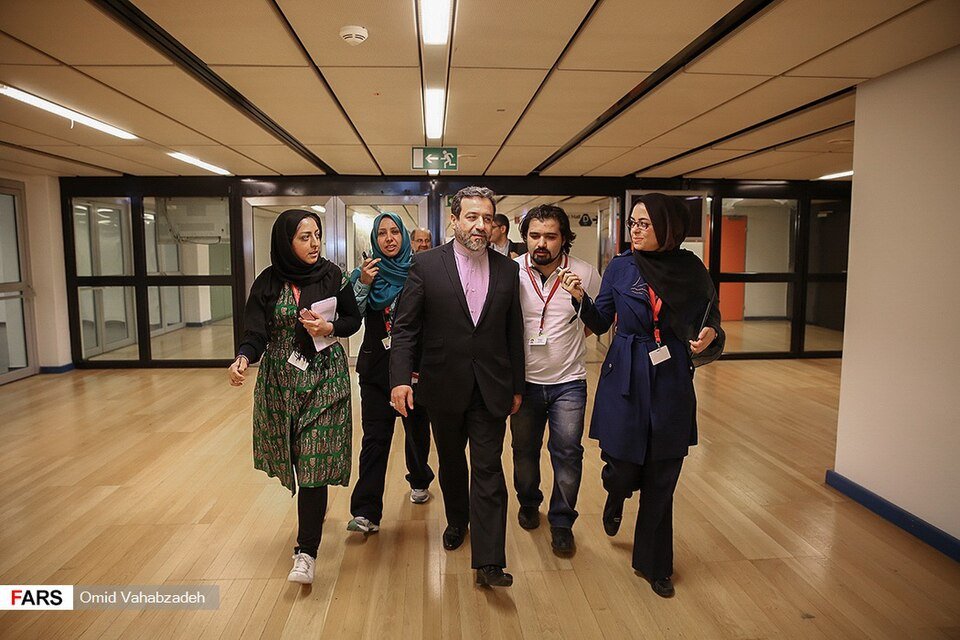
Iran’s Foreign Minister Abbas Araghchi posted on X that a deal has “never been closer.” In a remarkable gesture, Trump reshared Araghchi’s post to his own followers. Iran’s parliamentary speaker, Mohammad Bagher Ghalibaf, added a pointed message: “Commitments made must be commitments kept. No ifs, no buts, no excuses. For the close deal ahead, there is no other way. You reap what you sow.”
But Araghchi also went on Iran’s Press TV and stressed that no agreement has been signed. The memorandum of understanding is still being reviewed. He pointed to deep distrust of the Trump administration, which launched strikes twice while nuclear talks were ongoing. He said there is no timeline for a signing ceremony.
The contradictions coming out of Washington are not helping. On Thursday, Trump threatened on Truth Social to hit Iran “very hard tonight” and take over Iran’s oil infrastructure, including Kharg Island. Hours later, he announced he had canceled the strikes because talks had been “approved.” He then stood in the Oval Office and said a “great settlement” had been reached.
Iranian state media Fars reported that Trump’s move was not a breakthrough but a tactical retreat. “The reality is that up until now, not only has Iran not given a final response, but it is the US that has returned to its previous demand,” Fars wrote. It acknowledged that because the US has accepted Iran’s proposed text, “there is a possibility of re-examining this text.”
Israel is not part of the negotiations. Netanyahu’s office confirmed that Trump spoke with the prime minister, and that Netanyahu appreciated Trump’s “commitment that the final agreement” would include restrictions on Iran’s nuclear program. But Israel continues its military operations in Lebanon, and its exclusion from the process raises the question of whether it would abide by a deal it had no hand in shaping.
The financial markets are acting as though the deal is real. Stock indexes rose sharply on Thursday after Trump’s announcement. Oil prices dropped on the prospect of Hormuz reopening. But markets have been fooled before during this war, and the gap between a framework agreement and a signed, implemented peace is vast.
What is different this time is that mediators Pakistan, Oman, and the UAE are putting their credibility on the line. Sharif’s statement went further than any previous mediator has dared. Araghchi’s public post, shared by Trump himself, suggests both sides see an off-ramp they can sell to their domestic audiences.
What has not changed is the mutual distrust. Iran remembers that Trump pulled out of the 2015 nuclear deal and reimposed sanctions. Trump’s administration has bombed Iran for months. Both sides are now signaling readiness for peace, but the weapons are still hot, and the negotiating table sits in the shadow of a war that neither side has been able to win.
A final text is a real achievement after 105 days of destruction. But a final text is not a signed agreement. And a signed agreement is not a lasting peace. The next few days will show whether the paper means something or nothing.