

Published: June 06, 2026, 02:20 UTC
Trump’s Iran envoys quietly assembled 100 nuclear scientists at Oak Ridge, a signal that Washington is preparing technical blueprints for a deal it still cannot guarantee will happen.
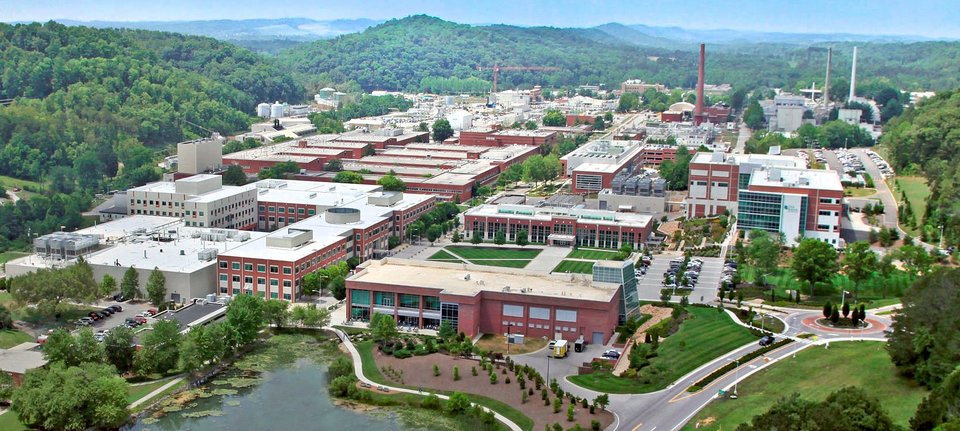
There is a place in eastern Tennessee where the United States has secretly handled other nations’ nuclear materials for decades. Oak Ridge, home to the Y-12 National Security Complex and the Oak Ridge National Laboratory, is where uranium from dismantled Soviet warheads was processed in the 1990s, where Libya’s centrifuges were rendered harmless after Gaddafi gave them up in 2003, where Kazakhstan’s weapons-grade stockpile was neutralized.
On Thursday, President Donald Trump’s Iran envoys, special envoy Steve Witkoff and the president’s son-in-law, Jared Kushner, made an unannounced trip to this same facility. They met with a team of roughly 100 nuclear scientists and technical experts who have been quietly assembled over recent weeks to prepare for what may come next: the technical dismantlement of Iran’s nuclear program.
The meeting, first reported by Axios and confirmed by Reuters and multiple other outlets, represents the most concrete sign yet that the White House is moving beyond diplomatic generalities and into the hard logistics of a potential Iran deal.
“This meeting in Oak Ridge doesn’t mean that a deal is going to happen, but it is a sign that the negotiations are in a very serious phase and that there is a good chance to get it done, and we want to be prepared,” one US official told Axios.
The official’s choice of words is worth reading closely. Nobody inside the administration is declaring victory. But the fact that Witkoff and Kushner, two men who function as Trump’s personal foreign policy channel, bypassing much of the State Department, traveled to Tennessee to brief a dedicated nuclear task force means the White House believes a deal is close enough to warrant concrete planning.
The technical team assembled at Oak Ridge includes some of the country’s foremost authorities on centrifuge technology and uranium processing. Their job, if a preliminary agreement is reached, would be to design the actual mechanics of handling Iran’s enriched uranium stockpile, imposing new enrichment limits, and verifying compliance. These are not negotiators. They are engineers and nuclear physicists. Their presence in the process means the United States is thinking about what happens after the handshake.
The 60-day framework
The groundwork for the Oak Ridge meeting was laid last week, when Witkoff and Kushner agreed on terms with Iranian counterparts for a 60-day memorandum of understanding. The proposed MOU would extend the current ceasefire between the US and Iran, reopen the Strait of Hormuz to commercial shipping, permit Iran to sell oil on international markets, and launch formal talks on the fate of Iran’s enriched uranium stockpile and future enrichment limits.
Each of these provisions represents a major concession from one side or the other. Reopening the Strait of Hormuz, blockaded since the early stages of the 2026 Iran war, would restore the flow of roughly 20% of the world’s oil supply. Allowing Iran to sell oil would give Tehran a desperately needed revenue stream after months of sanctions and military blockade. And beginning talks on enrichment limits would address the core concern that started this conflict: the status of Iran’s near-weapons-grade uranium, estimated at roughly 440 kilograms (970 pounds) of material enriched to 60% purity or higher.
But the framework is not yet signed. Trump has reportedly requested two changes to the draft text. Iran has demanded its own revisions. One key sticking point is the timeline for “down-blending” Iran’s enriched uranium, the process of diluting it to a level that cannot be used for weapons. Washington wants this done within 60 days. Tehran wants 90. The two sides also disagree on the timing and amount of Iranian frozen assets that would be released as part of any agreement.
These are the kind of details that can kill a deal or save it. They are also the kind of details that require technical expertise to resolve, which is precisely why the Oak Ridge meeting mattered.
From Venezuela to Tennessee
The Oak Ridge team has recent, relevant experience. According to US officials cited by Axios, some of the same experts who met with Witkoff and Kushner this week recently helped recover enriched uranium from Venezuela, material that was transferred to the state of South Carolina for processing last month.
That operation, the removal of nuclear material from a hostile state, is the closest recent analog to what a potential Iran deal would require. If the MOU moves forward and leads to a comprehensive nuclear agreement, the United States would need to safely extract, transport, and neutralize Iran’s enriched uranium stockpile from sites that have been damaged by months of US and Israeli bombing.
Trump himself acknowledged the complexity of this task on Friday, telling Fox News that only the United States and China have the technical capability to retrieve enriched uranium from Iran’s “obliterated” nuclear sites. He also said he would be willing to meet with Iran’s Supreme Leader Mojtaba Khamenei if negotiations produce a final deal, a remarkable offer from a president who, earlier this year, ordered the strikes that destroyed much of Iran’s nuclear infrastructure.
The politics of preparation
The Oak Ridge meeting also carries political significance within Washington. Witkoff and Kushner have functioned as Trump’s parallel diplomatic channel on Iran from the start of negotiations in 2025. Their trip to Tennessee, and the assembling of a 100-person technical team, signals that this channel is operating with White House backing, regardless of where the State Department or Pentagon stand on the emerging deal.
It also puts pressure on Iran. The public disclosure of the Oak Ridge meeting, via an Axios scoop sourced to US officials, sends a message to Tehran: the United States is preparing to move quickly if an agreement is reached. The technical infrastructure for verification and dismantlement is being built now. The ball, the message implies, is in Iran’s court to accept the remaining terms.
Whether Iran’s leadership, reportedly divided on whether to deal with Trump, will accept those terms is the open question. The dispute over 60 versus 90 days for down-blending looks small on paper but reflects a deeper mistrust. The US wants rapid denuclearization as proof of Iranian intent. Iran wants breathing room and financial relief before surrendering its most significant strategic asset.
What comes next
The next few days will be telling. The 60-day MOU was tentatively agreed last week. Trump’s requested changes, and Iran’s counter-revisions, are now being exchanged. If the remaining gaps can be closed — and the Oak Ridge preparations suggest the White House thinks they can — an announcement could come within days.
If they cannot, the Oak Ridge meeting will be remembered as a moment of preparation that never bore fruit. The team of 100 nuclear experts will stand down. The war will continue, the Strait of Hormuz will stay blocked, and Iran’s enriched uranium will remain in place, buried beneath the rubble of bombed-out facilities.
The broader context is sobering. The 2026 Iran war, which began with Operation Epic Fury on February 28, has already reshaped the global energy market, drawn in Gulf states, and left thousands dead. A ceasefire holds, but barely. The difference between a negotiated settlement and a stalemate that slides back into open conflict may come down to whether Witkoff and Kushner can close the final gaps on a 60-day timeline that neither side fully trusts.
But for now, the United States is doing something it has not done in decades: quietly assembling the technical apparatus to dismantle a hostile state’s nuclear program, in advance of a diplomatic deal that may or may not come. That alone is news worth watching.
This article is based on reporting by Axios, Reuters, and the Anadolu Agency, supplemented by background from Wikipedia’s entry on the 2025-2026 Iran-US negotiations.