

Published: June 06, 2026, 01:08 UTC
ISS Crew Briefly Shelters in Dragon as Zvezda Module Leak Worsens
Five crew members aboard the International Space Station were ordered to shelter inside a SpaceX Crew Dragon capsule on Friday morning as two Russian cosmonauts attempted repairs on a worsening air leak in the Zvezda service module’s transfer tunnel. The “safe haven” order lasted roughly 90 minutes before Roscosmos paused the repair effort, opting instead to take measurements for future assessment.
NASA directed U.S. astronauts Jessica Meir and Jack Hathaway, French astronaut Sophie Adenot, and Russian cosmonaut Andrey Fedyaev into the Crew Dragon Freedom around 9 a.m. EDT (13:00 UTC) on June 5. NASA astronaut Chris Williams, who arrived at the station last November aboard a Russian Soyuz ferry ship, joined them. The four Crew-12 members launched in February and Freedom serves as their lifeboat until their scheduled return to Earth in September.
“All USOS crew members need to execute Emergency Procedure 3.4: Crew Dragon, establish Safe Haven,” NASA mission control radioed to the station. “If we need you to suit up, we will do that once we’re inside the Dragon.”
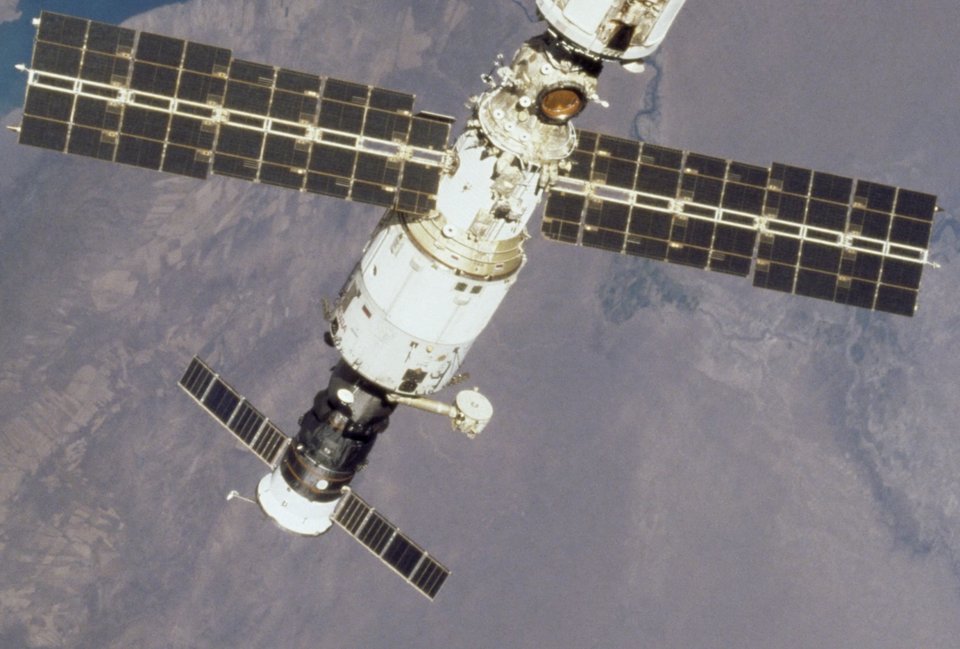
The shelter order was triggered by Roscosmos’s decision to pursue a more aggressive repair of the PrK tunnel – a vestibule at the aft end of the Zvezda module that connects a docking port to the rest of the Russian segment. The tunnel has suffered from microscopic cracks for over six years, and cosmonauts have repeatedly attempted to seal them with temporary fixes, none of which held permanently.
“Following new leaks, Roscosmos has elected to proceed with a more extensive repair operation on Friday, June 5,” NASA spokesperson Bethany Stevens wrote on social media. “Out of an abundance of caution, NASA has directed all four of the agency’s SpaceX Crew-12 members and NASA astronaut Chris Williams to assume an elevated safety posture in the Dragon spacecraft while the repair is underway.”
Repair Paused
After about 90 minutes, mission control in Houston informed the crew they could reopen hatches. The repair work was called off before it truly began.
“Our Russian colleagues have elected to perform measurements only today,” mission control told the crew. “So with that, we are comfortable backing out of the safe haven config.”
Roscosmos cosmonauts Sergey Kud-Sverchkov and Sergei Mikayev had been working at the leak site on the opposite end of the station, roughly 200 feet from the Dragon. According to Roscosmos, Russian flight controllers detected an air leak while pressurizing the PrK tunnel earlier on June 5. Inspections revealed two potential leak sites: one was coated with a sealant, while preparations are underway to seal the other, located on a conical section of the vestibule.
Stevens posted a follow-up stating that Roscosmos had “paused” the “structural repair efforts” inside the PrK to take more measurements and assess data.
“We look forward to working with Roscosmos on a collaborative approach to address the leaks,” she added.
The crew’s response drew a moment of dry humor. When mission control reported that the Russian cosmonauts had elected to perform only measurements, Crew-12 commander Jessica Meir asked: “We don’t have help from our counterparts?” The reply came back: “Affirm.”
A Six-Year-Old Problem
The PrK tunnel’s leak issues date back to at least 2019. Engineers from NASA and Roscosmos have tracked a gradual increase in the leak rate over the years, attributing it to microscopic cracks in the module’s structure exposed to thermal cycling, micrometeoroid impacts, and material fatigue. After a few months of relative pressure stability inside the PrK earlier this year, Roscosmos confirmed in May that the leaks had returned.
NASA has not disclosed the current leak rate, when the new leaks were discovered, or when the agency decided the situation warranted sheltering the crew. Ars Technica reported that NASA spokespersons did not provide details on the proposed repair or why it was considered risky enough to order U.S. crew members into the Dragon lifeboat.
The Dragon Freedom has four seats configured for the Crew-12 mission. Williams, the fifth person in the capsule, would have been an extra occupant in an evacuation scenario. NASA previously demonstrated during the Boeing Starliner Crew Flight Test saga that Dragon could be outfitted with makeshift seating for additional personnel in an emergency.
Implications
The incident underscores growing concerns about the aging Russian segment of the ISS as the station approaches its planned end of operations around 2030. The Zvezda module launched in July 2000 and has been in continuous service for 26 years. While Roscosmos has stated the situation poses no immediate threat to the station or its crew, the decision to pre-position astronauts in a lifeboat – the first such precautionary measure tied specifically to the leak problem – signals a notable escalation in how NASA assesses the risk.
Roscosmos emphasized that air pressure in the station remains stable at normal levels and that the situation is under control. But the fact that NASA chose to activate safe haven procedures, and that Roscosmos paused the repair mid-operation to reassess, suggests the structural integrity of the PrK tunnel is being treated with increasing seriousness by both agencies.