

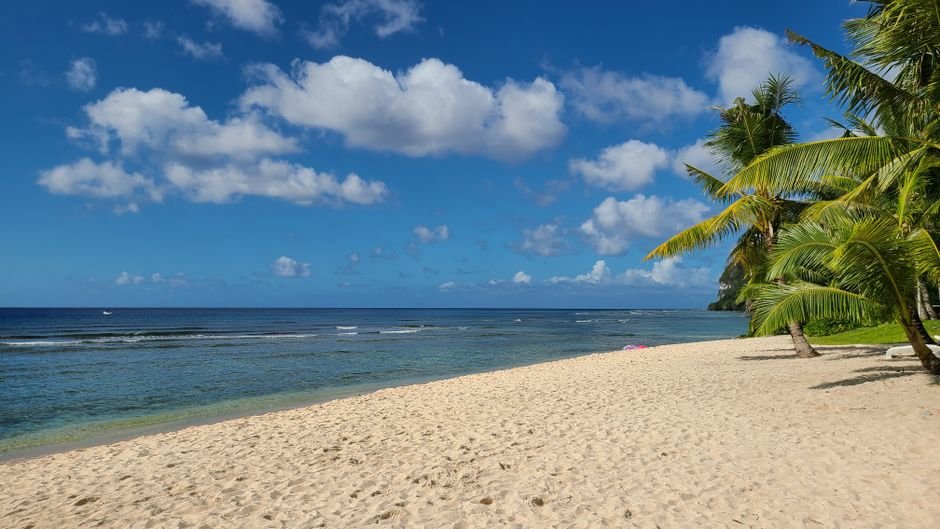
Super Typhoon Bavi made landfall on Guam and the Northern Mariana Islands on July 5, battering the US Pacific territories with sustained winds of approximately 290 km/h (180 mph) and gusts reaching 350 km/h (217 mph). The western eyewall of the storm passed directly over Rota, the southernmost inhabited island of the Northern Mariana Islands chain about 50 km (31 miles) northeast of Guam, bringing catastrophic conditions that forecasters expect will persist until early afternoon Monday local time.
The storm’s approach prompted the opening of five evacuation centers in Guam schools, with a combined capacity of roughly 1,700 people. One center reached capacity by early Sunday afternoon, forcing authorities to redirect evacuees to other sites. Residents boarded up homes and businesses with plywood as the storm closed in. Pinky Cubacub, a 55-year-old restaurant owner in Guam, told the BBC she spent $500 worth of materials to protect her eatery: “I cannot afford to lose so many days. It hurts because I just started, whatever we’re making right now is just for rent, utilities, and my people, and supplies. I don’t even pay myself yet.”
The Joint Typhoon Warning Center, the US military agency that monitors western Pacific tropical storms, classified Bavi as a super typhoon, a storm with sustained winds exceeding 240 km/h (149 mph), equivalent to a Category 4 or 5 hurricane. The US National Weather Service warned of a “very dangerous” storm expected to inflict “catastrophic” damage.
A Decade of Intensification
Bavi’s devastation is not an isolated event. It is the 11th Category 4 or 5 tropical cyclone to hit US territory in the past decade, one more than the total recorded in the prior 57 years combined. The frequency and intensity of these storms have drawn direct attention from climate scientists, who point to warming sea surface temperatures as a key driver.
Warmer ocean waters provide more energy for tropical cyclones and increase the amount of moisture the atmosphere can hold, both of which supercharge storm intensity. A strong El Niño event this year is expected to push more tropical storms into higher-intensity categories as it shifts the Pacific’s heat distribution. Earlier this year, Super Typhoon Sinlaku struck the same region in April, killing 17 people and causing an estimated $1.5 billion (£1.1 billion) in damage to Guam and the Northern Mariana Islands.
The Human Cost
Guam, a US territory with a population of roughly 170,000, and the Northern Mariana Islands are among the most typhoon-exposed inhabited territories on Earth. Their location in the western Pacific warm pool places them directly in the path of storms that form over some of the warmest ocean waters on the planet.
Japanese tourist Miku Sakurai, 25, was stranded on Guam after her return flight to Tokyo was canceled. “We will stay in the hotel when the storm comes,” she told the BBC. “I am scared.”
One of the key challenges for these islands is economic vulnerability. Tourism and subsistence commerce make up a substantial portion of local economies, and a direct hit from a super typhoon can wipe out months of income for small business owners. The $500 Cubacub spent boarding up her restaurant is a significant outlay for a business that started just 18 months ago, but the alternative, unmitigated damage, would be far more costly.
What Comes Next
Forecasters expect typhoon-force winds to persist through early Monday afternoon local time, with conditions not falling below tropical storm force until after midnight. Storm surges of up to 11 meters (35 feet) compound the threat from wind, submerging coastal areas already saturated by heavy rain.
The immediate priority is search and rescue, with damage assessments unlikely to begin until the eyewall has fully passed. Historically, the combination of extreme wind and storm surge in this region produces the deadliest outcomes, and Bavi’s 350 km/h (217 mph) gusts place it among the most intense storms to hit US territory in recorded history.
Source: BBC News, “Super Typhoon Bavi makes landfall on US Pacific islands with huge wind gusts” (5 July 2026).