

Iran has a new leadership for the first time in four decades, and it looks nothing like the old one. Younger, more ruthless, and more pragmatic, this generation came of age during war and is now shaping what comes after it.
A changing of the guard
The death of Ayatollah Ali Khamenei in the US-Israeli airstrikes of February 28 removed the man who had ruled Iran for 36 years. His son, Mojtaba Khamenei, aged 56, has taken over as Supreme Leader. He is three decades younger than his father and belongs to a completely different political generation.
President Masoud Pezeshkian is 71, but the revolutionary old guard that surrounded his father is gone. The key figures now are men like parliamentary speaker Mohammad Bagher Ghalibaf and IRGC commander-in-chief Ahmad Vahidi, both in their sixties, both with deep ties to the Revolutionary Guard. These are not the ideologues of 1979. Analysts describe them as “children of the revolution,” post-revolutionary, pragmatic, and focused on preserving the state by any means necessary.
“The 86-year-old is no longer guiding the ship of the Islamic Republic. The big handbrake on evolution of the system was Ali Khamenei,” said Sanam Vakil of Chatham House.
War changed everything
Before the war, Iran looked vulnerable. The economy was in ruins. The nuclear program had been damaged. The Axis of Resistance had been shattered; Assad was gone in Syria, Hezbollah was decimated, Hamas was devastated, the Houthis were under heavy attack.
Then came the US-Israeli strikes in late February. What followed was not the quick collapse that Washington and Tel Aviv had anticipated. Iran fought back hard, closing the Strait of Hormuz, launching drone and missile barrages at multiple US bases, killing six American soldiers in Kuwait and wounding hundreds more. For the first time since the 2020 Soleimani killing, when Iran telegraphed its retaliation carefully and killed no US personnel, Tehran demonstrated it was willing to shed American blood directly.
“They’ve shown that they’re willing to engage in war in a much more aggressive way than the previous generation,” said Vali Nasr of Johns Hopkins SAIS.
The war ended in a negotiated ceasefire, not a surrender. A memorandum of understanding was signed at the Palace of Versailles in June. Fragile as it is, skirmishes around the Strait of Hormuz continue, and it represents a better outcome for Tehran than almost anyone predicted when the bombs first fell.
The new social contract
The most visible changes are internal. The hijab is no longer enforced outside state institutions. Alcohol is quietly available in Tehran restaurants. These are not signs of liberalization in any Western sense. They are pragmatic decisions by a regime that understands it cannot govern by coercion alone.
“They made a pragmatic decision that their raison d’etat requires them to relax these things,” said Nasr.
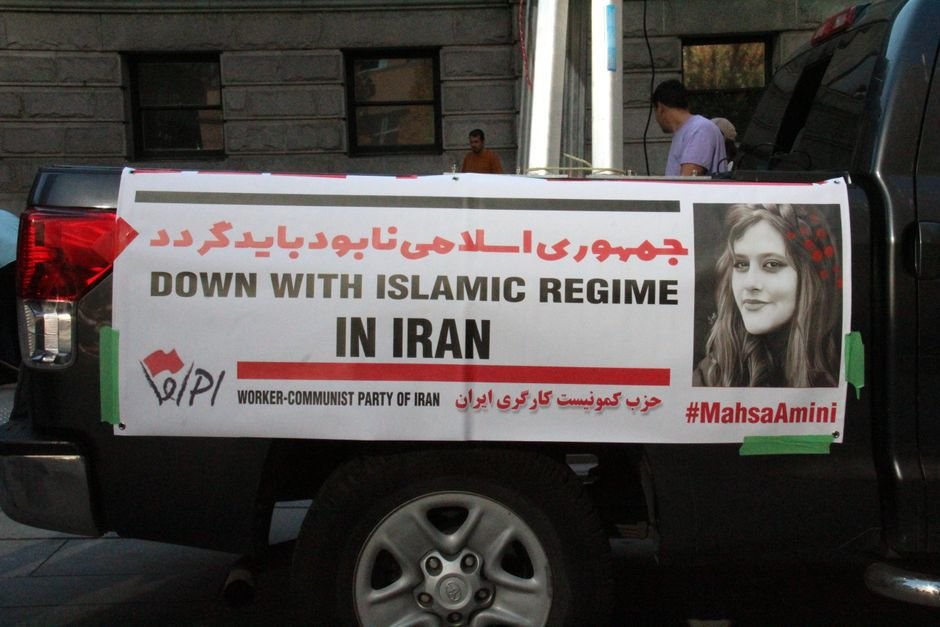
Before the war, Iran saw mass protests in January that Trump and Israeli Prime Minister Benjamin Netanyahu believed might topple the regime. The crackdown killed thousands of young people. The regime’s legitimacy among its own population has never been lower. But the war also handed the regime something it had lost: the ability to claim it defends the nation. Civilian deaths from US-Israeli strikes, including a school bombing in Minab, turned some public sentiment away from the attackers.
“This is a sort of China-after-Mao moment, in the sense that the system as a whole recognizes that something’s got to give. This new leadership understands that it needs a new social contract,” said Ali Vaez of the International Crisis Group.
Regional realignment
The Gulf states are scrambling to adjust. Before the war, they parked their security entirely under the American umbrella. That calculation has changed. The war showed that hosting US bases makes you a target, not just a protected ally. Saudi Arabia is reportedly preparing a “reconciliation summit” with Iran and its Gulf neighbors.
“A lot of these countries were hoping that US military bases on their territory would provide them with security, not make them a target. The Gulf states are now questioning the credibility of the US security umbrella,” Vaez said.
But the shift has limits. The Gulf states remain too dependent on Washington to cut ties entirely. “They can try to hedge their bets, but at the end of the day, they don’t have anywhere better to go,” Vaez added.
What comes next
The ceasefire holds, but barely. Iran has already received US sanctions waivers to export crude oil, which gives the new leadership some economic breathing room. The Strait of Hormuz is partially open but under Iranian terms that would have been unthinkable before the war.
The real test will be whether Mojtaba Khamenei’s regime can deliver the new social contract it needs to survive, or whether the internal contradictions that produced the January protests will reemerge once the war recedes from memory.
“This war is much more consequential and larger than we have given it credit for thus far,” Nasr said. “All major wars of this magnitude ultimately reorder the chess board. This will do it for the Middle East.”