

SpaceX launches Starlink mission on historic first day of Nasdaq trading
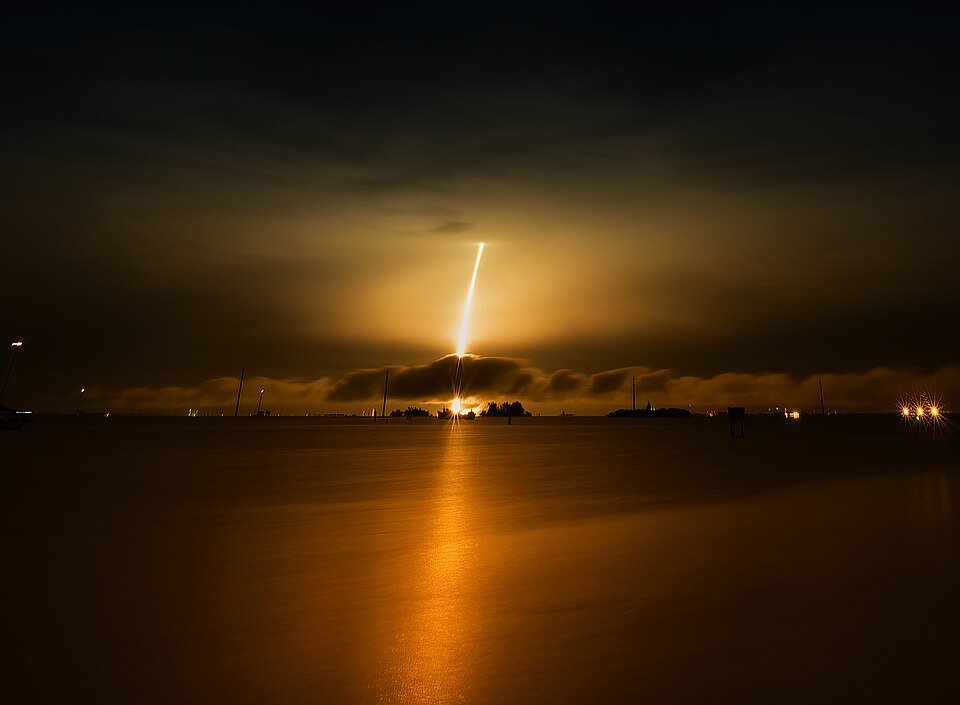
SpaceX marked its historic first day as a publicly traded company Friday morning with a Falcon 9 launch from Cape Canaveral Space Force Station, sending 29 Starlink V2 Mini Optimized satellites into orbit.
Liftoff of the Starlink 10-54 mission from Space Launch Complex 40 was at 8:37 a.m. EDT (1237 UTC), timed less than an hour before the opening bell on the Nasdaq Stock Market. The launch was the 650th flight of SpaceX’s Falcon 9 and the 68th Falcon 9 launch of 2026.
The mission used booster B1080 on its 27th flight. The booster previously launched two crewed Axiom Space missions to the International Space Station, two cargo missions, and the European Space Agency’s Euclid observatory. It landed on the drone ship “A Shortfall of Gravitas” off the coast of South Carolina about eight minutes after liftoff — the 155th landing on that vessel and the 623rd booster landing overall for SpaceX.
A day of firsts
The launch was the 55th dedicated Starlink mission of the year and brought the total number of Starlink satellites in orbit to more than 10,500.
But the milestone extends beyond launch statistics. Friday marks SpaceX’s first trading day on the Nasdaq more than 24 years after Elon Musk founded the company in March 2002. The company’s initial public offering priced 555.6 million shares of Class A common stock at $135 each, raising $75 billion and giving SpaceX a valuation of approximately $1.77 trillion.
In its SEC filings ahead of the IPO, SpaceX disclosed that its Starlink connectivity business generated about $2 billion in revenue in 2024 and $4.4 billion in 2025, underscoring the satellite internet division as a key driver of the company’s growth story.
What’s next
SpaceX is betting its future on Starship-Super Heavy to launch larger next-generation satellites, including the planned Starship V3 and the AI1 satellites that would power Musk’s xAI ambitions in orbit. The company is positioning its orbital infrastructure as foundational to both its commercial business and its long-term Mars colonization goals.
The launch proceeded under favorable conditions, with the 45th Weather Squadron forecasting an 80 percent chance of acceptable weather at the opening of the window.
Sources: Spaceflight Now (Will Robinson-Smith, June 12, 2026); SpaceX SEC filings.