

Researchers at Japan’s Okayama University of Science have taken a significant step toward making aquaculture a viable food source for future Moon bases by studying how shrimp feed and behave in microgravity. The findings were published in the journal Microgravity Science and Technology.
The challenge is straightforward. Food does not exist naturally in space. Every meal for astronauts must either be brought from Earth or grown and raised in the habitat. Seafood is among the most widely consumed proteins on Earth, but almost nothing is known about how aquatic animals would behave in the low-gravity or microgravity environments of a Moon base or deep-space mission.
To address this gap, the team built a custom clinostat, a device that rotates samples to simulate weightlessness. Standard clinostats rotate at 10 to 25 revolutions per minute, but that speed is too slow for complex animals that can reorient themselves faster than the device can compensate. The Okayama team built a version that spins at approximately 130 rpm, more than two rotations per second, fast enough to prevent shrimp from sensing and compensating for gravity. This allowed the researchers to simulate pseudo-weightlessness over periods ranging from minutes to several days, far longer than the seconds available in drop towers or parabolic aircraft flights.
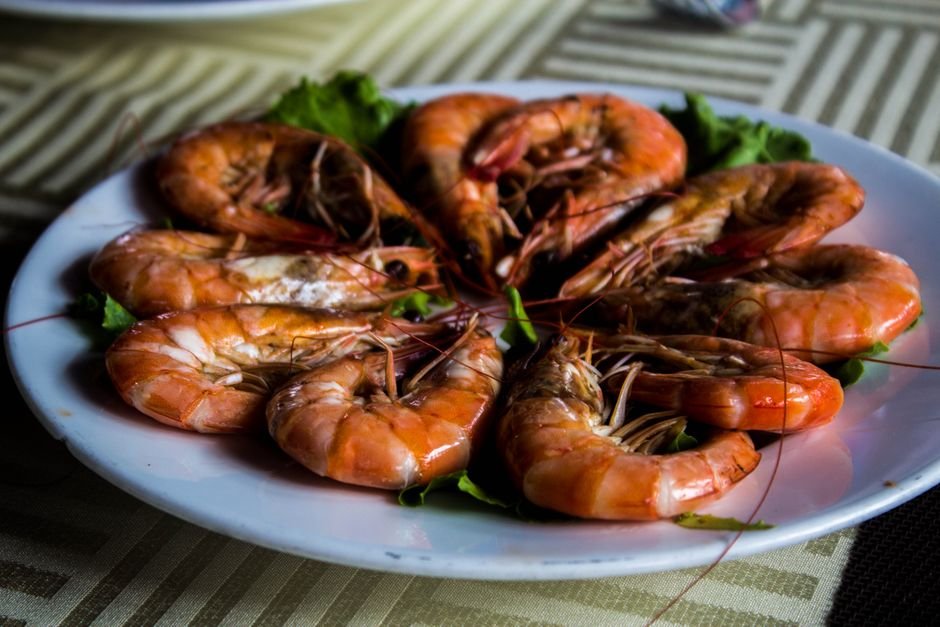
The team conducted two experiments. In the first, juvenile kuruma shrimp were placed in the clinostat for 15-minute sessions while holding onto a plastic mesh net to counteract water sloshing. The shrimp ate only food pellets that appeared directly in front of their mouths, adopting a passive feeding strategy rather than actively hunting. Feeding was most effective when water movement stopped, suggesting shrimp will actively eat in microgravity if water flow is properly controlled.
In the second experiment, brine shrimp (Artemia salina) were kept in continuous rotation for four days. They successfully preyed on algae, generated waste, and grew significantly, showing no major adverse effects from prolonged simulated microgravity. Brine shrimp, commonly known as sea monkeys, are hardy organisms that could serve as a reliable protein source in a closed-loop space habitat.
Genetic analysis added another layer of insight. The researchers compared RNA from kuruma shrimp exposed to 24 hours of simulated microgravity against a control group kept at normal gravity. They found stark changes in genes controlling chitin metabolism and cuticle development, both tied to locomotion and exoskeleton maintenance. The results indicate that microgravity affects shrimp at a fundamental biological level, altering how their bodies produce and maintain their external structure.
The study is part of a broader push to develop space aquaculture. Related programs include the Lunar Hatch initiative, which has sent fertilized fish eggs to the Moon, and SpaceGenFish, an automated aquaculture system designed for the International Space Station. The Okayama team attempted fish experiments as well, but those failed due to camera limitations, leaving room for follow-up studies.
Much additional research is needed before aquaculture can play a critical role in supplying astronauts with fresh meat. But the findings show that at least some crustaceans can survive, grow, and feed in conditions that simulate the microgravity of space, opening the door to future studies aboard the ISS or on the lunar surface.