

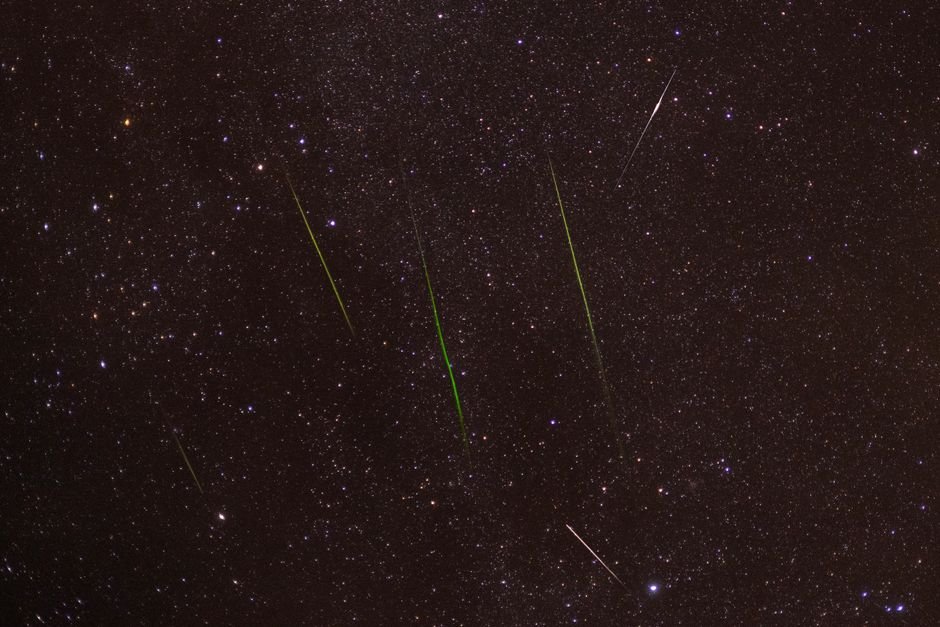
The Perseids, peaking around August 13, are the summer’s marquee meteor shower, and this year conditions are near-perfect: a new moon on August 12 means a dark sky for the Perseid peak on the 13th. But there are other meteor showers between mid-July and late August worth knowing about, even if, in some cases, moonlight makes them a challenge in 2026.
Here is a guide to the season’s meteors, compiled from Space.com skywatching columnist Joe Rao.
The Showers
The Delta Aquarids (peak July 29) are the most active minor shower, producing 20-30 meteors per hour under ideal conditions. Unfortunately, the full moon falls on July 29, washing out all but the brightest. Patient observers watching after moonset, around 1:40 a.m. for the Capricornids (peak July 25), may catch a few bright members of that shower, which produces only a handful of meteors but tends to include fireballs.
The Alpha Capricornids (peak July 31) are the opposite of the Delta Aquarids: low rate (about five per hour) but spectacular when they hit. They are known for bright yellow fireballs that can be quite dramatic. The moon will be 93% illuminated and sitting in the same constellation, making this a poor year for them. Still, a single bright fireball can be memorable.
The Kappa Cygnids (peak August 17) are a late-summer dark-horse favorite. They produce only about four meteors per hour, but these are slow-moving fireballs that streak across the sky. With a thin waxing crescent moon that sets early, conditions are good.
Observing Tips
Meteors appear across the entire sky, not just near the radiant point. The greatest numbers are typically seen about 30 degrees away from the radiant, toward the zenith. A dark sky, limiting magnitude +6.5, is essential for seeing fainter meteors. Light pollution reduces counts dramatically.
No equipment is needed beyond your eyes and a blanket. A reclining chair or ground cloth makes extended viewing comfortable. Temperate summer nights can still get cold before dawn, so dress well.
Combined Viewing Strategy
The best approach is to pick a dark night near the new moon (August 12) and watch during the predawn hours, when the Earth’s rotation faces into the meteor stream. Even outside the Perseid peak, on a dark August night you can typically see 10-15 meteors per hour from various showers combined, plus sporadic meteors unrelated to any known stream.
Sources
1. J. Rao, “Beyond the Perseids: 6 meteor showers worth watching this summer,” Space.com, July 18, 2026. https://www.space.com/stargazing/meteor-showers/beyond-the-perseids-6-meteor-showers-worth-watching-this-summer