

Published: June 03, 2026, 06:11 UTC
The Floating Prison
Twenty thousand sailors have been trapped on or near the Strait of Hormuz since late February. No one is negotiating for them.
Captain Hassan Khan does not want to use his real name. He is afraid of being identified. He is the master of a ship that has been stuck in the middle of a war zone for three months, and he does not know when — or if — he will be allowed to leave.
“It is really strange that everything looks normal outside, but people inside are not calm,” he says. “The stress stays in our mind all the time. Everyone is just exhausted — both physically and mentally.”
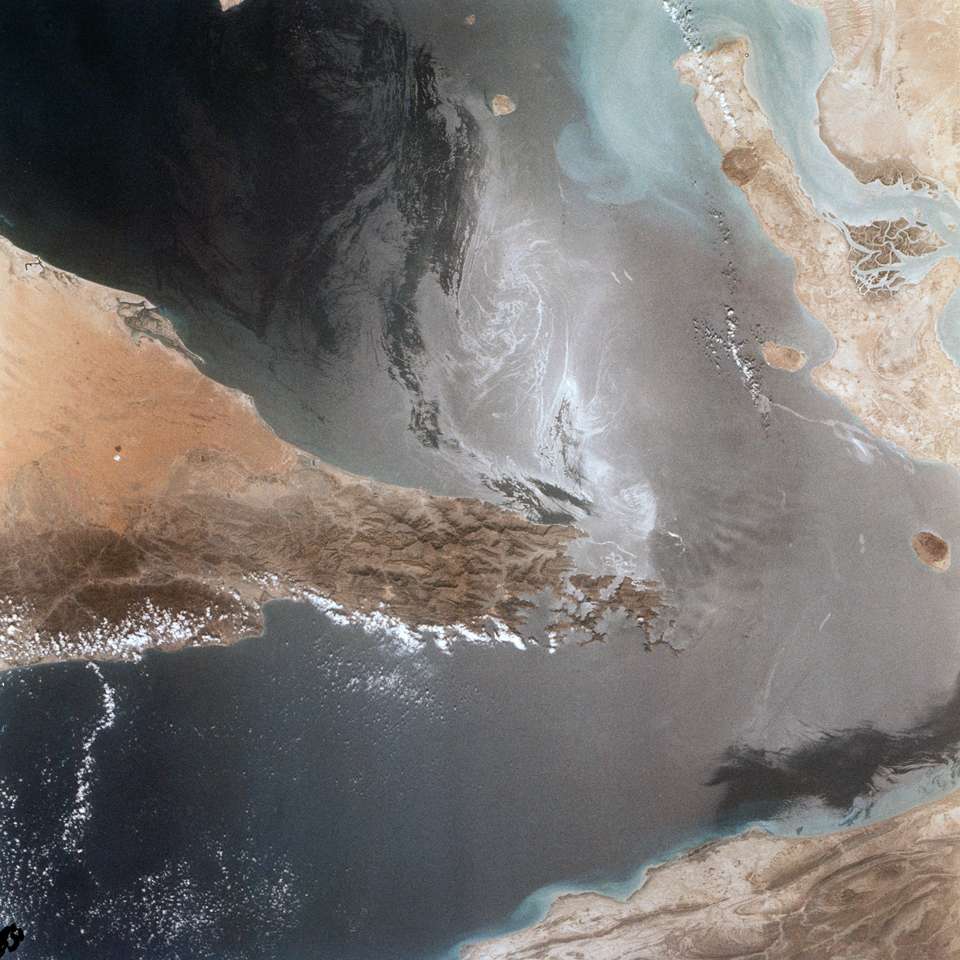
Khan is one of roughly 20,000 sailors trapped in or near the Strait of Hormuz, the narrow waterway between the Gulf of Oman and the Persian Gulf that once carried a fifth of the world’s oil and gas. Since late February, when the US-Israeli war with Iran began, the strait has effectively become a dead zone. Iran shut it. The United States blockaded it. And in between, roughly 1,600 merchant vessels have been caught on the wrong side of both decisions.
The International Maritime Organisation counts them. It also counts at least 11 sailors killed and one missing in 39 verified incidents since the conflict began. But the IMO is a shipping regulator, not a war council. It has no power to open the strait. It cannot negotiate a ceasefire. It can only count.
The Banglar Joyjatra is a Bangladesh-owned bulk carrier. It has been sitting in the Gulf for months, carrying 37,000 tonnes of fertiliser that was supposed to go to South Africa. Its captain, Shafiqul Islam, has tried twice to leave. Both times he was turned back.
The first attempt came after the announcement of a ceasefire on April 8. Islam heard that another ship had been given permission by Iran’s Islamic Revolutionary Guard Corps to cross the strait. He steered toward the critical waterway along with four other vessels. Shortly after, they were all warned not to proceed.
Nine days later, Islam tried again. Iran had said the strait would be “completely open” for commercial vessels in line with the ceasefire. But Iran quickly reversed that decision after the United States kept the blockade of its ports in place. By then, Islam’s ship had already come within 30 nautical miles of the strait. He had no choice but to turn it away as warnings of attacks crackled over the radio.
“Sometimes missiles fly over one ship, and sometimes debris falls on the next,” Islam says.
His chief engineer, Rashedul Hasan, puts it more plainly: “Whenever attacks continued throughout the night, none of us could sleep. We have witnessed horror and devastation with our eyes.”
The physical toll is measurable. The psychological toll is beyond measurement.
Water, the most basic necessity on any ship, has become extortionately expensive. Hasan says his ship purchased about 180 tonnes of water two days ago. Before the war, it would have cost between $1,500 and $2,000. Now it costs $11,000 — roughly a sixfold increase.
“It feels like some food and water suppliers are trying to take advantage of the situation and make excessive profits,” says a Korean sailor on a different vessel, who also does not want to be named.
On Khan’s ship, they still have food and water, but the variety has shrunk. Beef and chicken are obtainable. Vegetables and lentils are hard to come by. And the worst part is that summer is coming. The air temperature in the Gulf has already exceeded 30 degrees Celsius in May. It can reach 45 degrees in the peak months. Hotter weather means more water, and more water means more cost, and more cost means more desperation.
The ships have moved to different ports or anchored offshore within the Gulf for safety. The Gulf region — especially around Dubai, Abu Dhabi and Kuwait — has well-established maritime supply services. But deliveries are now unpredictable. The supply chains that keep the crews alive were never designed for a situation where 1,600 ships sit still for months.
The Strait of Hormuz is not a humanitarian crisis in the sense that most people understand that term. No one is starving to death. No one has been bombed out of their home. But 20,000 people are effectively imprisoned on vessels that cannot move, in waters where missiles fly overhead and mines sit beneath the surface, while the cost of drinking water has multiplied six times and the temperature is rising.
They are not soldiers. They are not diplomats. They are the crews of commercial ships — Bangladeshi, Pakistani, Filipino, Korean, Indian, Sri Lankan — who signed contracts to move goods across the world and found themselves trapped in someone else’s war.
The negotiations to resolve this crisis are happening at a level far above them. In Washington, the question is whether Trump will sign a deal with Iran. In Tehran, the question is whether the IRGC will accept any deal that limits its power. In Islamabad, Pakistani mediators shuttle between the two sides. In New York and Geneva, officials talk about the IMO’s role in facilitating crew changes.
But none of those conversations are about the sailors directly. The sailors are a side effect. They are the unaccounted cost of a blockade policy that was designed to pressure a government and has instead trapped the people who happened to be in the wrong place at the wrong time.
On April 17, Iran said the strait would reopen. It did not. The US blockade of Iranian ports remains in place, and Iran maintains that no ship passes through the strait without its permission. The two blockades — one American, one Iranian — work in opposite directions and produce the same result: no one gets out.
Captain Islam’s ship, the Banglar Joyjatra, is still anchored in the Gulf. Its 37,000 tonnes of fertiliser are still on board. Its crew is still waiting. They have been waiting since February. They have no idea when the waiting will end.
“I am lucky to be alive,” Islam says. He means it. Eleven other sailors are not.
The blockade is often discussed in terms of strategy. The cost of oil. The leverage over Iran. The pressure on negotiations. What is rarely discussed is what happens to the people who are simply in the way. The ones who do not have a seat at any table. The ones who pay the price in water that costs six times what it should, in sleep lost to missile fire, in the slow erosion of hope that comes from being told — twice — that you are free to leave, and then being turned back both times.
That is what a naval blockade looks like from the deck of a ship. It is not a diagram with arrows and chokepoints. It is 20,000 men and women who cannot go home, watching the temperature rise and their supplies dwindle, while the people who decide their fate have never met them and never will.