

Published: June 03, 2026, 05:50 UTC
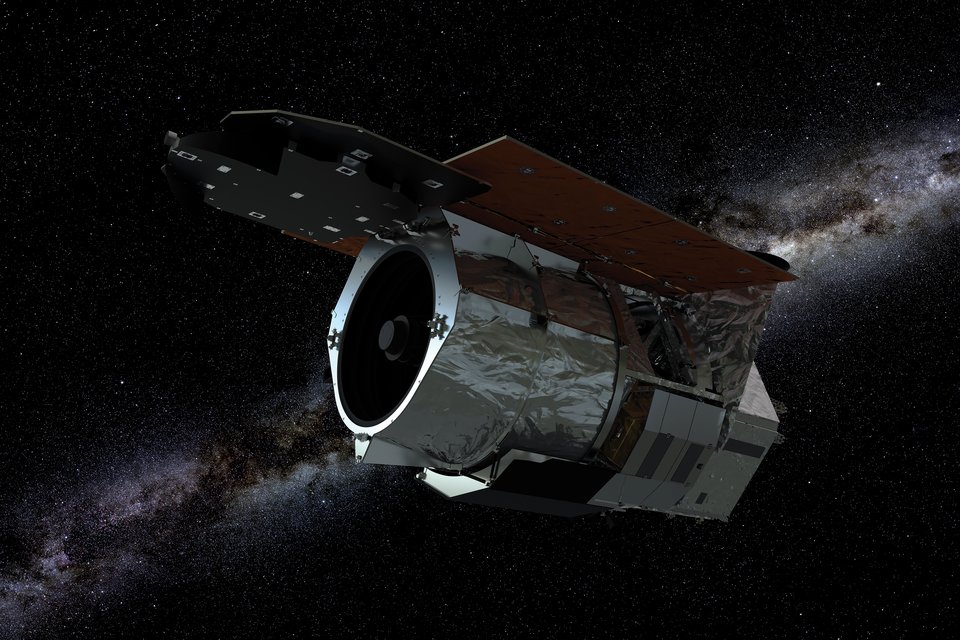
In September 2026 — just three months from now — NASA is scheduled to launch the Nancy Grace Roman Space Telescope, a 2.4-meter observatory that astronomers believe will fundamentally transform our understanding of planets beyond our solar system. The projected yield from its primary exoplanet survey: over 100,000 new worlds, potentially more than all confirmed exoplanets in history combined.
To appreciate the scale of that number, consider the current exoplanet census. After three decades of discovery, the total number of confirmed exoplanets stands at roughly 6,270. NASA’s Kepler telescope, the most prolific exoplanet hunter of its era, found approximately 2,780 of them by staring at a single patch of sky. TESS, still active, has added thousands more by scanning nearly the entire sky for bright, nearby transits.
Roman will not just add to that count. It will multiply it.
Two Methods, One Telescope
Roman’s exoplanet survey, known as the Galactic Bulge Time Domain Survey (GBTDS), is designed to use two complementary planet-hunting techniques simultaneously — an approach no previous space telescope has been able to combine at this scale.
The transit method — the same technique used by Kepler and TESS — watches for the faint dimming of a star’s light as a planet passes in front of it. Roman’s 288-megapixel infrared camera (comprising 18 H4RG-10 detectors) will monitor hundreds of millions of stars toward the dense center of the Milky Way at high cadence, looking for these telltale dips. The survey covers approximately 1.7 square degrees of the galactic bulge — a region so packed with stars that Roman will see more in a single pointing than Kepler saw in its entire mission. The projected yield: roughly 100,000 transiting planets, mostly on close-in orbits, ranging from super-Earths to hot Jupiters.
The microlensing method exploits a different physical phenomenon. When a foreground star passes nearly directly in front of a background star, its gravity bends and magnifies the background star’s light — a temporary brightening that can last days to weeks. If the foreground star has a planet, the planet’s gravity adds a detectable blip to the magnification pattern. This technique is uniquely sensitive to planets in wide orbits, cold planets far from their star, and even free-floating “rogue” planets not bound to any star at all. No space telescope has ever conducted a dedicated microlensing survey from space. Roman will be the first, and it is expected to find hundreds to thousands of these distant and hard-to-detect worlds.
Seeing Through the Dust
Roman has a decisive advantage over Kepler and TESS for the galactic bulge survey: infrared vision. The center of the Milky Way is shrouded in vast clouds of dust that block visible light — the reason optical telescopes cannot see deep into the galactic plane. Roman’s 0.48–2.0 micron infrared sensitivity cuts through that dust, allowing it to probe stars up to 26,000 light-years away across the far side of the galaxy. Kepler and TESS, by contrast, were limited to stars within roughly 3,000 light-years.
This means Roman will sample planetary populations from an entirely different region of the galaxy — inner, older, and more metal-rich than the solar neighborhood where all known exoplanets have been found to date. It will answer a question that current data cannot touch: do planets form with the same frequency and diversity across the entire Milky Way, or is our corner of the galaxy special?
The Coronagraph
Roman also carries a technology demonstration that points toward the field’s ultimate goal: the Coronagraph Instrument (CGI), a precision starlight-suppression system designed to block a star’s light by a factor of 10⁸ — allowing direct imaging of Jupiter-like planets orbiting nearby stars. The coronagraph is expected to image about a dozen gas giants directly. But its real purpose is to prove out the technology for a future mission — one that could one day image an Earth-like planet.
Timeline
Roman has already been built and completed. Construction finished in November 2025. The telescope is currently in storage awaiting its ride to space. NASA announced in April 2026 that the target launch window had moved up to early September 2026 on a SpaceX Falcon Heavy from Kennedy Space Center. After launch, the telescope will travel to the Sun-Earth L2 Lagrange point, about 1.5 million kilometers from Earth, where it will spend roughly 2–3 months deploying and calibrating before beginning science operations in late 2026 or early 2027.
The primary mission is five years, with the potential for an extended mission that could double or triple that.
What 100,000 New Planets Will Teach Us
A 15-fold increase in the known exoplanet population is not just a quantitative leap — it is a qualitative one. With 100,000 planets, rare populations become statistically accessible. The frequency of Earth-sized planets in the habitable zone. The distribution of planet sizes as a function of stellar metallicity. The abundance of free-floating rogue planets. The architecture of multiplanet systems. The demographics of planets in the inner galaxy versus the outer galaxy.
The combination of Roman’s transit and microlensing surveys will produce a near-complete census of planetary systems — from hot, close-in worlds to cold, distant giants to unbound rogues — across two different stellar environments. Planetary formation models will have to explain the full distribution, not just the subset visible from the solar neighborhood.
For the exoplanet community, Roman represents what Kepler promised and delivered — and then something more. Kepler taught us that planets are everywhere, that most stars have them, and that small rocky planets are common. Roman will teach us what those planets look like across the galaxy, in all their variety.
Sources: NASA Press Release, May 28, 2026. “Peering into the Milky Way’s far side, Roman could unveil 100,000 worlds.” Wilson RF, et al. Transiting Exoplanet Yields for the Roman Galactic Bulge Time Domain Survey. ApJS. 2023;269:5. arXiv:2510.13974 (Oct 2025). Nancy Grace Roman Space Telescope overview, NASA Goddard Space Flight Center. Launch: September 2026 on SpaceX Falcon Heavy from KSC.