

Russian troops have infiltrated the Donbas gateway. Ukraine says it still controls the city.
KOSTYANTYNIVKA, Ukraine. Russian forces have infiltrated the strategic city of Kostyantynivka in eastern Ukraine and are trying to surround it, according to Ukrainian soldiers and military observers who describe a battlefield situation that is more fluid and dangerous than official statements suggest.
The entire city is now effectively in a “grey zone,” no longer fully controlled by either side, Ukrainian soldiers told the BBC. Russian troops have advanced from the south and been spotted on the city’s northern outskirts. The two prongs of a pincer movement are roughly two kilometers apart.
If Kostyantynivka falls, the consequences would be severe. The city is the gateway to the remaining Ukrainian-held areas of Donbas. Behind it lie Kramatorsk and Sloviansk, Ukraine’s last strongholds in the east. Lose Kostyantynivka, and the road to both cities is open.
Brigadier General Oleksandr Bakulin, commander of Ukraine’s 19th Corps, insists the situation is under control. “The situation remains under control,” he said. But the soldiers on the ground describe something more chaotic.
“They get into areas behind our backs and in urban conditions it is extremely difficult to push them out,” a Ukrainian drone pilot operating in the area told the BBC.
The Russian push on Kostyantynivka is the main effort of Moscow’s Spring-Summer 2026 offensive. The Institute for the Study of War assessed that Russia committed elements of at least one combined arms army and several additional army corps to the fight. Two tactical groups, the “Bakhmut” group operating from the east and the “Dzerzhinsk” group from the south, have been advancing into the city since early June.
The pace is slow but the direction is consistent. Russian forces first infiltrated Kostyantynivka in October 2025. By June 2026, ISW estimated they had established a presence in roughly 12.7 percent of the city. The infiltration pattern is what makes it dangerous. Small groups of Russian infantry move through residential areas, establish positions in buildings, and force Ukrainian defenders into a street-by-street fight where artillery and drones become less effective.
Russian information operations have amplified the pressure. Moscow has circulated AI-generated footage claiming a flag was raised over the city. Russia’s defense ministry says its forces have encircled Ukrainian units. Both claims appear to be exaggerated. But the psychological effect on Ukrainian defenders and the civilian population is real.
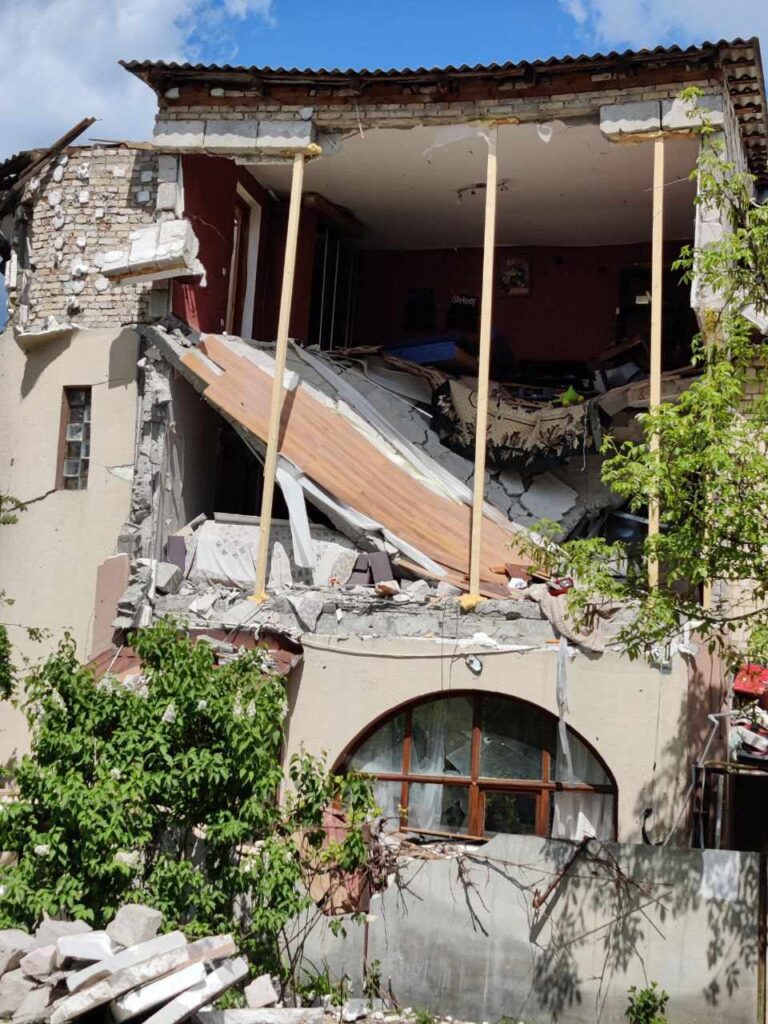
About 4,800 residents remain in a city that once held 70,000 people. They live in damaged buildings with intermittent water and electricity, surviving on humanitarian supplies when they can get them.
The Kostyantynivka battle sits inside a broader strategic picture that is less grim for Ukraine than the city’s situation suggests. Ukrainian forces have recaptured more territory this year than they have lost, according to Ukrainian commanders. Deep strikes on Russian oil infrastructure have forced Moscow to ration fuel in occupied Crimea. The Russian offensive has not achieved the breakthroughs that Kremlin planners hoped for when they committed reinforcements in March.
But cities do not need to be fully encircled to fall. They can be hollowed out. Infiltrated. Made uninhabitable by constant shelling until the defenders withdraw. That is the pattern Russia has followed in Bakhmut, Avdiivka, and Chasiv Yar. Kostyantynivka looks like the next city on that list.
For Ukraine’s allies, the question is whether the warning signs are being read in time. Kostyantynivka’s fall would not end the war, but it would end Ukraine’s best hope of holding the Donbas line this year. The troops there are fighting with what they have. Whether that is enough depends on whether the infiltration can be stopped before it becomes an encirclement.
- George, 1ban.news