

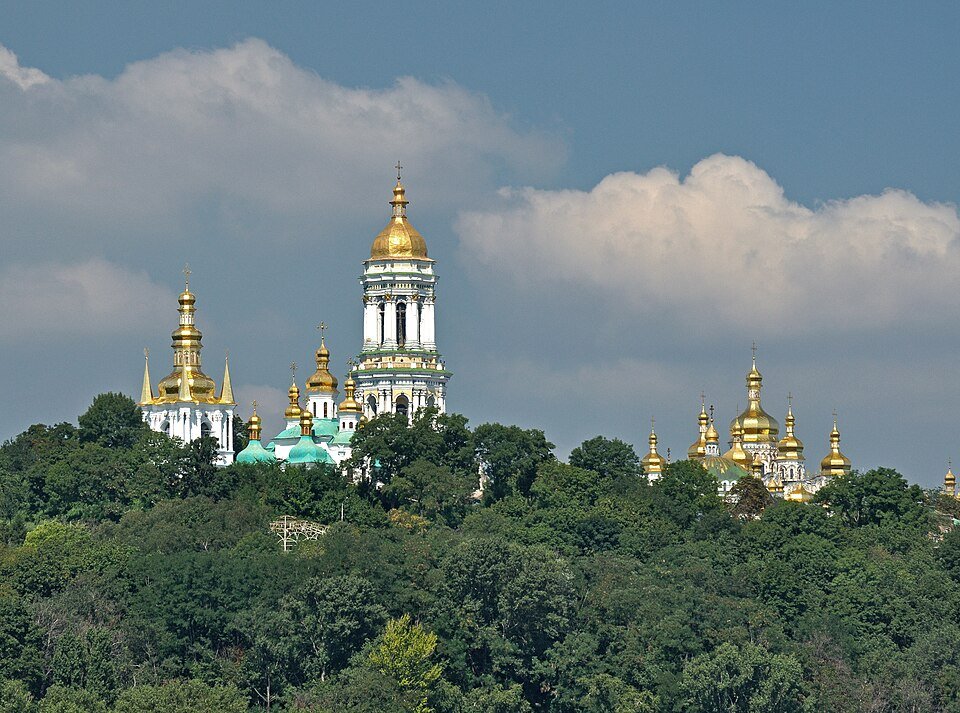
Moscow’s missile strike on the historic Kyiv Pechersk Lavra monastery complex was not a random act of war. It was a deliberate signal aimed directly at Europe as the continent finally begins to tighten the screws on Russia’s war machine.
At least 11 people are dead after a Russian overnight barrage of missiles and drones slammed into the UNESCO World Heritage site on June 14-15. The Dormition Cathedral, the architectural and spiritual heart of the 11th-century monastery, was set ablaze. Among the dead are five rescue workers who were responding to the initial attack in Kharkiv, illustrating how Moscow’s escalation cuts a wide and murderous swath.
Ukrainian President Volodymyr Zelenskyy said Russia “deliberately” targeted the site. Moscow, predictably, denied responsibility. But the timing tells a different story.
This strike lands at a specific inflection point in the war. Days earlier, the European Union proposed its 21st sanctions package, including an entry ban on Russian combatants. The United Kingdom seized a Russian shadow fleet tanker in the English Channel, a move that directly threatens Moscow’s ability to move oil revenue through unregulated channels. European capitals, after years of halting indecision and internal division, are finally moving to starve the Kremlin’s war economy by targeting the ghost fleet of uninsured, often aging tankers that Russia uses to evade the G7 oil price cap. Conservative estimates put the shadow fleet at several hundred vessels, and every seizure represents a direct hit on the financing of the invasion.
The Kremlin’s response was not to de-escalate. It was to reach for its heaviest ordnance and aim it at one of the most culturally significant sites in Eastern Europe.
This is the pattern that has repeated since the full-scale invasion began in 2022. Every meaningful increase in Western pressure triggers a Russian escalation calibrated to shock and horrify. Sanctions on energy? Strike a power grid. Tanks to Ukraine? Target a civilian mall. Now, with Europe threatening the shadow fleet and barring Russian soldiers from EU soil, Moscow answers by setting a UNESCO monastery on fire.
The Pechersk Lavra is not a military target. It is not a command center or an ammo depot. It is a monastery founded in 1051, a UNESCO World Heritage site, a pilgrimage destination for Orthodox Christians across the world, and a symbol of Ukrainian cultural identity that survived the Mongol invasion, the fires of World War II, and decades of Soviet persecution. Its catacombs hold the mummified remains of saints. Its golden domes have defined the Kyiv skyline for nearly a millennium. Striking it serves no tactical purpose. It serves a strategic one: Moscow is telling Europe that there is no pressure it will not match with atrocity, no line it will not cross, no symbol too sacred to burn.
This is a cultural war crime by any legal definition. The Rome Statute recognizes intentionally directing attacks against historic monuments and cultural institutions as a war crime, especially when they are UNESCO-designated. Russia signed that statute. It has since withdrawn, but that does not erase the legal reality of what just happened.
The message is unmistakable. Europe can seize tankers and ban soldiers, but Moscow will respond by destroying heritage, killing rescuers, and proving that it still holds escalation dominance. The question for European leaders is whether they have the stomach to see this through. Every half-measure has been met with barbarism. Limited sanctions brought limited war crimes. Full economic pressure now brings cultural annihilation. The only remaining option is to go all the way, because the Kremlin has made clear it will only respond to overwhelming force, not calibrated pressure aimed at avoiding escalation.
The fires at the Pechersk Lavra are still smoldering. So is the question of whether Europe will treat this as a reason to retreat or a reason to finally commit.