

Space Mirrors Are Coming: Reflect Orbital’s First Orbital Mirror Gets FCC Green Light for a 50,000-Satellite Constellation
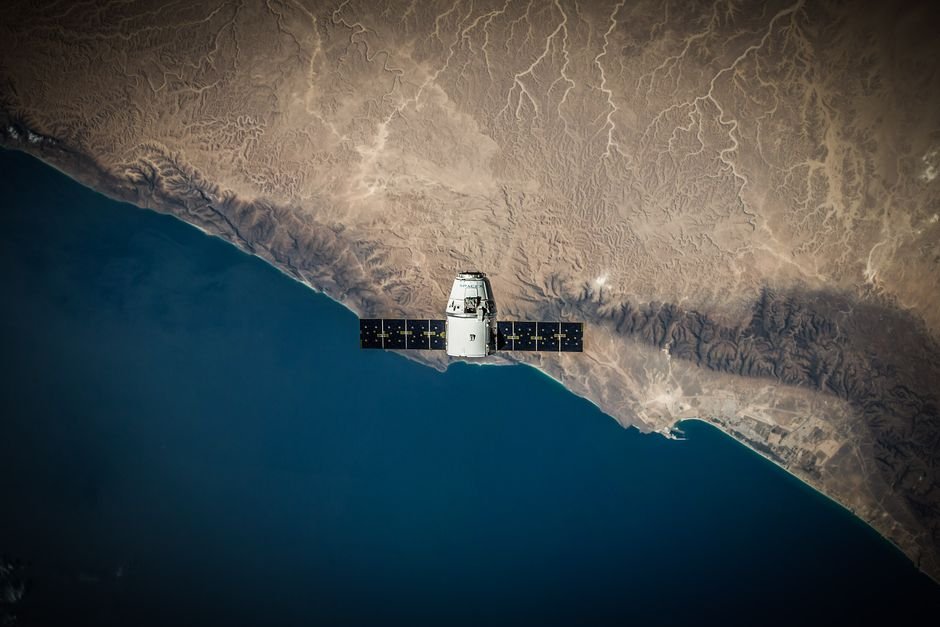
Featured image: [Artist’s concept of a Reflect Orbital mirror satellite reflecting sunlight down to Earth; credit: Reflect Orbital]
A California startup just got federal permission to launch the first of what could become tens of thousands of sunlight-reflecting mirrors into low Earth orbit. To its supporters, Reflect Orbital represents a clean-energy breakthrough. To astronomers, environmentalists, and some wildlife researchers, it is an uncontrolled experiment with the night sky.
The U.S. Federal Communications Commission granted Reflect Orbital a license to launch and operate Eärendil-1, its first demonstration satellite equipped with an 18-meter (60-foot) reflective mirror. The company plans to launch the test satellite later this year and, if successful, deploy up to 50,000 or more mirror-craft by 2035.
The Promise: Sunlight on Demand
Reflect Orbital’s concept is simple in theory: place large mirrors in orbit that beam sunlight down to specific locations on Earth after dark. Each reflected beam would be roughly four times brighter than the full moon, concentrated into a spot on the ground.
The company cites several applications. Search and rescue teams could use the light to locate missing persons at night. Urban lighting could become safer and more evenly lit without carbon emissions. Construction crews could work through the night, potentially halving project timelines. And solar farms could generate electricity after sunset, boosting output from existing infrastructure.
“This license is the first step toward rigorously testing our technology’s efficacy and the safeguards we have developed,” said Ben Nowack, co-founder and CEO of Reflect Orbital. “We are excited to demonstrate how our technology works and to introduce transformative, clean technology the world urgently needs.”
The company claims the light is not bright enough to start fires or harm eyes, even when viewed through a telescope, and cannot be concentrated past maximum natural sunlight irradiance.
The Cost: A Brightened Night Sky
But many see a darker side. Each beam at four times the brightness of the full moon is not a narrow spotlight; atmospheric scattering means the glow will extend well beyond the targeted area. With tens of thousands of mirrors in orbit, critics argue the cumulative effect could permanently alter the night environment.
Astronomers are among the most vocal opponents. The concerns mirror those raised by Starlink and other satellite megaconstellations, but with an added twist: Starlink produces light pollution as an unfortunate byproduct of communications; Reflect Orbital’s mirrors produce light pollution by design.
“If this project reaches the scale they are talking about, it could permanently scar the night sky,” said Michael Brown, associate professor of astronomy at Monash University, who has studied the impact of satellite constellations. “Unlike satellites that reflect sunlight accidentally, these ones are built to do it on purpose.”
Wildlife researchers have also raised concerns. Nocturnal animals, migratory birds, and insects that rely on natural darkness for navigation, feeding, and reproduction could be affected over large areas. A study published in Science earlier this year on ecological risks of orbital solar reflectors warned that the effects could be felt “on a planetary scale.”
The Company’s Safeguards
Reflect Orbital says it has designed for safety in three ways: the light is contained within the spot on the ground, the light can be turned off quickly and at any time, and the company can intentionally avoid sensitive areas like research observatories or protected habitats.
“We design for safety in three ways,” the company states. “The light is contained within the spot, the light can be turned off quickly and at any time so that none of it reaches the Earth, and we can intentionally avoid sensitive areas like research observatories or protected habitats.”
A Regulatory Precedent
The FCC license for Eärendil-1 is the first of its kind for an orbital mirror system, setting a regulatory precedent. Environmental groups and some members of Congress have called for a more comprehensive environmental review before any expansion beyond the single test satellite, arguing that the National Environmental Policy Act (NEPA) should apply to projects that could alter nighttime lighting conditions across large geographic areas.
For now, Reflect Orbital has permission for one mirror. But the company’s long-term plan calls for 50,000, and the FCC license could open the door for many more. Whether that future represents clean-energy progress or environmental disruption may depend on what happens next, and how regulators, scientists, and the public choose to respond.