

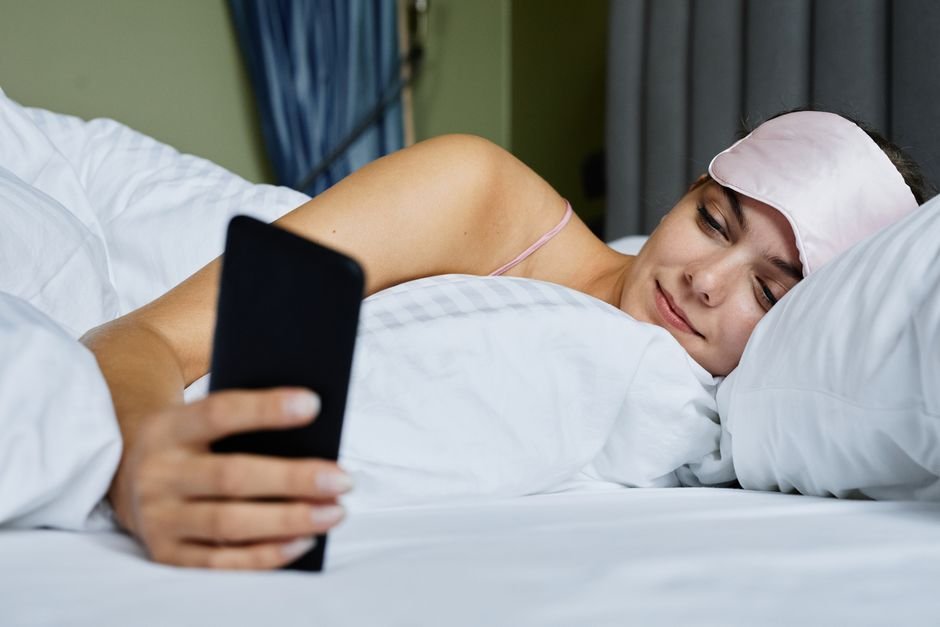
Every teenager and young adult has heard the warning: scrolling social media before bed will ruin your sleep. The advice feels intuitive, but the evidence behind it has been surprisingly muddled. Most previous studies have relied on self-reported screen time and subjective sleep ratings, both of which are notoriously unreliable. Could the real relationship be more complicated than a simple “screens are bad” story? A new study published in the Journal of Sleep Research set out to answer that question with rigorous objective measurements, and the results reveal a picture that is both clearer and more nuanced than what came before.
What They Found
Researchers led by Bothe and colleagues recruited 23 healthy males aged 14 to 25 (average age 18.09) and tracked them over 14 consecutive days. Nine of those days took place in the participants’ own homes; four included overnight stays in a sleep laboratory. This hybrid design gave the team both naturalistic data from real-world conditions and controlled measurements from the lab.
The study used MotionWatch 8 actigraphy devices to capture objective sleep metrics, while participants also kept sleep diaries and completed the Karolinska Sleepiness Scale for subjective assessments. Crucially, social media use was not self-reported. Instead, the team used a specialized app called Murmuras to automatically track time spent on Instagram, Snapchat, X (formerly Twitter), and Pinterest.
The results split into two distinct categories: binary use (any social media before bed versus none) and duration effects (how much time was spent).
Binary use effects. On nights when participants used any social media before bed, objective actigraphy showed significant disruptions: lower sleep efficiency, more awakenings, and greater sleep fragmentation. All of these effects were statistically significant at p < 0.01, meaning the probability they occurred by chance is less than 1 percent.
Duration and the weekend effect. The duration of social media use told a more specific story. Longer pre-bedtime scrolling was linked to lower sleep efficiency (p = 0.030), longer sleep onset latency (p = 0.016), and greater fragmentation (p = 0.039) — but only on weekends. On weeknights, duration had no statistically significant impact on objective sleep measures.
This weekend effect was quantitatively meaningful. For every additional 10 minutes of social media use before bed on weekends, sleep efficiency dropped by approximately 2.4 percentage points. Given that weekend nights are often when young people are already prone to irregular sleep schedules, this additional disruption is not trivial.
The big surprise: a subjective-objective dissociation. Perhaps the most striking finding is what the participants themselves reported. Despite the objective disruptions detected by actigraphy on weekend nights, participants did not perceive their sleep as worse. Their subjective sleep diaries and sleepiness ratings showed no corresponding decline. This dissociation between what the devices measured and what the participants felt suggests that adolescents and young adults may be genuinely unaware of the damage social media is doing to their sleep architecture.
What the study did not find. The researchers also looked at total smartphone use (not just social media) and found no dose-response effects. The sleep disruption was specific to social media apps, not to screen time in general. This is a meaningful distinction: it suggests that the content and interactive nature of social media, rather than blue light exposure or screen brightness alone, may be the driving factor.
Why It Matters
These findings carry implications for how we think about adolescent sleep hygiene. If the problem is specific to social media, blanket “no screens before bed” rules may be both overly broad and less effective than targeted interventions aimed at social media behavior specifically.
The subjective-objective gap is particularly concerning from a public health standpoint. If young people cannot feel the sleep disruption that actigraphy detects, they have no internal signal telling them to change their behavior. A teenager who scrolls Instagram for 30 minutes on a Saturday night and then wakes up feeling fine is unlikely to connect that habit with whatever cognitive or metabolic costs accumulate silently beneath the surface. The study adds to a growing body of evidence that subjective sleep reports can miss real physiological disruption, especially in younger populations.
There is also a developmental angle worth noting. The adolescent brain undergoes critical remodeling during sleep, and the prefrontal cortex which governs impulse control and emotional regulation is particularly active during this period. If social media is systematically degrading sleep quality on weekends without the sleeper’s awareness, the cumulative effects across months or years could be substantial.
For clinicians and parents, the specificity of the finding matters. Telling a teenager to put their phone away entirely is often met with resistance. But the data suggest that removing or restricting just a few specific social media apps before bed, particularly on weekends, might produce meaningful improvements without requiring a total digital detox.
Limits
The study has several important limitations. The sample was small at 23 participants and exclusively male, which limits generalizability to females and to broader populations. The age range of 14 to 25 is wide, and developmental differences within that span could be significant. A 14 year old may respond to social media and sleep disruption very differently from a 25 year old.
The observational design means causality cannot be firmly established. While the statistical controls were robust, unmeasured confounders could explain some of the associations. For example, adolescents who use more social media before bed on weekends may also have different weekend schedules, different social environments, or different levels of physical activity, all of which affect sleep.
The study tracked only four social media platforms (Instagram, Snapchat, X, and Pinterest). It is not clear whether these findings generalize to other platforms such as TikTok, YouTube, or WhatsApp, each of which has different interaction patterns and content types.
Finally, the actigraphy-based measurements, while superior to self-report, are not as precise as polysomnography. Actigraphy may overestimate or underestimate certain sleep parameters, and the fact that the dissociation between objective and subjective measures was so pronounced raises the question of which measure best captures clinically meaningful sleep disruption.
Bottom Line
Pre-bedtime social media use, particularly on weekends, objectively disrupts sleep in adolescent and young adult males, even though the users themselves do not perceive any deterioration in their sleep quality. The effect is specific to social media rather than total screen time, and it is dose-dependent on weekends. Any social media use before bed is worse than none, and more use is worse than less, at least on weekend nights.
The takeaway for young adults and their families is not that smartphones are inherently harmful, but that the interactive, reward-driven nature of social media platforms may hijack the brain’s arousal system in ways that interfere with sleep onset and maintenance, even when the user feels fine the next morning. Awareness alone is unlikely to be enough, since the disruption appears to fly below the radar of subjective perception.
Source
Bothe, K., Schabus, M., Eigl, E.S., Kerbl, R., & Hoedlmoser, K. (2026). Effects of pre-bedtime social media use on objective and subjective sleep quality in adolescents and young adults. Journal of Sleep Research, e70405. Early View. https://doi.org/10.1111/jsr.70405
Open Access (CC BY 4.0)