

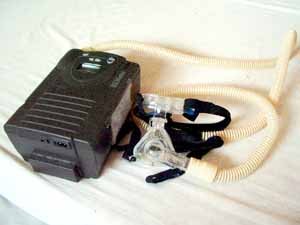
Untreated Sleep Apnea Nearly Doubles Parkinson’s Risk, VA Study Finds
A massive study of more than 11 million U.S. military veterans has produced some of the strongest evidence yet that untreated obstructive sleep apnea (OSA) significantly raises the risk of developing Parkinson’s disease, and that consistent use of CPAP therapy may substantially lower that risk.
Published November 24, 2025, in JAMA Neurology, the study was featured on the American Academy of Sleep Medicine’s Talking Sleep podcast, where host Dr. Seema Khosla interviewed lead author Dr. Lee E. Neilson, an assistant professor of neurology at Oregon Health & Science University and a staff neurologist at the Portland VA Health Care System.
The findings are already influencing how sleep and neurology clinicians think about the long-term consequences of untreated sleep apnea, a condition estimated to affect as many as one billion people worldwide.
What They Found
Dr. Neilson and senior author Dr. Gregory D. Scott, also at OHSU and the Portland VA, analyzed electronic health records from the Veterans Health Administration spanning 1999 to 2022. The dataset included more than 11 million veterans, making it one of the largest longitudinal analyses ever conducted on the relationship between sleep apnea and Parkinson’s disease.
The central finding was stark: veterans with untreated OSA were nearly twice as likely to develop Parkinson’s disease compared to those whose sleep apnea was treated with positive airway pressure (PAP) therapy, most commonly CPAP.
This association held even after the researchers adjusted for known risk factors and confounders including age, obesity, hypertension, diabetes, and other medical conditions that might independently influence Parkinson’s risk.
The study also examined the relationship between OSA diagnosis and Parkinson’s outcomes using multiple methods. Sleep apnea was identified through formal sleep testing, and Parkinson’s disease was tracked through clinical notes, medication records, and longitudinal follow-up across the health system.
While the observational design cannot prove causation, the dose-response pattern the researchers observed strengthened the case for a real biological link. Veterans who used their CPAP consistently and adherently showed a lower risk than those who used it intermittently, and those who never received treatment showed the highest risk of all.
The study further explored whether more severe OSA correlated with greater Parkinson’s risk. The data suggested that the relationship may track with the degree of oxygen desaturation and the frequency of apneic events, adding weight to the hypothesis that the mechanism involves repeated intermittent hypoxia.
Why It Matters
Parkinson’s disease is the fastest-growing neurodegenerative condition in the world, and no disease-modifying therapy currently exists. If OSA is a modifiable risk factor for Parkinson’s, as this study suggests, the public health implications are enormous.
The proposed mechanism is biologically plausible. Each time a person with sleep apnea stops breathing at night, oxygen levels in the blood drop. Over months and years, that repeated intermittent hypoxia may cause cumulative damage to vulnerable neurons in the brain.
“If you stop breathing and oxygen is not at a normal level, your neurons are probably not functioning at a normal level either,” Dr. Neilson said in an OHSU press release. “Add that up night after night, year after year, and it may explain why fixing the problem by using CPAP may build in some resilience against neurodegenerative conditions, including Parkinson’s.”
This framework positions CPAP not merely as a treatment for sleepiness and cardiovascular risk, but potentially as a neuroprotective intervention. The study also raises the question of whether treating sleep apnea can delay the onset of Parkinson’s or even reduce its incidence at a population level.
Dr. Neilson said the findings would change his clinical practice. For sleep physicians and neurologists already managing patients with OSA, the results provide a new and compelling reason to emphasize treatment adherence.
Dr. Scott, the senior author, noted in the same release that many veterans who use CPAP already report feeling better and less tired. “Perhaps if others know about this reduction in risk of Parkinson’s disease, it will further convince people with sleep apnea to give CPAP a try,” he said.
The number needed to treat to prevent one case of Parkinson’s was also discussed on the Talking Sleep podcast, though the exact figure depends on baseline risk in the population being treated. Even a modest reduction in risk, if applied across millions of people with OSA, could prevent thousands of cases of Parkinson’s each year.
Limits
As an observational study using electronic health record data, this work cannot establish that OSA causes Parkinson’s or that CPAP prevents it. Causal inference is limited by the potential for unmeasured confounding. For example, people who adhere to CPAP therapy may also be more likely to engage in other health-promoting behaviors that independently lower Parkinson’s risk.
The VA population is predominantly male and older than the general U.S. population, which may limit generalizability to women, younger adults, and non-veterans. The study also relied on clinical documentation of Parkinson’s rather than standardized research assessments, which could introduce misclassification.
The analysis did not control for every potential confounder, and while the researchers adjusted for many known risk factors, residual confounding is always a concern in retrospective database studies.
The study also did not examine non-PAP therapies for OSA, such as oral appliances, positional therapy, or hypoglossal nerve stimulation. Whether these treatments confer similar neuroprotective benefits is unknown. And as with any observational finding, replication in prospective clinical trials would significantly strengthen the evidence base.
A tangential discussion on the podcast also touched on whether the relationship between OSA and Parkinson’s might differ from the well-known connection between idiopathic REM sleep behavior disorder (RBD) and synucleinopathies. The researchers distinguished trauma-related RBD from the idiopathic form, noting that the pathways to neurodegeneration may differ.
Bottom Line
Untreated obstructive sleep apnea is associated with a significantly higher risk of developing Parkinson’s disease, and consistent CPAP use appears to lower that risk substantially. While the study is observational and cannot prove causation, the size of the dataset, the consistency of the finding across subgroups, and the biological plausibility of the hypoxia mechanism all strengthen the case that OSA is a modifiable risk factor for Parkinson’s.
For the estimated one billion people worldwide with sleep apnea, and the millions who are currently untreated, these findings add a powerful new incentive to seek diagnosis and adhere to therapy. CPAP may do more than help you breathe at night: it may help protect your brain for decades to come.
Source
Neilson LE, Scott GD, et al. Obstructive Sleep Apnea, Positive Airway Pressure, and Implications of Early Treatment in Parkinson Disease. JAMA Neurology. November 24, 2025. doi:10.1001/jamaneurol.2025.4691
This article is based on the AASM Talking Sleep podcast (Season 8, Episode 9) featuring an interview with Dr. Lee Neilson by host Dr. Seema Khosla, as well as the OHSU press release and the original study published in JAMA Neurology.