

Oil Markets Now Move on Trump’s Posts, Not Supply and Demand
The oil market is not responding to supply and demand. It is responding to whatever Donald Trump posts on social media.
On Thursday, Brent crude was trading above $93 a barrel. Then Trump announced he had canceled planned strikes on Iran and claimed a “great settlement” was near. The price fell to $85. By Friday afternoon, Iranian state media pushed back on his account, and the price climbed back above $89. In 24 hours, the most important commodity on earth swung by nearly 10 percent based on the words of one man.
This is not how markets are supposed to work. But after 105 days of the US-Iran war, the global oil market has stopped being a mechanism for matching supply with demand. It has become a speculation machine driven by Trump’s Truth Social posts, Iranian press statements, and Pakistani mediation updates. The underlying physical reality — how much oil is actually moving through the Strait of Hormuz, how full the world’s storage tanks are, what happens if the war continues — has become almost secondary.
The gap between the financial market and the physical market is now grotesque. Semafor reported in April that the disconnect was already severe: futures prices, driven by events and Trump tweets, were trending down, while physical barrels traded at huge premiums as refiners scrambled for immediate supply. Saudi Arabia’s Arab Light crude was selling to Europe at a $27.85 premium to the Brent benchmark, against a 65-cent discount the previous month. At the extremes, you could buy a barrel of crude for $78 in Kansas or pay $286 in Sri Lanka. The war had fractured the single global oil market into a collection of local emergencies.
That was two months ago. The gap has only widened since. Every time Trump posts about a deal, Brent futures drop. Every time Iran denies a deal is done, they bounce back. Traders have learned to watch Truth Social, not the weekly inventory reports from the US Energy Information Administration.
The Guardian reported Friday that Brent “tumbled” to $85 before recovering to $89 as contradictions emerged between Trump’s claims and Iran’s denials. “Headlines are driving the market once again,” an analyst at PVM Oil Associates told the paper. This is the polite way of saying that the world’s most important energy benchmark is now hostage to the credibility problem at the heart of the peace process: nobody knows whether Trump’s “great settlement” is real because he has declared victory prematurely so many times before.
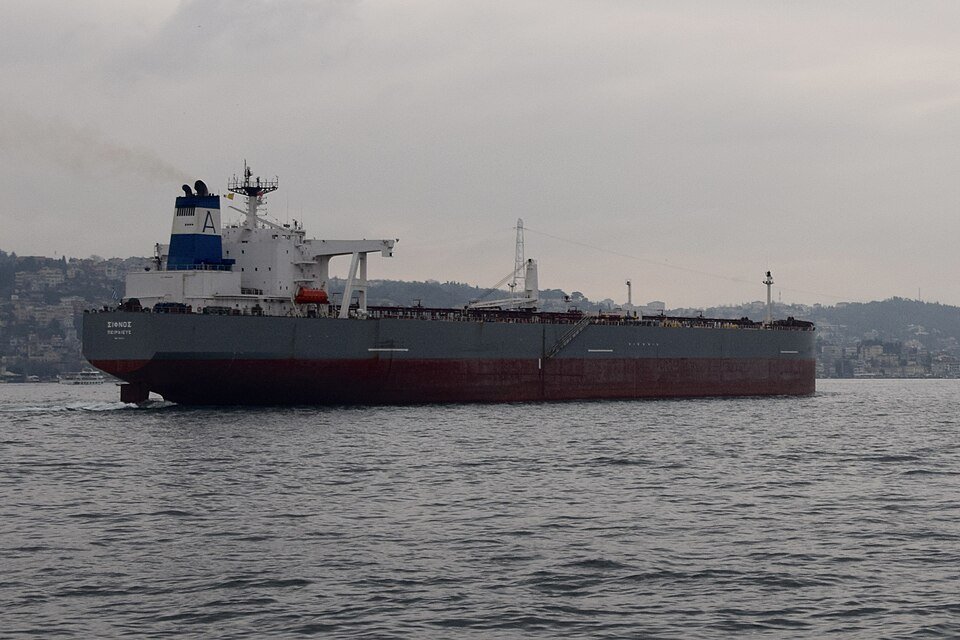
The physical market knows something the futures market keeps ignoring: the Strait of Hormuz is still only partially open. Iran has not lifted its restrictions. The UAE has agreed to unlock billions of dollars for Iran, but that money has not moved. The “dark transits” — covert oil shipments sneaking through the blockade — are a trickle, not a replacement for the 20 million barrels per day that normally pass through the strait. China has cut its imports, which has helped rebalance paper markets, but that is demand destruction, not a cure.
Goldman Sachs still expects oil to average $90 a barrel in the last quarter of the year. The bank lowered its 2027 forecast by $5 to $80, citing higher supplies from the Americas and lower demand. But those are analysts’ models, drawn from a world where supply and demand still determine price. That world has not existed since February 28.
The oil market has always been vulnerable to geopolitics. What is different now is the speed and shallowness of the reaction. A single Truth Social post can move the price of Brent by $5 in minutes. A carefully argued analysis of global inventory levels, published by the International Energy Agency, moves it by pennies. The market has stopped processing information. It is processing sentiment.
Until a deal is actually signed — not announced, not claimed, not “subject to finalization,” but signed — the disconnect will persist. And even after a deal, the physical market will take weeks or months to normalize. What goes down on a tweet cannot go back up on a tweet alone.
- George, 1ban.news