

WASHINGTON/TEHRAN — Tehran and Washington are not close to a deal. The ceasefire is a pause, not a peace. And the Strait of Hormuz — the narrow throat through which a fifth of the world’s oil passes — is now a weapon both sides are holding.
What Happened
On Friday, Donald Trump met his top advisers in the White House Situation Room. The purpose, as he posted on Truth Social beforehand, was to make a “final determination” on a framework for extending the ceasefire with Iran. The meeting ended late that evening. No announcement followed. A White House official told the BBC that the meeting had concluded. The official provided no further details.
Hours before the meeting, Trump laid out his demands on social media. Iran must agree never to possess a nuclear weapon. The Strait of Hormuz must be reopened for “unrestricted shipping traffic, in both directions.” Any mines in the strait must be removed. Iran must allow the United States to remove and destroy its enriched uranium. “No money will be exchanged, until further notice,” Trump wrote.
The next day, Iran responded. The Khatam al-Anbiya Central Headquarters — the operational command of Iran’s armed forces — issued a statement, reported by Iranian media and covered by Al Jazeera. It said: “The management of the Strait of Hormuz is exercised with full authority by the Armed Forces of the Islamic Republic of Iran.” All ships and tankers, the statement said, must travel through designated routes and obtain permission from the Islamic Revolutionary Guard Corps Navy. Any violation “will seriously jeopardise the security of their traffic.”
On the same day, Iran’s semi-official Tasnim news agency reported that the U.S. naval blockade of Iranian shipping remains in place. Iranian vessels are still being stopped at the blockade line and receiving warnings from U.S. forces, according to Tasnim.
The Deal That Isn’t
On Thursday, U.S. officials had told the BBC that the two countries had agreed on a framework — a memorandum of understanding — pending approval from Trump and Iran’s leadership. The framework would reportedly extend the current 60-day ceasefire and launch talks on Iran’s nuclear programme.
But Iran’s Foreign Ministry spokesman, Esmaeil Baghaei, told state television on Friday that “no final agreement has been reached.” He said Tehran was “focused on ending the war, and there are no negotiations on the nuclear issue.”
Iran’s Fars news agency, citing informed sources, said Trump’s comments were a “mixture of truth and lies.” There was no provision to destroy nuclear materials in the memorandum of understanding, Fars reported. The agency also cited sources saying Tehran was demanding “the immediate release of $12bn” in frozen assets before moving to the next phase of negotiations. That figure matches what the New York Times reported on May 27: Iran is seeking $12 billion out of roughly $24 billion frozen abroad.
Iran’s chief negotiator, Mohammad Baqer Qalibaf, put it plainly on social media: “No trust in guarantees or words. No action will be taken before the other side acts. The winner of any agreement is the one who is better prepared for war the day after.”
The Strait and What It Carries
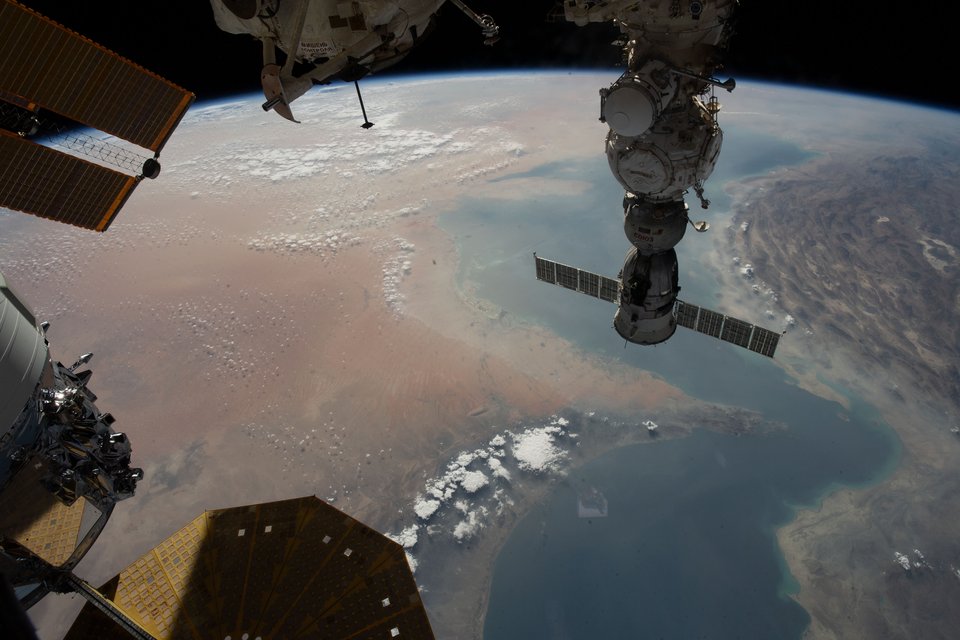
The Strait of Hormuz is a 34-kilometer (21-mile) wide channel between Iran and Oman. According to the International Energy Agency, nearly 15 million barrels of crude oil — about 34 percent of global crude oil trade — passed through it in 2025. The BBC reports that roughly 20 percent of the world’s total energy supplies are shipped through the strait under normal conditions.
On February 28, the United States and Israel launched strikes on Iran. Iran responded by attacking Israel and U.S.-allied Gulf states, and it effectively closed the strait. Global oil prices soared. The War on the Rocks analysis by Andy Polk, published May 29, notes that energy prices accounted for over 40 percent of the total increase in U.S. consumer prices in April 2026. The oil crisis, Polk writes, is being “layered on top of America’s new tariff-induced fragility.”
That is what is at stake in the strait. Not just Iranian pride or American prestige. The price of oil. The cost of everything that runs on oil or is made from it. Which is nearly everything.
The Two Positions
The United States says Iran must never possess a nuclear weapon. A White House official told the BBC: “President Trump will only make a deal that is good for America and satisfies his red lines. Iran can never possess a nuclear weapon.” Trump’s position, as stated on social media, also demands that Iran cease its control of the strait and allow U.S.-led removal of enriched uranium.
Iran says its nuclear programme is entirely peaceful. It denies seeking nuclear weapons. It says it is not negotiating on the nuclear issue. It demands the unfreezing of its assets — $12 billion, according to its negotiators. And it insists on retaining control of the Strait of Hormuz.
Mohsen Rezaei, an adviser to Iran’s Supreme Leader Mojtaba Khamenei, wrote on X: “As predicted, the President of the United States is betraying diplomacy for the third time. By continuing the naval blockade and making excessive demands in negotiations, he has once again proven that he is not inclined toward negotiation and is pursuing other objectives.”
Iran’s ISNA news agency reported that a plan “to implement Iran’s management and sovereignty over the Strait of Hormuz will soon be approved by parliament.”
The U.S. position on restarting the war was stated clearly by Defense Secretary Pete Hegseth. Speaking at a security summit in Singapore on Saturday, he said: “Our stockpiles are more than suited for that, both there and around the globe. We’re in a very good place.” U.S. Central Command posted that American forces “remain present and vigilant across the region.”
How We Got Here
The Joint Comprehensive Plan of Action — the Iran nuclear deal — was signed in 2015 between Iran and the P5+1 (the U.S., UK, France, Russia, China, and Germany). Iran agreed to limit its nuclear activities in exchange for the lifting of international sanctions. In 2018, during his first term, Trump withdrew the United States from the deal and reimposed sanctions. Iran responded by breaching the deal’s limits on uranium enrichment.
For years, there was no deal, no inspections, no diplomatic process — only sanctions and enrichment. In 2025, under the Biden administration, indirect talks had restarted but made no real progress.
Then came February 28, 2026. The U.S. and Israel launched military strikes on Iranian nuclear sites. CNN reported that Ayatollah Ali Khamenei, Iran’s supreme leader for 36 years, was killed in the strikes. Iran retaliated with missile attacks on Israel and U.S.-allied Gulf states. The strait was closed. Oil prices jumped. A war had begun.
On April 8, a two-week ceasefire was reached, mediated by Pakistan. It has been extended twice since. The current ceasefire runs on day-to-day extensions while negotiations continue — or, more accurately, continue to fail.
The Pieces That Do Not Fit
Both sides accuse the other of violating the ceasefire. On Thursday, Iran’s Islamic Revolutionary Guard Corps said it had targeted a U.S. air base in Kuwait that had been the source of earlier strikes on Bandar Abbas, Iran’s strategic port city near the strait. U.S. Central Command called the attack an “egregious ceasefire violation.”
Iran’s air defences also shot down a drone that, according to IRNA state news, “belonged to the US-Zionist aggressor enemy” on Saturday.
Behind the military posturing, the core issue is money and control. Iran needs its frozen assets. The U.S. demands Iranian submission on the strait and on enriched uranium. Neither side appears willing to move first. Iran’s negotiator said as much: “No action will be taken before the other side acts.”
The Lebanon Connection
The war is not only about Iran and the strait. Iran has said any ceasefire with the U.S. must include an end to the war in Lebanon, where Israel is fighting Hezbollah, the Iranian-backed militia. NPR’s Jane Arraf reported from Beirut on May 30 that Israeli forces have launched more than 3,000 strikes in the past week, compared to 187 from Hezbollah and its allies. Lebanon’s Ministry of Health says at least 3,300 people have been killed since the war began. UNICEF reports an average of 11 children killed or injured every 24 hours.
Iran will not sign a deal that leaves its ally under Israeli bombs. The U.S., for its part, has shown no interest in constraining Israel.
Bottom Line
The United States and Iran are not close to a deal. They are close to the end of a pause. Trump held his meeting, made no decision, and offered no clarity. Iran reasserted control of the strait and demanded its money. Both sides are armed, both are posturing, and neither trusts the other. The strait — through which a third of the world’s crude oil trade must pass — is a weapon in Iranian hands and a blockade under American guns. Nothing has been resolved. Nothing will be resolved until one side decides that the cost of no deal is higher than the cost of giving something up. Neither has reached that point.
Image: Strait of Hormuz from the International Space Station. Credit: NASA (Public Domain)