

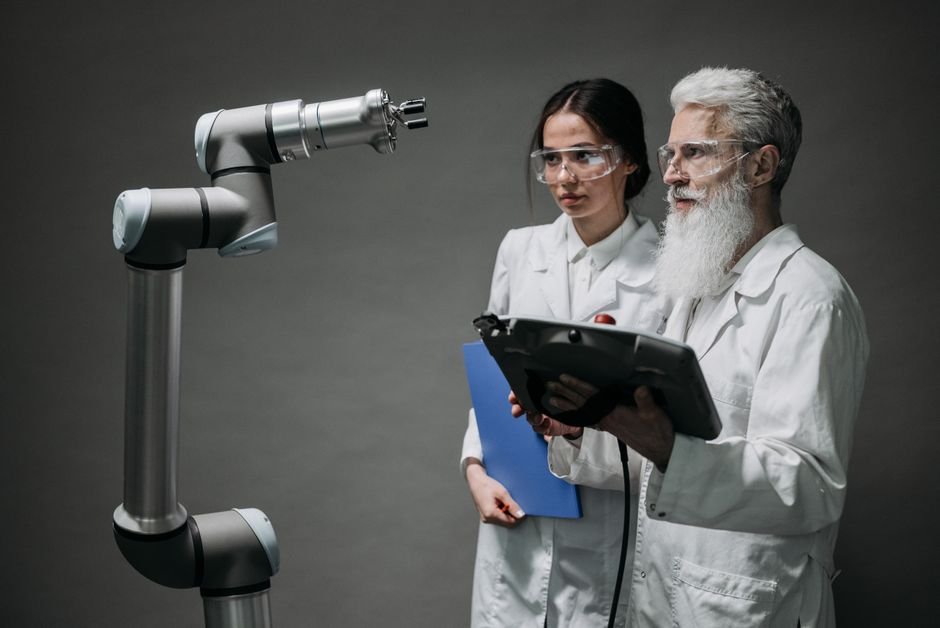
A year ago, the idea of an “AI scientist” was mostly conceptual. Today, a handful of agentic AI tools are crossing from demonstration to daily lab use, and a Nature news feature by Ewen Callaway provides a practical guide for researchers trying to figure out which one fits their needs.
The landscape, as presented, breaks down into three broad categories: general-purpose scientific workbenches, multi-agent hypothesis generation systems, and specialized open-source tools.
Claude Science
Anthropic’s Claude Science is the most broadly capable of the current offerings. It functions as a scientific workbench, literature review, data analysis, figure generation, and manuscript preparation within a single interface. It includes local Python, R, and shell execution, a built-in “reviewer” agent that cross-checks claims against execution records, and the ability to connect to HPC and SSH compute resources.
The most striking demonstration comes from Euan Ashley at Stanford. In 2010, his team of 31 scientists took nine months to perform the first clinical analysis of a human genome. Ashley gave Claude his genome and asked it to produce a clinical report. It took 30 minutes. The output correctly identified Alzheimer’s risk alleles and drug-metabolism variants at what Ashley considered a clinically actionable standard.
Claude Science is included in all paid Claude plans, from $20 per month for the Pro tier to $100-200 per month for the Max tier, with team and enterprise options available.
Co-Scientist
Google DeepMind’s Co-Scientist, published in Nature in May 2026, takes a different approach. It uses six specialized agents, Generation, Reflection, Ranking, Evolution, Proximity, and Meta-Review, plus a supervisor agent that orchestrates them in a debate-and-evolve cycle. Given a broad research question, the system surfaces testable hypotheses ranked by plausibility and novelty.
Cambridge immunologist Clare Bryant gave Co-Scientist a grant application and some preliminary data. It generated a hypothesis to mutate an innate-immune protein and test its impact on influenza infection. Bryant’s assessment: “It could have taken two years” for a human researcher to arrive at the same idea.
Gary Peltz at Stanford used Co-Scientist to identify existing drugs that could be repurposed for liver fibrosis, validating the predictions in organoid models and publishing the results in Advanced Science. On GPQA Diamond, a benchmark for graduate-level scientific reasoning, Co-Scientist’s top-rated hypothesis achieved 78.4% accuracy.
Co-Scientist is not yet publicly available. Researchers can register for experimental access through Google Labs.
Open-source alternatives
Biomni, developed by an academic team including Phylo co-founder Yuanhao Qu and described in Science, is an open-source tool designed for specific tasks like genomic analysis. It integrates with databases such as GeneCards for grounded biomedical queries. It is free.
Boltz, a London-based startup’s open-source protein design tool, was used in combination with Claude agents to design an antibody recognizing two therapeutic targets simultaneously, though the outputs have not yet been experimentally validated.
How to choose
Ashu Singhal of Benchling, the laboratory software platform, offers straightforward guidance based on project stage. For early hypothesis generation, start with Co-Scientist. For specific analytical tasks, genomic data analysis, literature synthesis, figure generation; start with Claude Science or Biomni.
The most important advice, according to Singhal, is to actually try them: “Less than 20% of labs have fully integrated AI scientists. It’s really important that people actually try these things out, rather than simply trusting what gets shared in headlines.”
Gabriele Corso of Boltz recommends beginning with small, verifiable tasks so outputs can be easily checked. “Worst case, you have to do them over.”
The article notes that all systems still require domain-expert review. None of the AI-generated hypotheses published to date have completed clinical trials, and data privacy remains a concern, particularly for labs working with sensitive clinical or proprietary data.
Sources
[1] Callaway, E. “Which ‘AI scientist’ suits your lab? A guide for the perplexed.” Nature (2026). https://www.nature.com/articles/d41586-026-02091-6