

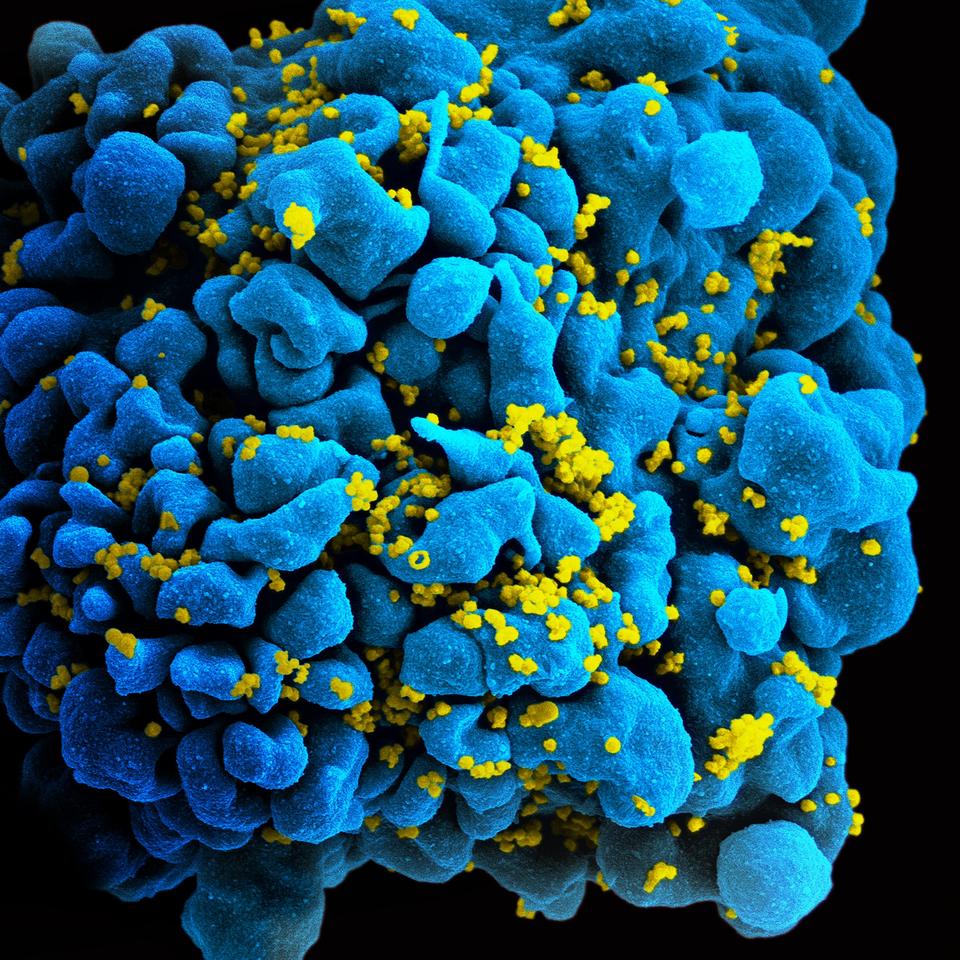
For decades, structural biologists studying viral surface proteins have faced a fundamental trade-off. To get high-resolution images of how antibodies bind their targets, they have needed to extract those proteins from the viral membrane and purify them. But removing a membrane protein from its lipid environment can alter its shape, particularly in the regions closest to the viral surface, exactly where some of the most important antibodies bind.
A team at Scripps Research has developed a platform that avoids this problem. By embedding full-length viral glycoproteins in nanoscale lipid discs, they can visualize the proteins in near-native membrane conditions using cryo-electron microscopy. The result is a view of antibody engagement that has been inaccessible with conventional methods.
The technique
The platform, published in Nature Communications by the lab of William Schief, uses membrane scaffold proteins (MSP1D1) to form nanodiscs, stable, roughly 10-nanometer-wide patches of lipid bilayer encircled by a protein belt. Viral glycoproteins are detergent-solubilized from cellular membranes, then mixed with the scaffold proteins and lipids. When the detergent is removed, the components spontaneously self-assemble into nanodiscs, with each glycoprotein embedded in its own patch of synthetic membrane.
The key advantage is that the nanodisc preserves the entire glycoprotein, including the membrane-proximal external region (MPER) and the transmembrane domain, sections that are typically removed or destabilized in soluble vaccine constructs. These regions are critical targets for broadly neutralizing antibodies against HIV.
What it revealed
The team applied the platform to two viruses: HIV-1 and Ebola.
For HIV, they resolved the structure of the envelope glycoprotein’s MPER bound to the broadly neutralizing antibody 10E8 at 3.5 angstroms by cryo-EM, the first time the full MPER epitope has been visualized in a membrane environment. The structure revealed that 10E8 makes contact with three components simultaneously: lipid headgroups in the nanodisc, the MPER peptide itself, and the gp41 ectodomain. This tripartite interaction was invisible in previous soluble constructs that lacked the membrane context.
The membrane environment stabilizes MPER in a specific conformation that exposes vulnerabilities not seen in detergent-solubilized or truncated forms. Antibodies can engage epitopes directly adjacent to the viral lipid bilayer that were previously masked.
For Ebola, the team validated that the same nanodisc platform works for the Ebola glycoprotein, demonstrating that monoclonal antibodies can identify and bind the protein in its membrane-mimetic environment.
Why it matters for vaccines
The nanodisc platform integrates naturally with the standard vaccine development workflow. The embedded proteins are compatible with antibody binding assays, B cell sorting, and high-resolution structural biology. This means the same platform used to discover a new antibody epitope can also be used to design and test immunogens that present that epitope.
For HIV vaccine design, the MPER region is one of a handful of conserved sites targeted by broadly neutralizing antibodies. If a vaccine could elicit antibodies like 10E8, it would need to present the MPER in exactly the membrane-associated conformation that the nanodisc captures. Previously, it was unclear what that conformation even was.
The caveats
The nanodiscs use synthetic lipid bilayers with defined composition, which may not perfectly replicate the curvature or lipid heterogeneity of real viral membranes. The scaffold protein belt is not part of the natural environment. The detergent solubilization step during assembly could affect labile protein conformations, though the results suggest the native structure is preserved.
The 3.5-angstrom resolution is good but not atomic; some side-chain details may be unresolved. The platform has been demonstrated on two viruses (HIV and Ebola), and generalizability to other enveloped viruses needs further validation.
The underlying paper was published February 10, 2026, approximately four months before this article. The findings are verified and the platform is established, but the results are not breaking news in the strictest sense.
Source: Rantalainen, K., Liguori, A., Ozorowski, G. et al. (2026). Virus glycoprotein nanodisc platform for vaccine analytics. Nature Communications, 17, 2561. DOI: 10.1038/s41467-026-68985-1
Corresponding authors: T. Schiffner, A.B. Ward, and W.R. Schief. Scripps Research, IAVI Neutralizing Antibody Center. PDB: 9OGM, 9OGL; EMDB: EMD-70471.