

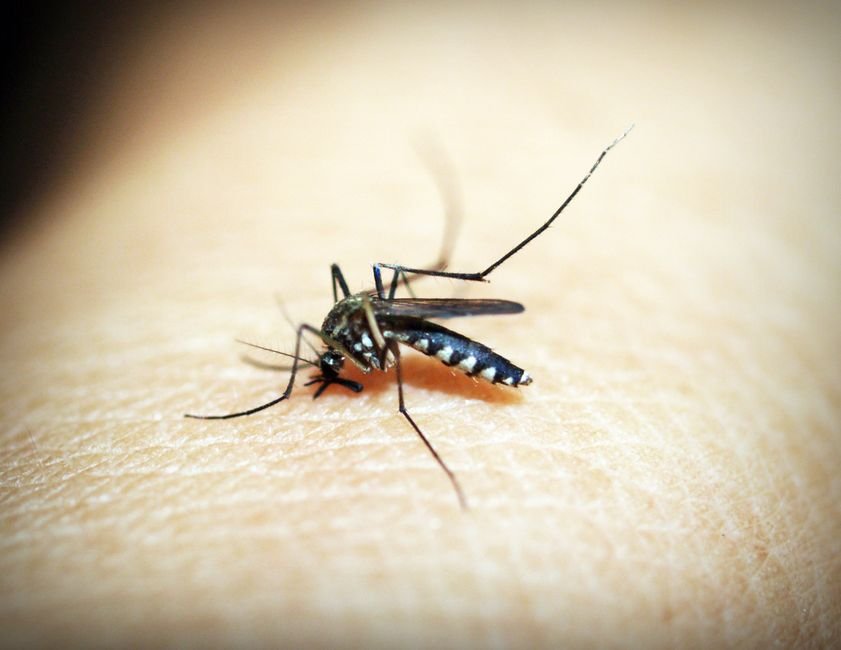
The Asian tiger mosquito, Aedes albopictus, was first detected in Connecticut in 2003 as a single female. By 2010, it had established a permanent population. Today it is one of at least 54 mosquito species found in the state, and it carries the capacity to transmit dengue, Zika, chikungunya, and malaria, diseases historically confined to tropical regions.
Its northward expansion is not an isolated event. As the climate warms, mosquito species that transmit pathogens are pushing into areas where they have never been documented, lengthening transmission seasons and putting new populations at risk. But the United States, according to public health experts, lacks the surveillance infrastructure to keep up.
A patchwork of programs
The U.S. relies on more than 1,000 local mosquito control agencies operating with varying budgets and capabilities. There is no national surveillance database that aggregates data on mosquito populations or the viruses they carry.
Connecticut is a rare exception. Its Mosquito and Arbovirus Surveillance Program, established in 1997, operates 91 fixed trapping sites statewide, identifying all captured mosquitoes to species level and testing them for viruses. Philip Armstrong, the program’s chief scientist at the Connecticut Agricultural Experiment Station, said the data reveals a steady influx of new species. “There are a number of new species that are creeping into our area,” he told Inside Climate News.
Other states lack even basic capacity. New York has no statewide mosquito surveillance program. Many counties have no monitoring infrastructure at all. A pilot program in St. Lawrence County was created in 2024 only after an outbreak of Eastern equine encephalitis, a rare but devastating virus that kills roughly 30% of those infected. Brian Leydet, a researcher at SUNY College of Environmental Science and Forestry, described the system as “sparse and disintegrated.”
“If the county doesn’t have money or resources, these programs fade away,” Leydet said. “If we don’t have these surveillance programs, then all we’re doing is responding to a problem when it’s already a problem, and that’s never how prevention works.”
What is at stake
The list of diseases expanding their range includes West Nile virus, already the leading cause of mosquito-borne disease in the U.S. Northeast, with more than 3,300 deaths since it arrived in 1999, and Eastern equine encephalitis, which Armstrong said is now showing “cycles of increased virus activity we didn’t see before historically.”
Tropical diseases such as dengue, Zika, and chikungunya are predicted to become established in temperate areas as warming continues. In Connecticut, mosquitoes were found testing positive for West Nile virus in Milford as of July 2026.
Rising temperatures accelerate mosquito development, enabling multiple reproductive cycles per year in areas where previously there was only one. “As the temperatures rise, you can actually speed up mosquito development, so you can have multiple cycles of mosquitoes every year in new areas,” Leydet said.
The cost of monitoring
Armstrong’s team uses carbon dioxide traps to attract mosquitoes, relying on dry ice that can be difficult to obtain in rural areas. Some teams have resorted to producing their own. Dan Markowski of the American Mosquito Control Association said the funding gap is the central problem. “It all obviously comes back to money.”
A bill introduced in the New York State legislature in 2025 would create a comprehensive statewide surveillance program. No decision has been reached. Meanwhile, the window between detecting a new virus in mosquitoes and seeing human cases is narrow. “By the time we learn about human cases, it’s usually too late to do anything,” Armstrong said.
Sources
- Inside Climate News (republished by Ars Technica): “As mosquito ranges expand, better monitoring is key to preventing disease” (July 16, 2026)
- Armstrong, P.M., et al. “Northern range expansion of the Asian tiger mosquito (Aedes albopictus): Analysis of mosquito data from Connecticut, USA.” PLOS Neglected Tropical Diseases (2017). DOI: 10.1371/journal.pntd.0005623