

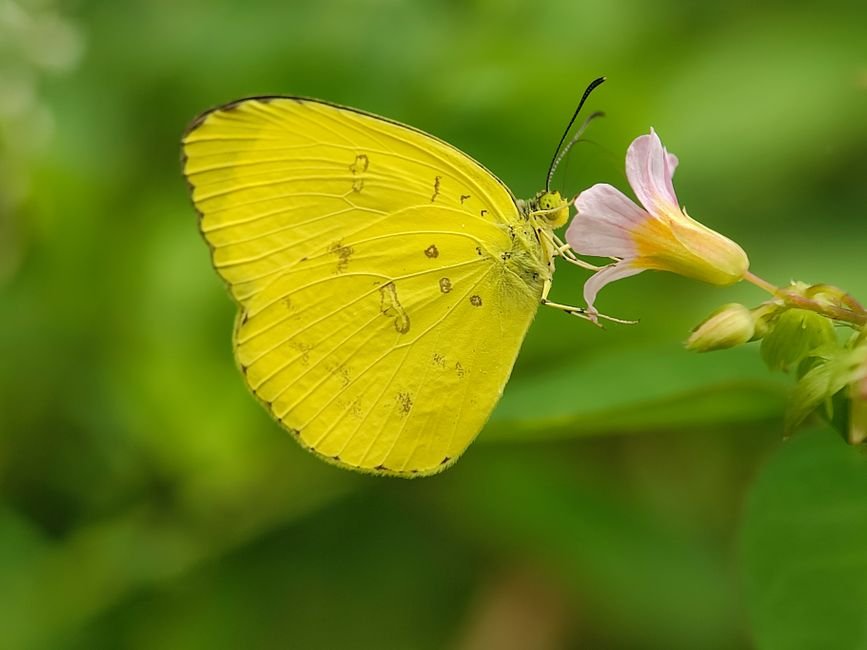
Britain’s hottest and sunniest spring on record has created ideal conditions for butterflies, and conservationists are hoping the public will help document what could be a banner summer for the country’s most colorful insects.
The Big Butterfly Count, an annual citizen science project run by Butterfly Conservation, opened on July 18 and runs through August 10. Participants are asked to spend 15 minutes in a garden, park, or countryside, counting the butterflies they see. After a disastrous 2024, which Butterfly Conservation called a “butterfly emergency” with record-low numbers, the organization is optimistic.
A good spring for the early species
Richard Fox, head of science at Butterfly Conservation, said two species that emerged early in the year had an exceptionally strong start. The Holly Blue and the Red Admiral “had a really good spring, so that bodes well for a bumper summer,” Fox told the BBC.
The UK experienced its warmest and sunniest spring on record in 2025, according to Met Office data, with a mean temperature of 9.5 degrees Celsius (49 degrees Fahrenheit), 1.4 degrees above the long-term average, and 653 hours of sunshine, 43 percent above normal. That combination of warmth and sun is crucial for butterflies, which are cold-blooded and depend on solar radiation to regulate their body temperature for flight and feeding.
The challenge of drought
The picture is not entirely positive. The same dry conditions that brought record sunshine also meant a lack of rain, and by July drought conditions had been declared in parts of England. Fox noted that the dry weather could affect the caterpillar food plants that butterfly larvae depend on, with grass dying and plants wilting in some areas.
Butterflies are resilient to short-term weather fluctuations, and the warm spring gave the adult population a strong start that could carry through the summer. “We don’t know yet what the summer holds for our butterflies, that’s why we need people to go out and take part,” Fox said.
Citizen science in action
The Big Butterfly Count is one of the largest citizen science projects in the UK, producing data that scientists use to track long-term population trends. The 2024 count recorded an average of just 7 butterflies per 15-minute session, the lowest in the survey’s history, reflecting a particularly poor year driven by a cold, wet spring.
The 2025 count ultimately recorded nearly 1.7 million butterflies and moths, with an average of 10.3 per session, better than 2024 but still below the long-term average, reflecting the ongoing decline that has seen more than half of Britain’s butterfly species decrease in abundance since comparable records began.
For now, the warm spring offers reason for optimism. “We’re hoping to see a big uplift,” Fox said.
Sources
- BBC News: “Britain set for butterfly boom after hot spring” (July 2026)
- Met Office: Spring 2025 seasonal assessment (warmest and sunniest spring on record)
- Butterfly Conservation: Big Butterfly Count data