

In 1776, the Moon Was a Clock, a Calendar and a Streetlight, and It Was 31 Feet Closer to Earth
Featured image: Illustration of the waning gibbous moon over a colonial American landscape, July 1776; credit: NASA/Historical Society
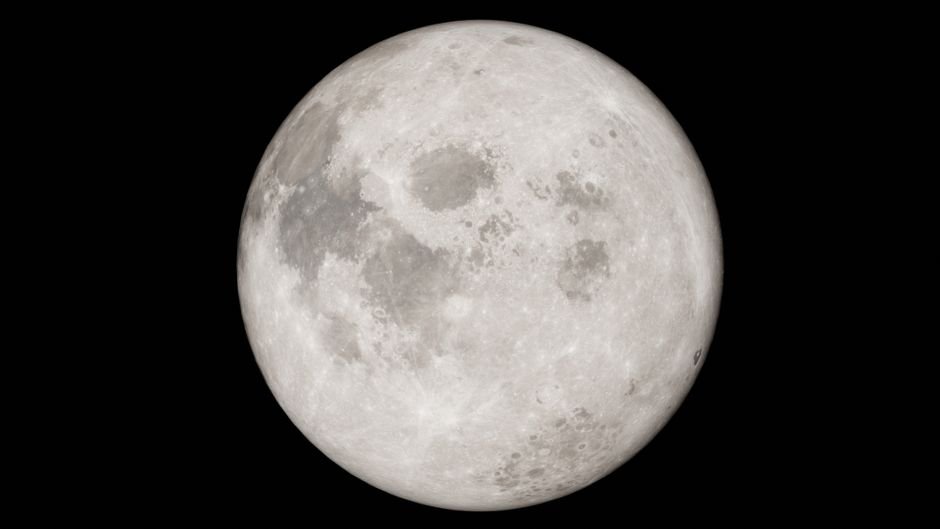
On July 4, 1776, as the Second Continental Congress adopted the Declaration of Independence, a waning gibbous moon roughly 88 to 92 percent illuminated rose in the night sky over Philadelphia. That Moon was not only a fixture of the natural world but an essential tool for daily life, it sat about 9.4 meters (31 feet) closer to Earth than it does today.
The Moon is drifting away from Earth at a rate of about 3.8 centimeters (1.5 inches) per year due to tidal friction, a phenomenon measured with millimeter precision using laser retroreflectors placed on the lunar surface by Apollo 11, 14 and 15 astronauts. Over 250 years, that steady recession adds up to roughly 9.4 meters (31 feet). However, as Seth McGowan of the Adirondack Sky Center and Observatory noted, the Moon’s elliptical orbit creates a monthly distance variation of about 43,000 kilometers (26,000 miles), so “the tiny 31-foot shift over 250 years is entirely swallowed up by that massive monthly variance.”
The Moon as Clock, Calendar and Streetlight
In 1776, before artificial lighting, standardized time zones, and digital calendars, Americans depended on the Moon for timing. Travel was planned around moonlight availability: a bright moon meant safe nighttime journeys, while a new moon meant staying put. Mariners tracked the Moon’s pull on tides for navigation. Farmers and Indigenous communities used lunar cycles to inform seasonal changes, planting, and harvesting.
Almanacs such as Benjamin Franklin’s Poor Richard’s Almanack provided moon phases, rise and set times, eclipse predictions, and tide tables, the essential reference apps of their era. Even military strategy during the Revolutionary War was influenced by moonlight: moonlit nights aided troop movement but could also expose positions to enemy forces.
The full Moon preceding Independence Day had occurred on July 1, 1776. By the evening of July 4, the waning gibbous Moon was well past full, rising after sunset and providing substantial natural light in the late-night and early-morning hours.
What Astronomers Knew and Did Not Know
By 1776, Galileo’s telescopic observations had already revealed mountains and craters on the Moon, and Newton’s laws explained its orbit and tides. But no one in 1776 knew the Moon was slowly moving away from Earth, or that a day was approximately 5.75 milliseconds shorter than it is today due to the same tidal interaction that drives the Moon’s recession.
That tidal mechanism works like a cosmic gravitational leash: the Moon’s gravity pulls on Earth’s oceans, creating a tidal bulge. Because Earth rotates faster than the Moon orbits, the bulge leads ahead of the Moon, pulling it forward into a higher, wider orbit. The energy transfer also slows Earth’s rotation by roughly 2.3 milliseconds per century.
The Apollo Retroreflector Legacy
The precise 3.8 centimeters per year recession rate was only confirmed after Apollo astronauts placed mirror arrays on the Moon between 1969 and 1971. Observatories at Apache Point in New Mexico and Grasse in France fire lasers at these reflectors and measure the round-trip time of about 2.5 seconds, calculating the Earth-Moon distance with millimeter precision. Two Soviet Lunokhod rovers also carry reflectors, providing additional data points for this ongoing measurement.
Over very long timescales, the Moon’s recession will eventually end total solar eclipses, as the Moon becomes too small in angular size to fully cover the Sun. But that day is billions of years away; in about 5 billion years, the Sun will become a red giant and consume both worlds anyway.