

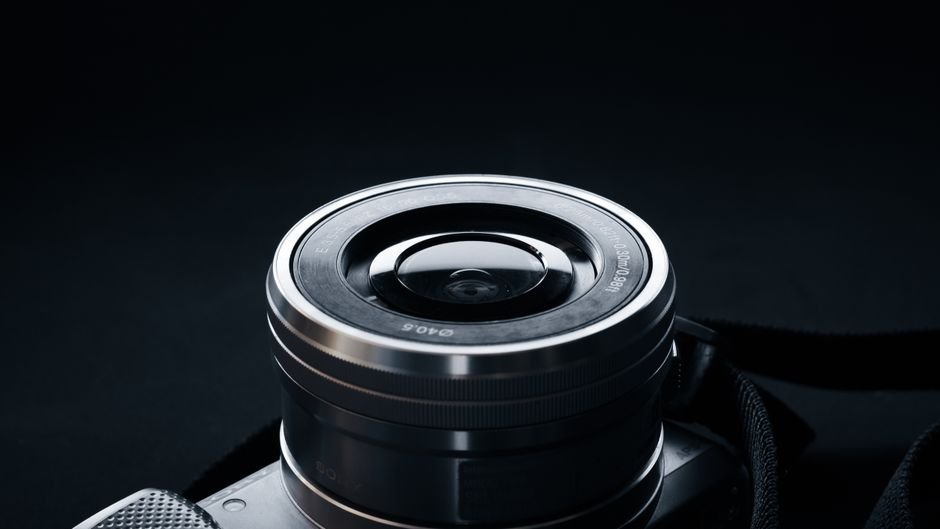
A camera built largely from commercial parts has been operating in orbit for about two years, and its developers argue the design can remove one of the biggest cost barriers in space-based astronomy: the price of a flight-grade ultraviolet detector.
Space-grade astronomy cameras with proven performance in orbit have long been expensive, and ultraviolet observations have been held back further by the low quantum efficiency of most sensors at those wavelengths. The LUVCam program, led from the Dunlap Institute at the University of Toronto, is built around a large-format, commercial-off-the-shelf CMOS sensor, the Gpixel GSENSE4040BSI, packaged with custom readout electronics, firmware and structure. The 4096 by 4096 pixel detector with 9 micron pixels reaches a peak quantum efficiency of 90% at 580 nanometers and 55% across the ultraviolet from 200 to 300 nanometers, a range where silicon sensors have historically been inefficient. Measured read noise in high-gain mode is 1.7 electrons, below the vendor specification of 2.3. The camera is ITAR-free and, the authors write, cheap to fabricate.
The cost argument rests on a mismatch in the economics of space astronomy. Launch costs have fallen by more than an order of magnitude, to the point where a half-meter telescope’s spacecraft bus and launch can be procured for under 5 million dollars. Instrument prices have not followed. A January 2023 workshop organized by the American Astronomical Society identified the absence of a low-cost, high-performance UV/optical camera with space heritage as one critical barrier, the paper notes.
The first LUVCam flew as a technology demonstration on GRBBeta, a 2U CubeSat built as a gamma-ray burst detector testbed, on the inaugural flight of the Ariane 6 rocket on July 9, 2024. The payload, 96 by 96 by 44.5 millimeters and 287 grams, includes a tiny custom UV telescope folded into the remaining volume: a 55.77 millimeter focal length triplet with a 240 to 310 nanometer bandpass, a 9.5 degree field of view and an entrance aperture smaller than the sensor itself. The team originally planned a sealed camera with an LED flat-field source, then noticed that one GRBBeta side panel carried no solar cells or antennae and replaced it with a radiator and a path to open sky.
The technology demonstration requirements were deliberately modest: verify noise performance, radiation robustness, and survival of launch and thermal cycling, operate for at least 90 days, and cost no more than 50,000 Canadian dollars, excluding non-recurring engineering. Design to delivery took under a year. The camera reached Technology Readiness Level 7, meaning the technology has been demonstrated in the space environment, and characterization is in progress.
Radiation testing guided the design. In accelerated proton irradiation at the TRIUMF facility in Vancouver, a smaller sibling sensor roughly doubled its read noise after a total dose of 100 kilorad and its dark current grew by a factor of about 60, while fewer than 0.2% of pixels became non-linear. The authors conclude the effects are manageable for missions of under 10 years in low Earth orbit, while noting that dose rate, not just total dose, matters for radiation damage.
The ultraviolet context explains part of the design. Most UV telescopes on orbit over the last 50 years, including GALEX, used micro-channel plate detectors that suffer localized gain loss when they observe bright sources. The TD1 catalog of stellar ultraviolet fluxes contains measurements of 31,215 stars, and the authors estimate that a roughly 20 millimeter aperture telescope with modern coatings and a high-UV-efficiency sensor could approach the sensitivity of the 27 centimeter S2/68 instrument that flew on TD-1A in the 1970s.
LUVCam is manifested for several more missions. The abstract lists a second technology demonstration CubeSat for launch in 2026, and the conclusion adds a further orbital flight planned for late 2027 with the back-side illuminated sensor, upgraded electronics and an extension into the far ultraviolet. The camera will also provide both focal plane cameras for QUVIK, a two-channel ultraviolet transient astronomy mission and the first Czech space telescope, a roughly 30 million euro project scheduled for a 2029 launch that will target kilonovae, the collisions of neutron stars that forge elements heavier than iron. The Dunlap Institute describes LUVCam as its first foray into space instrumentation, and says results will inform the QUVIK mission.
The developers argue the controller platform is designed to stay current as sensors improve, with later iterations planned around other Gpixel, Sony and Fairchild Imaging detectors. Keeping the electronics substantively similar across sensor generations maintains the qualification base, while low cost enables a high flight rate. The goal, the paper states, is a near future in which individual institutions can design, develop and launch world-class telescopes at low cost and on fast timescales.