

Moonshot AI has released Kimi K3, a 2.8 trillion parameter open-weight model that is the largest ever released under an open license — but the headline parameter count is misleading. What makes K3 significant is the architectural strategy behind it: a deliberate bet on memory rather than compute, shaped directly by the hardware constraints imposed on Chinese AI companies by US export controls.
K3 uses a Mixture-of-Experts architecture with 896 specialized sub-networks, of which only 16 are activated per token. This drops the compute required per token sharply, but all 2.8 trillion parameters must remain loaded in memory, ready for any expert to be called upon. The model was trained at 4-bit precision from the fine-tuning stage onward, reducing its memory footprint from an estimated 5.6 terabytes to approximately 1.4 terabytes — a choice made, Moonshot says, “for broad hardware compatibility,” hedging against non-Nvidia silicon.
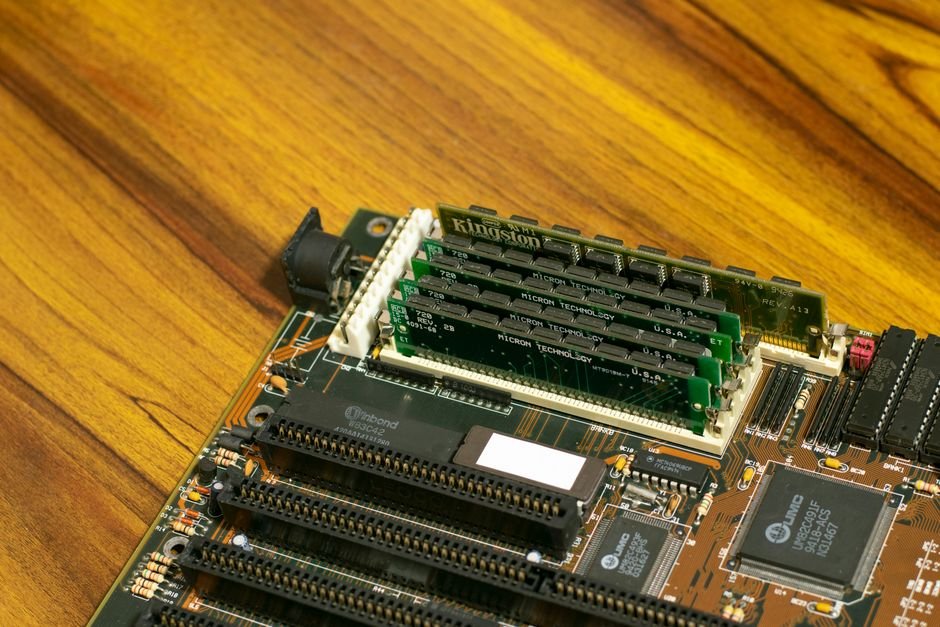
The key insight, as AI News noted, is that “memory can be gathered up across a large number of individually unremarkable chips. Training-grade compute cannot be assembled the same way.” Export controls that target high-bandwidth memory have forced Chinese AI companies to innovate around a different constraint than their US counterparts face, and K3’s architecture reflects that reality directly.
The model introduces Kimi Delta Attention, an optimization that delivers up to 6.3 times faster decoding in million-token contexts by addressing the growing key-value cache that becomes the dominant memory consumer in long-document processing. Moonshot has contributed the caching code to the open-source vLLM serving project.
On the Arena Frontend Code evaluation, K3 scored 1,679 points — first place, ahead of Anthropic’s Fable 5. But Moonshot openly acknowledges that overall performance “still trails” Claude Fable 5 and GPT 5.6 Sol, and that generation quality can be “highly unstable” if the serving harness fails to pass back historical thinking content. The company also notes that K3 may make “unexpected decisions on the user’s behalf” when intent is ambiguous, and that there is a “noticeable UX gap” versus the leading US models.
Recommended serving requires 64 or more accelerators wired as a single memory pool, and standard open-source serving tools do not yet support K3’s new architectures — Moonshot is working with inference partners to bridge the gap. Weights are scheduled for public release on July 27, 2026.
Pricing is set at $3 per million input tokens and $15 per million output tokens, with cached inputs at $0.30 — far below Fable 5’s $50 output pricing but above DeepSeek V4’s $0.87 and z.ai GLM-5.2’s $4.40.
Sources: Kimi K3 open-weight model: China’s biggest AI is a bet on memory, not compute (AI News, July 2026)