

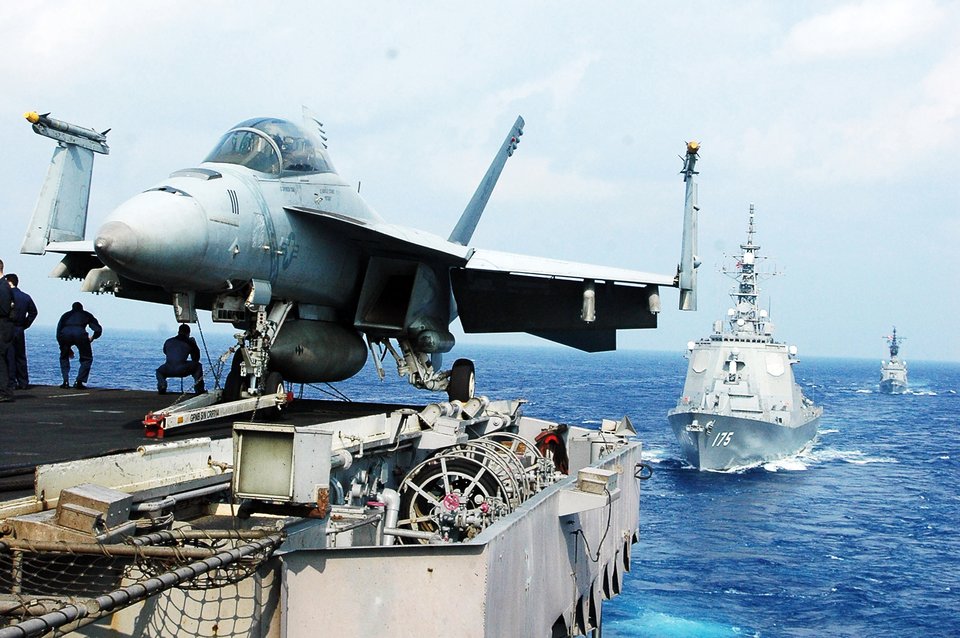
Japan is rebalancing its defense posture in ways that would have been unthinkable a decade ago. The shift is measured, deliberate and driven by a cold reading of regional realities: China’s military buildup, North Korea’s deepening ties with Russia, and a United States consumed by wars in the Middle East and Europe.
The direction of travel is clear. Japan is moving from a posture that relied overwhelmingly on the American security umbrella toward something closer to autonomous defense capability.
The numbers tell part of the story. Japan’s defense budget has risen to 2 percent of GDP, a doubling in real terms that represents the largest military expansion since World War II. The March 2026 reorganization of the Self-Defense Forces reflects the new priorities: a centralized Fleet Surface Force that concentrates naval command, a new Amphibious and Mine Warfare Group focused on island defense, and an institutional push into unmanned warfare capabilities that would have been politically impossible under earlier governments.
Defense export rules that once barred the sale of lethal weapons have been relaxed. Japan is now actively pursuing defense-industrial partnerships with Australia, Britain, Italy and India. The message to the region is unmistakable: Japan is no longer content to be a consumer of security provided by others.
The strategic rationale comes down to a single uncomfortable question that Tokyo has avoided for 70 years: What happens if the United States cannot — or will not — defend Japan?
The question is no longer academic. America’s war with Iran has consumed the attention of the White House and the Pentagon since February. European allies are being told to shoulder more of their own defense burden. The logic applies to Asia as well. If Washington is stretched thin across two theaters, the gap must be filled by someone.
Japan’s new National Security Strategy and Defense Buildup Program, due later this year, are expected to formalize this shift. The emerging doctrine of “autonomous littoral defense,” a Japanese term that translates to self-reliant territorial defense, signals a fundamental break from the postwar Yoshida Doctrine, which prioritized economic growth while outsourcing security to the United States.
Prime Minister Sanae Takaichi, who won a landslide election in March on a platform of economic revitalization and security reform, has accelerated the timeline. She vowed to revise Japan’s three key security-policy documents within months rather than years, compressing a reform cycle originally designed to take a decade.
The domestic politics have shifted as well. The Japanese public, long skeptical of military expansion, has grown more accepting of defense spending increases as North Korean missile tests cross Japanese airspace with increasing frequency and Chinese naval activity around the Senkaku Islands intensifies. Polls show majority support for the 2 percent defense spending target.
But the shift is not without risks. A more militarily assertive Japan risks alarming its neighbors, particularly South Korea and Southeast Asian nations that remember the imperial era. China has already condemned the defense buildup as a “break from the postwar path of peace.” Japan’s diplomatic corps is working to frame the changes as defensive in nature, but the distinction is not always accepted abroad.
There is also the question of alliance management. The United States has pushed Japan to spend more on defense for years. But a Japan that becomes too self-reliant could begin to question the terms of the alliance itself. The U.S.-Japan security treaty obligates America to defend Japan. If Japan no longer needs that guarantee, the foundational bargain of the postwar alliance may begin to unravel.
For now, Tokyo is walking a careful line: building autonomous capability without breaking the alliance, reassuring neighbors without appearing threatening, and preparing for a future in which the old certainties no longer apply. Whether that balance holds will be one of the defining questions of Asian security in the years ahead.