

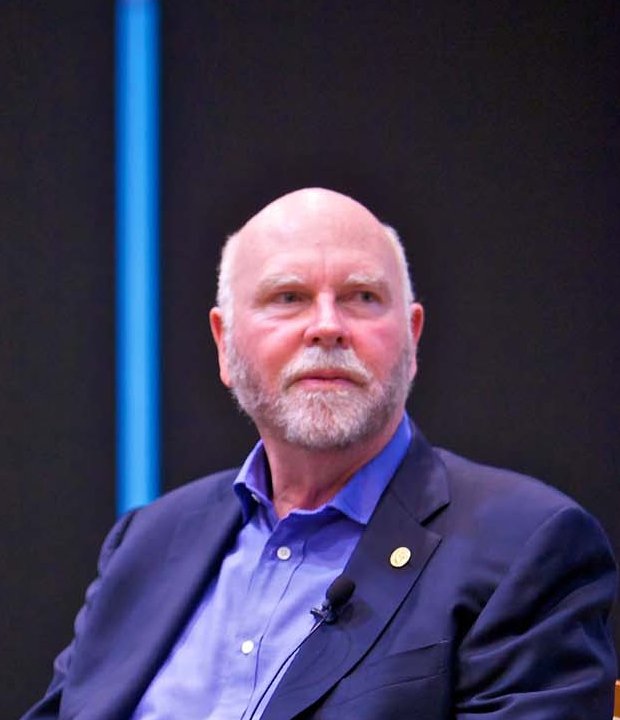
J. Craig Venter, Who Decoded the Human Genome and Redefined Biology, Dies at 79
June 13, 2026
J. Craig Venter, the brilliant and combative scientist who led the private effort to sequence the human genome, created the first synthetic bacterial cell, and spent his later years hunting for new forms of life in the world’s oceans, has died. He was 79.
Venter died Wednesday in San Diego, according to his family. No cause was immediately given.
With his passing, biology loses one of its most transformative and polarizing figures. Venter was never content to work within the slow, consensus-driven machinery of academic science. He preferred speed, scale, and the kind of high-stakes competition that made headlines and, often, enemies. But the results reshaped the field.
The Human Genome Race
Venter’s defining moment came in the late 1990s, when he founded Celera Genomics with the goal of sequencing the human genome years ahead of the publicly funded Human Genome Project. Using a technique called whole-genome shotgun sequencing, which Venter had pioneered for bacterial genomes, Celera sequenced the human genome at a fraction of the cost and in a fraction of the time.
The race became one of the most dramatic scientific contests of the modern era. Venter and Francis Collins, who led the public effort, represented two competing visions of how science should be done: private and rapid versus public and methodical. In June 2000, the rivals stood alongside President Bill Clinton at the White House to announce the completion of the first draft of the human genome. The joint announcement papered over what had been a bitter rivalry, but the milestone was undeniable.
The human genome sequence transformed biology. It gave researchers a reference map for every human gene, accelerating the discovery of disease-causing mutations and laying the foundation for the age of precision medicine.
From Reading to Writing
Venter did not stop at reading genomes. In 2010, his team at the J. Craig Venter Institute announced the creation of the first synthetic bacterial cell, Mycoplasma mycoides JCVI-syn1.0. The team had designed the genome on a computer, synthesized it in the lab, and transplanted it into a recipient cell, where it booted up and began replicating. The achievement, published in Science, was the first time a cell had been controlled entirely by a synthetic genome.
The work was controversial. Some critics questioned its utility. Others raised ethical concerns about the creation of synthetic life. But Venter saw it as a proof of principle for a new kind of biology: one where genomes are designed and built, not just read. The techniques developed for that project later informed efforts in vaccine development, biofuels, and chemical synthesis.
The Sorcerer II and the Global Gene Hunt
Between the genome and the synthetic cell, Venter undertook another ambitious project. In 2003, he sailed the Sorcerer II, his 95-foot sloop, around the world to collect samples of marine microbes. The goal was to sequence the DNA of the ocean’s invisible majority. The expedition yielded millions of new genes and thousands of new protein families, dramatically expanding our understanding of microbial diversity.
The Sorcerer II expedition was classic Venter: bold, expensive, and executed at a scale that made traditional funding mechanisms uncomfortable. It also produced lasting scientific value. The data from the voyage remain a foundational resource for marine genomics.
Unfinished Business
In his later years, Venter pursued a vision of human longevity through personalized genomics and cell reprogramming. He founded Human Longevity Inc., a company focused on whole-genome sequencing and stem cell therapies, and later co-founded Celestial AI, which aimed to combine biological and silicon computing.
He never lost his passion for the genome as the central operating manual of life. In a 2023 interview, he said: “We are still scratching the surface of what the genome can tell us about disease, about aging, about who we are.”
Venter published more than 300 scientific papers and received numerous awards, including the National Medal of Science. But he also attracted persistent criticism for his aggressive style, his patenting of gene sequences, and what some saw as an outsized appetite for publicity.
He leaves behind a complex legacy. He was a disruptor who changed the pace of genomic science, a visionary who pushed the boundaries of what biology could achieve, and a scientist who refused to accept that the genome would remain a mystery on his watch.
Source: The Lancet (2026). DOI: 10.1016/S0140-6736(26)01149-9
Additional reporting based on J. Craig Venter Institute announcements, Science (2010), and archival coverage by Nature, Science, and The New York Times.