

How Sleep Architecture Shapes Early Recovery After Stroke
The quality of a stroke patient’s sleep may hold a key to how quickly their brain begins to heal. A new study from Soochow University in Suzhou, China, published in Neurological Research, reports that specific features of sleep architecture, particularly how slow oscillations and sleep spindles coordinate with each other, are independently linked to early neurological improvement after acute ischemic stroke.
What they found
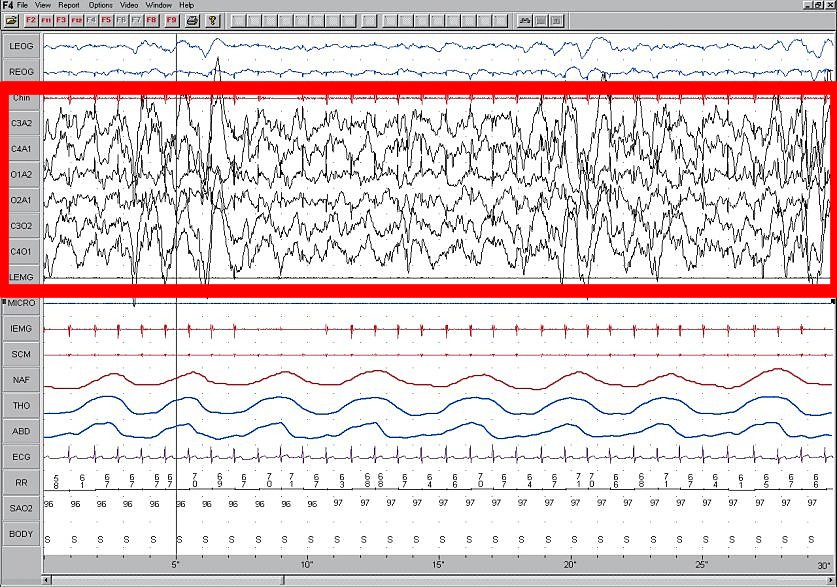
The researchers recruited acute ischemic stroke patients admitted to the Second Affiliated Hospital of Soochow University between November 2015 and October 2021. All patients underwent polysomnography (PSG) after admission, and the team extracted and analyzed sleep spindles and slow oscillations (SOs) from the recordings.
Patients were divided into two groups — those who showed early neurological improvement (ENI) and those who did not — based on the difference between their NIH Stroke Scale scores at admission and discharge. After adjusting for multiple clinical variables, several sleep features emerged as independent predictors:
- Higher sleep efficiency was independently associated with greater odds of ENI (p = 0.002).
- Stronger coupling between slow oscillations and sleep spindles was also an independent predictor of ENI (p = 0.011).
- Higher spindle frequency was independently associated with lower odds of ENI (p = 0.023).
- Higher slow oscillation frequency was independently associated with lower odds of ENI (p = 0.012).
Beyond sleep measures, the study identified several clinical factors linked to poorer recovery: elevated non-HDL cholesterol (p = 0.009), thalamic infarction (p = 0.006), and other cortical and subcortical infarctions (p = 0.035) were each independently associated with reduced odds of early improvement.
Why it matters
Sleep has long been recognized as essential for memory consolidation and brain repair, but the specific mechanisms have remained difficult to isolate in clinical populations. This study provides some of the first evidence that the coordination between brain oscillation types — not just the presence of sleep itself — may influence stroke recovery.
The finding that stronger SO-spindle coupling predicts better outcomes is particularly noteworthy. Slow oscillations and sleep spindles are hallmarks of NREM sleep, and their precise temporal coordination is thought to support synaptic plasticity and information transfer between brain regions. If this coupling is disrupted by stroke, the brain’s ability to reorganize and recover may be compromised.
Limits
As an observational study, the findings show association, not causation. The sample size was moderate and drawn from a single hospital, which limits generalizability. The study also could not fully control for infarct location and volume, both of which independently influence stroke outcomes. The authors note that the sleep architecture measures were collected within days of the stroke, so the temporal relationship between sleep disruption and recovery trajectory requires further investigation.
Bottom line
Sleep efficiency and the precise coupling of slow oscillations and sleep spindles during NREM sleep appear to be independent predictors of early neurological recovery after acute ischemic stroke. The findings suggest that monitoring sleep architecture in the acute stroke setting — and potentially developing interventions that strengthen SO-spindle coordination — could become part of early rehabilitation strategies.
Source
Chen SN, Ding Y, Fu X, Chen R, Li J. “Association between sleep EEG characteristics and early neurological improvement in patients with acute ischemic stroke.” Neurological Research, published online June 12, 2026. DOI: 10.1080/01616412.2026.2686944. PMID: 42287002.