

The European Union is trying to pass its 21st package of sanctions against Russia. Greece is blocking it.
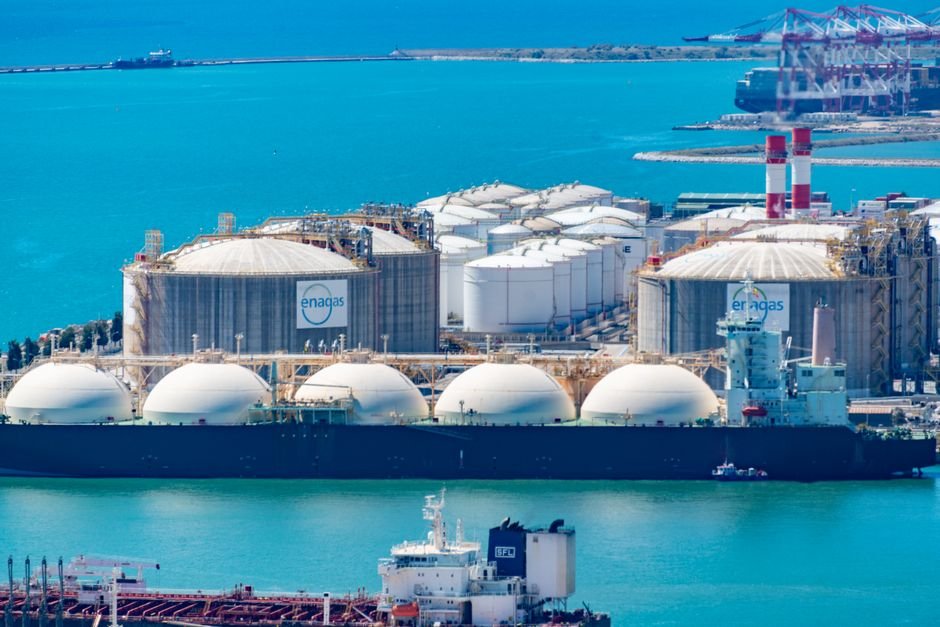
The reason is simple: the package would restrict European imports of Russian liquefied natural gas, and a Greek shipping company called Dynagas controls roughly one-third of the specialized ice-class tankers that haul LNG from Russia’s Arctic Yamal facility.
Greece’s ambassador to the EU told fellow envoys this week that the proposed LNG transport ban would “destroy” Dynagas, according to the Financial Times. Athens cannot support the package. The sanctions require unanimous approval from all 27 member states. Without Greece, they do not pass.
A profitable business
Dynagas is owned by billionaire George Prokopiou. His fleet of 27 LNG carriers includes the Arc7-class icebreaking vessels specifically designed to navigate the frozen waters of the Arctic, where Russia’s Yamal LNG terminal operates year-round thanks to these specialized ships.
Prokopiou also controls Dynacom, a tanker operator that has earned at least $915 million from trading Russian crude oil over the past three years. The company has been one of the key beneficiaries of the sanctions regime that was supposed to punish Russia, but instead created enormous profits for the middlemen who could still move Russian oil.
Greece’s argument is that the sanctions would hurt Greek shipowners more than they would hurt Russia. This is a difficult claim to evaluate, because the sanctions are explicitly designed to inflict economic damage on Russia. Every member state’s companies have suffered losses from earlier packages. That is the point.
But the Greek position has stalled the entire 21st package for more than a week. Other measures are stuck in limbo: sanctions on additional Russian banks, cryptocurrency networks, and defense-industrial firms. A mechanism to adjust the price cap on Russian crude oil, currently $44.10 a barrel, was extended for another week to buy time.
The other fear
There is another reason Greece is reluctant, and it has nothing to do with shipowner profits.
Al Jazeera’s report notes that Athens also “fears Moscow’s hybrid warfare.” Greece is one of the European countries most exposed to Russian destabilization operations, disinformation campaigns, cyber attacks, energy blackmail, and the kind of covert sabotage that has hit other Eastern European states.
Bulgaria, which shares a similar geographic and strategic position, is currently facing direct threats from Iran for hosting US tanker aircraft. Greece watches that and calculates its own exposure. Russia has shown it is willing to target countries that support Ukraine. Greece has supported Ukraine, it has sent weapons, hosted Ukrainian refugees, and backed EU sanctions. But there is a limit to how far Athens is willing to push.
The wider cost of the delay
The 21st package was supposed to close one of the remaining gaps in the EU’s sanctions architecture: Russian LNG exports. Europe stopped importing Russian pipeline gas but continued buying LNG, much of it carried by European-owned ships. Closing that loophole would have reduced Moscow’s revenue by billions.
The delay also keeps the oil price cap in uncertainty. The current ceiling of $44.10 per barrel was set months ago. Oil prices have risen sharply since then due to the Iran war and the Strait of Hormuz closure. Without a mechanism to adjust the cap, the ceiling loses its bite, and Russia earns more from every barrel it sells.
EU foreign policy chief Kaja Kallas expressed regret that no consensus had been reached. “Of course, member states have various reasons to object,” she said. “Our goal remains to reach an agreement. If we fail, we will begin working on Plan B.”
What Plan B looks like is unclear. But the longer Greece holds out, the more Russian LNG continues to flow, and the more the EU’s sanctions regime looks like a system that punishes everyone except the people it is meant to target.