

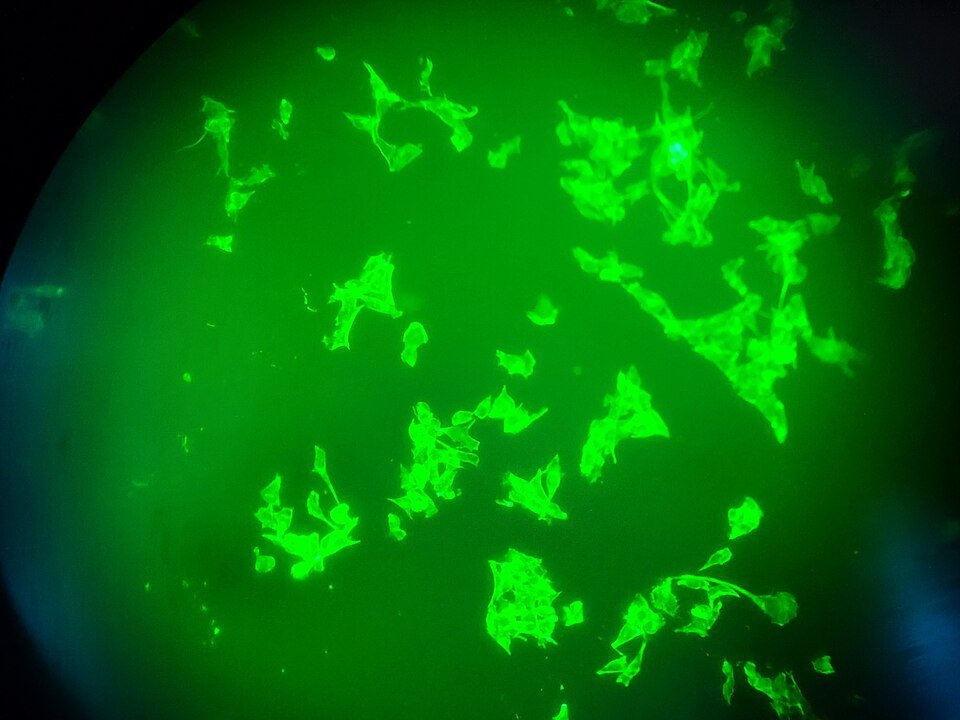
A gene that normally protects DNA by repairing damage can become dangerous when cells produce too much of it, and that very danger creates a therapeutic opportunity.
Researchers at Penn State College of Medicine have found that EXO1 (Exonuclease 1), a DNA repair enzyme described as “molecular scissors,” is overexpressed in approximately 20,30% of breast, liver, skin, and cervical cancers. When present at excessive levels, it stops repairing DNA and starts destroying it, degrading newly synthesized strands and creating the kind of genomic instability normally associated with BRCA mutations.
The finding, published in Nature Communications, suggests that EXO1 overexpression could serve as a biomarker to identify patients who might benefit from PARP inhibitors and cisplatin, drugs typically reserved for patients with inherited BRCA mutations.
“The conventional wisdom is that DNA repair enzymes protect cells from cancer,” says George-Lucian Moldovan, the study’s senior author. “But when EXO1 is overexpressed, it creates a state of genomic chaos that becomes the tumor’s Achilles’ heel.”
EXO1 is a 5′ to 3′ exonuclease that normally participates in two critical DNA repair pathways: homologous recombination (resecting DNA ends at double-strand breaks) and mismatch repair (removing mispaired bases). In healthy cells, its activity is tightly regulated.
In cancer cells where EXO1 is overexpressed, the enzyme:
- 1. Expands single-stranded DNA (ssDNA) gaps at replication forks, chewing beyond the point of repair
- 2. Degrades reversed replication forks, destroying the protective fork structure that normally prevents DNA breakage
- 3. Both actions occur even in cells with normal BRCA1 and BRCA2 genes, creating a functional “BRCAness” state
Crucially, EXO1 does not act alone. It works cooperatively with MRE11, another nuclease, to enlarge the gaps and create toxic double-strand breaks (DSBs). If either EXO1’s catalytic activity or MRE11 is disabled, the damaging effect disappears, the D173A mutant of EXO1 showed no effect in control experiments.
Why it matters for treatment
The genomic instability caused by EXO1 overexpression makes tumor cells hypersensitive to DNA-damaging chemotherapy. In cell-line experiments (HeLa, U2OS), EXO1-overexpressing cells were highly vulnerable to:
- Cisplatin, a platinum-based chemotherapy that crosslinks DNA
- Olaparib, a PARP inhibitor that blocks a backup DNA repair pathway
The sensitivity was comparable to that of BRCA2-knockout cells, the current standard for identifying PARP-inhibitor candidates.
“About 20,30% of tumors show EXO1 overexpression, not just in breast cancer but across multiple cancer types,” explains first author Alexandra Nusawardhana, a Ph.D. candidate at Penn State. “If we can use this as a biomarker, we could expand the use of PARP inhibitors to patients who don’t have BRCA mutations.”
According to The Cancer Genome Atlas (TCGA) PanCancer Atlas, the cancer types with highest EXO1 alteration rates include:
- Breast invasive carcinoma (~22%), particularly basal-like/triple-negative (~50% of EXO1-overexpressing breast cancers)
- Hepatobiliary cancer (~20%)
- Melanoma (~16%)
- Testicular cancer (~16%)
- Cervical cancer (~14%)
The limits
The findings are based on cell-line experiments and TCGA correlational data. No in vivo animal models or clinical trials have been conducted yet for EXO1-guided therapy.
EXO1 overexpression is somatic (acquired in the tumor), not germline, it does not predict hereditary cancer risk. And the “BRCAness” is a functional mimic: while EXO1-OE cells behave like BRCA-deficient cells, the underlying biology differs, and clinical response to PARP inhibitors in this context remains unproven.
The authors plan to launch clinical trials, but none are underway at publication.
What’s next
The Moldovan lab aims to develop a clinical assay for EXO1 overexpression and to test whether combining PARP inhibitors with MRE11 inhibition could enhance the therapeutic effect. The cooperative relationship between EXO1 and MRE11 suggests that dual targeting might be more effective than either alone.
Source
Nusawardhana A, Nicolae CM, Moldovan G-L. “EXO1 overexpression creates a BRCAness phenotype through nascent strand degradation at replication forks.” Nature Communications, 17, Article 1 (2026). DOI: 10.1038/s41467-026-69981-1
Funding: Penn State College of Medicine; data sourced from The Cancer Genome Atlas (TCGA).