

Elon Musk Wants 1 Million AI Satellites in Space, Says SpaceX Is Ready to Build Them
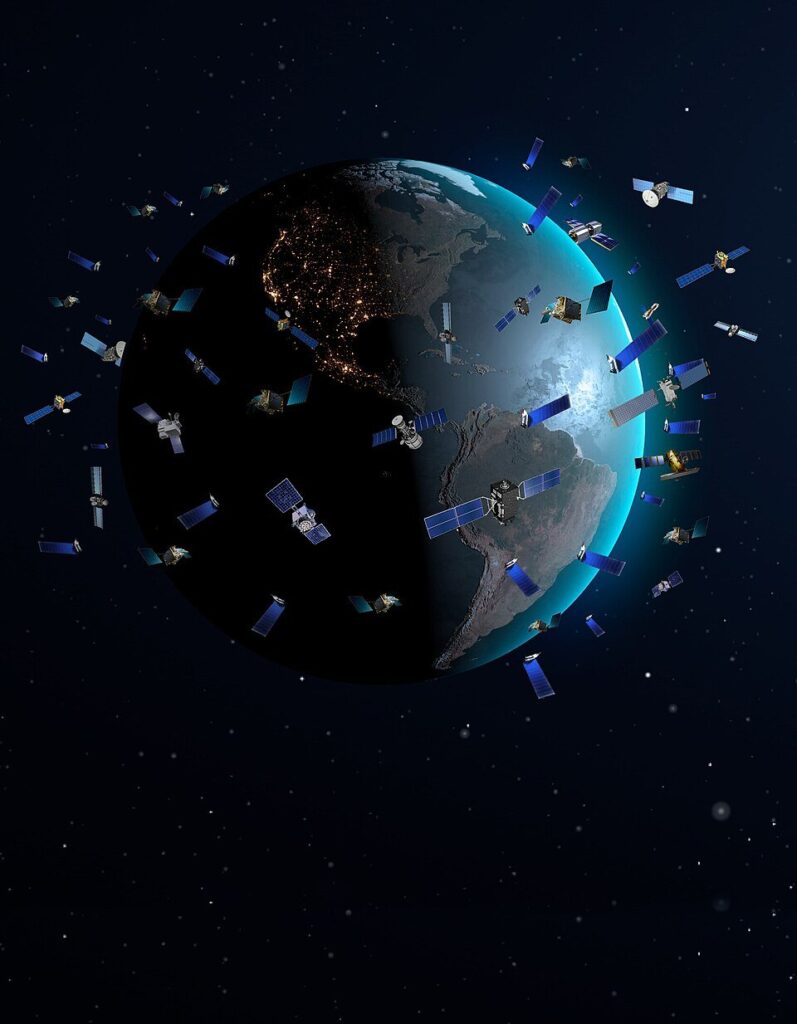
SpaceX CEO Elon Musk has outlined the most detailed vision yet for his company’s orbital data center plans, proposing a constellation of up to 1 million AI-equipped satellites and a dedicated production facility to build them.
In a half-hour video posted on X on June 8, Musk described satellites carrying “racks of compute” connected by high-speed laser links, generating enough power to rival terrestrial data centers. Each AI satellite would produce 150 kilowatts of power at peak (120 kilowatts consistently), drawing on large solar arrays and radiators. The satellites would launch aboard Starship and Super Heavy vehicles.
“A lot of this technology, we’ve already made for the Starlink V3 satellites,” Musk said. “Basically, we don’t think this is a super-hard problem, compared to things we already do.”
The Gigasat factory
SpaceX plans to build a “Gigasat” satellite production facility that would be “operating at some reasonable volume” by the end of 2027. The facility would mass-produce the AI satellites, leveraging the manufacturing lessons from Starlink’s assembly lines that have already produced over 10,000 operational satellites.
“So, if anybody wants to work on AI satellites, this is kind of going to become the hub of that,” Musk said.
The common pitch among orbital data center proponents is that terrestrial AI computing is running out of physical and political space. Data centers on Earth face community opposition over power and water consumption. Moving compute to orbit bypasses those constraints, at the cost of vastly higher launch and hardware expenses.
Scale concerns dismissed
When asked about orbital overcrowding, Musk dismissed the concern. “Space is really big, so it’s not like space is going to get crowded,” he said, citing SpaceX’s experience operating the Starlink constellation of over 10,000 satellites.
“We’ve got a pretty good idea of how to operate really large constellations and do it safely now,” Musk said. “We are the only operator that has any experience of that scale.”
The claim may not reassure other operators or regulators. Starlink satellites have been involved in thousands of collision avoidance maneuvers, and astronomers have raised persistent concerns about light pollution and radio interference from mega-constellations. A 1-million-satellite constellation would dwarf the current Starlink fleet by two orders of magnitude.
IPO context
The vision comes as SpaceX prices its highly anticipated IPO, with shares listed at $135 apiece for a valuation exceeding $1.75 trillion. The AI satellite pitch is a central element of SpaceX’s narrative to investors, alongside Starship development and Mars colonization plans.
The company faces competition on multiple fronts. Google, Blue Origin, and Microsoft are pursuing their own orbital data center concepts. Smaller players like Cowboy Space Corp. (formerly Aetherflux) and Starcloud are also in the race. None have demonstrated operational orbital computing at meaningful scale.
Reality check
While Musk’s vision is characteristically ambitious, the technical and regulatory hurdles are immense. Building 1 million AI satellites would require producing roughly 300 satellites per day for a decade at current Starlink production rates. Each satellite’s 150-kilowatt power system would need to be deployed, tested, and maintained in orbit. The total constellation would generate 150 gigawatts of orbital power — equivalent to roughly 150 nuclear power plants.
The regulatory framework for a 1-million-satellite constellation does not currently exist. The FCC, ITU, and international bodies would need to approve frequency allocations, debris mitigation plans, and orbital slot assignments at a scale never before contemplated.
SpaceX is positioning itself as the logical provider of orbital AI infrastructure. Whether the market, the regulators, or the physics cooperate remains to be seen.