

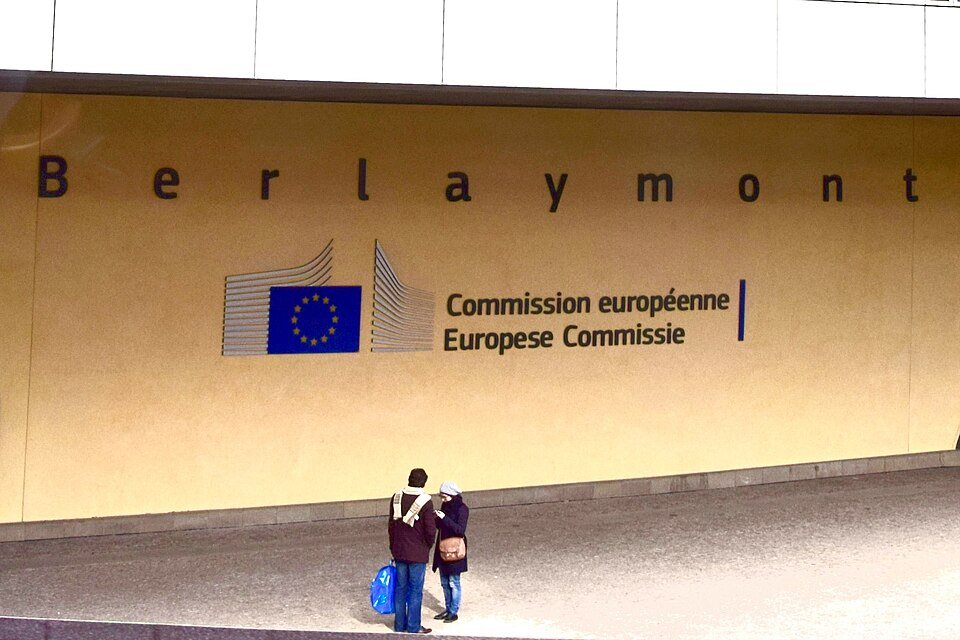
When the UK voted to leave the European Union in 2016, few in the scientific community expected the rupture to last as long or cut as deep as it did. Nearly a decade later, a detailed accounting in Nature by reporter Elizabeth Gibney shows that European research collaboration is healing, but far from whole.
Published June 18, the analysis draws on funding data, publication metrics, and interviews with researchers across the continent. Its central finding is that while the financial wounds of Brexit are closing, the relational damage, lost trust, broken networks, diminished credibility, may take a generation to fully repair.
The data: a deep funding trough
Before Brexit, the UK was a powerhouse of EU research collaboration. In 2015, British institutions captured 16 percent of all Horizon grants, the EU’s flagship research funding programme. After the 2016 referendum, participation began to slip. When the UK formally left the EU in 2020 and was excluded from Horizon Europe from 2021 to 2023, the share plummeted to 5.8 percent, including the UK’s own domestic guarantee funding that covered researchers during the exclusion period.
The UK’s share of EU co-authored papers as a proportion of total UK output fell from 60 percent in 2015 to 52 percent in 2022, according to a 2025 study in Higher Education by Oldac and Olivos (DOI: 10.1007/s10734-025-01596-9). British researchers, cut off from European networks, pivoted toward East Asian collaborators, a shift that has partially persisted even after reassociation.
“Funding is recovering,” said Vassiliki Papatsiba of Cardiff University, an expert on international research collaboration, in the Nature article. “But it will be harder to rebuild the United Kingdom’s credibility and networks of research collaboration. The progress is promising, but I do not think that the same position will be recovered in the foreseeable future.”
Signs of healing
The most concrete recovery metric is financial. In 2024, the first full year after the UK formally reassociated with Horizon Europe, the UK’s grant share rose to 9.3 percent, nearly double the 2023 low, though still well below the 2015 peak of 16 percent.
In April 2026, the UK and EU reached an agreement for the UK to rejoin the Erasmus+ programme, the continent’s student, PhD, and staff exchange scheme. The return is scheduled for 2027. Uta Staiger, a researcher at University College London who studies international research policy, described the effect of the exclusion period as tangible. “Our time out in the desert has affected participation rates,” she told Nature. “It’s quite natural that it might take some time to bed back down.”
Politically, the May 2025 UK-EU summit launched a “reset” of bilateral relations under the Labour government elected in 2024, which had campaigned on a platform of closer EU ties. But the reset has stalled over disagreements about the structure of a youth mobility scheme, and the agenda for the next round of talks has not been published.
The persistent problem: voice and direction
The deepest structural change may be one that funding cannot fix. The UK is now an associate member of Horizon Europe, meaning it pays into the programme but has no official vote on the design of the next Framework Programme, FP10 (2028-2034).
This matters because FP10 is being shaped with a proposed budget of 175 billion euros, a 50 percent real-term increase over Horizon Europe, and a growing emphasis on defense and dual-use research. As a non-voting associate, the UK cannot shape the research priorities that its own scientists will compete for.
Dani Payne of the Social Market Foundation, cited in the article, noted that the UK’s diminished ability to shape European research policy is a loss that compounds over time: “You’re at the table, but you’re not setting the menu.”
Networks that took decades to build were fractured during the exclusion years. Younger researchers who might have built European collaborations during their formative postdoctoral years instead turned elsewhere. Post-Brexit immigration rules, particularly the EU Settlement Scheme and minimum salary thresholds for skilled worker visas, have made it harder for European scientists to move to the UK, even as Horizon funding flows again.
The debate: can networks be rebuilt?
Not all assessments are pessimistic. The sheer speed of the Horizon funding recovery, from 5.8 to 9.3 percent in one year, suggests that many established UK researchers maintained enough of their European contacts to resume collaboration quickly. The Erasmus+ deal from 2027 will begin restoring the people-pipeline for the next generation.
But Papatsiba’s caution captures the consensus: credibility and networks are harder to rebuild than budgets. The UK’s scientific isolation was not just a funding gap but a signalling event. It told European partners that the UK could withdraw from shared institutions, and did. Rebuilding the assumption of permanence in collaborative relationships requires time and repeated demonstration of commitment.
“We cannot simply pick up where we left off,” said Staiger. “People changed their plans, their careers, their collaborations. Some of those changes are permanent.”
Source: Gibney, E. (2026). “Brexit tore apart European science, now the research rifts are healing.” Nature News, 18 June 2026. DOI: 10.1038/d41586-026-01841-w