

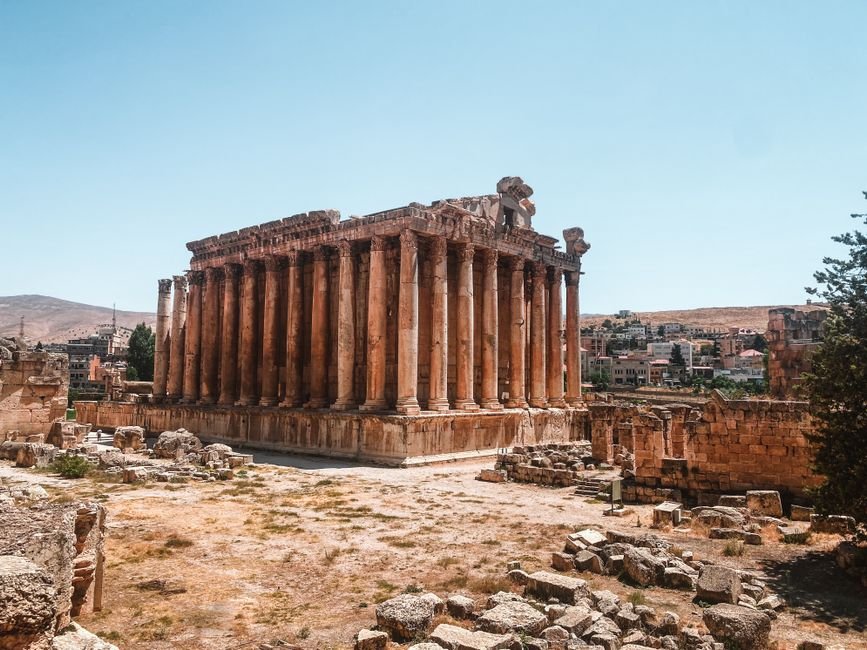
Israeli airstrikes on southern Lebanon have caused catastrophic damage to some of the oldest continuously inhabited settlements on Earth. The ancient Phoenician city of Tyre — a UNESCO World Heritage site — and the 12th-century Crusader fortress of Beaufort Castle have both been hit.
Lebanese Culture Minister Ghassan Salame condemned the strikes and said he was in contact with his counterparts worldwide and with international organizations “to draw their attention to the huge damage to archaeological sites and heritage districts” in south Lebanon.
“A large number of these sites enjoy enhanced protection from UNESCO,” Salame said, “making it necessary to protect them from any Israeli air or artillery attack.”
Tyre: The Queen of the Seas
Tyre, founded around 2750 BC, was a Phoenician metropolis, later conquered by Alexander the Great, and later still a Roman and Byzantine center. It is one of the world’s oldest continuously inhabited cities. The Romans built a triumphal arch, aqueducts, and a hippodrome there that still stand.
In recent days, Israel issued evacuation warnings for swaths of the city and carried out heavy strikes. One building targeted was located on a map shown by the Israeli military as being very close to the city’s archaeological area. Two hours after the warning, AFP footage showed a fireball and smoke rising from the district.
The strikes hit the al-Athar neighborhood — whose name means “archaeological site” in Arabic. Videos showed smoke billowing above ancient ruins.
Tyre had already been hit multiple times since March 2, when hostilities between Israel and Hezbollah escalated again after the start of the U.S.-Israeli war on Iran. In March, an Israeli strike damaged the entrance of the al-Bass archaeological site, another UNESCO-listed area in Tyre that includes a necropolis dating back millennia. In April, a strike hit and damaged the shrine of the Prophet Shamoun al-Safa in the village of Shamaa.
Earlier this year, the UNESCO-listed site had a strike land just meters away, killing eight people. Museum employees had hoped the blue UNESCO emblem would protect them. It did not.
Beaufort Castle
Perched on a strategic hilltop in the Arnoun area overlooking south Lebanon, Beaufort Castle has been a military stronghold since the Crusades. It offers commanding views of the Israeli border and the Lebanese interior.
An AFP correspondent saw smoke rising near the castle after what appeared to be artillery fire. The municipality of Arnoun condemned “the attack that targeted” the site and urged authorities to protect it “from further damage.”
The castle has a history with Israel: during its 20-year occupation of southern Lebanon that ended in 2000, Israeli forces used Beaufort Castle as a military base.
A Pattern of Violations
In November 2024, UNESCO granted 34 heritage sites in Lebanon, including Tyre and Beaufort Castle, “provisional enhanced protection” under the 1954 Hague Convention. The convention states that non-compliance “would constitute serious violations” and be grounds for prosecution.
In April 2026, UNESCO added another 39 Lebanese sites to the list.
The damage has not stopped. “There is no military or security presence in the sites,” Salame said in March, after the al-Bass hit. “Such an argument cannot be used to bomb or harm them.”
Prime Minister Nawaf Salam said on X that “nothing can justify the ongoing attacks on the Tyre and Nabatieh regions and the destruction of their historical landmarks.”
But the strikes continue. The Lebanese Health Ministry reports the death toll from Israeli attacks since March 2 has risen to 3,666, with more than 11,000 wounded. More than one million people — about one-fifth of Lebanon’s population — have been displaced.
Nader Saqlawi, director of archaeological excavations in the south for Lebanon’s culture ministry, said he believes the attacks on heritage sites are intentional. “The Israelis know everything. They know your shoe size,” he said. “And they know very well this is an archaeological site.”