

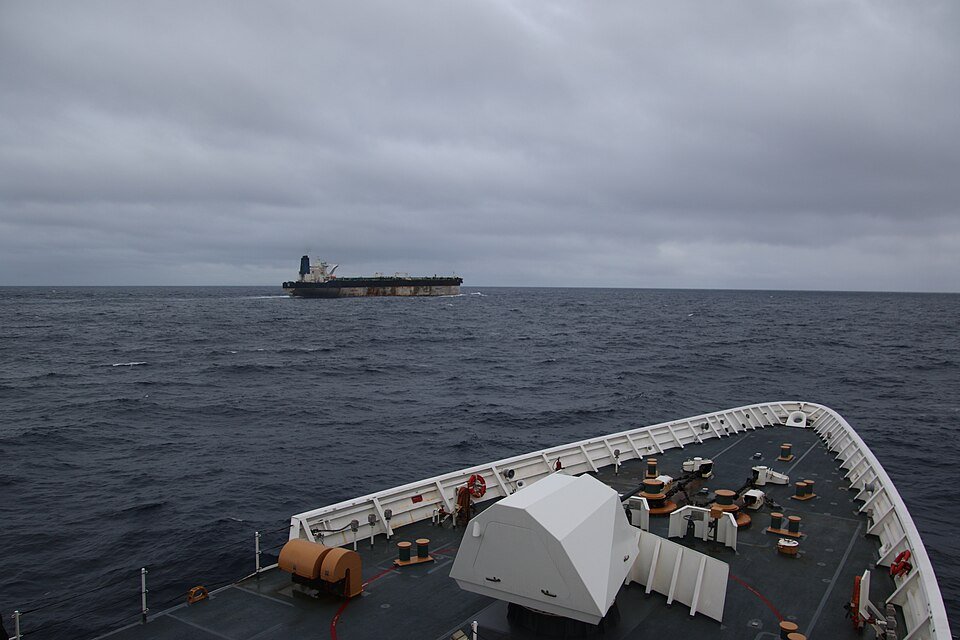
France Seizes Russian Shadow Fleet Tanker Off Brest Coast
A French naval boarding party, assisted by British forces, seized a Russian shadow fleet tanker in the Atlantic Ocean last week and arrested its captain, marking the second major interception this year as Paris enforces increasingly aggressive maritime sanctions against Moscow’s oil trade.
BREST. The French Navy detained the oil tanker Tagor on May 31 in international waters west of the Brittany coast, about 200 nautical miles from the port of Brest. The operation was carried out jointly with British naval assets, with French commandos boarding the vessel from helicopters and fast boats. The Tagor was flying a Cameroonian flag, but French authorities determined that the registration was false. The ship had departed from Murmansk, Russia’s Arctic hub, and was listed as heading for Limbe, Cameroon, with a cargo of crude oil.
According to Brest prosecutor Stephane Kellenberger, the captain of the Tagor, a Russian national, was taken into custody on June 2 when the vessel arrived in Douarnenez Bay under French escort. The captain faces a potential prison sentence of up to one year and a fine of 150,000 euros, approximately $174,000. The charges include sailing without a proper flag and refusing to comply with orders at sea. The shipowner, who is still being identified by investigators, faces the same penalties. Kellenberger also said that a decision may be made to confiscate the vessel itself.
The Tagor is not merely a random vessel caught in a routine inspection. It has been on the European Union’s sanctions list since July 2025, designated for its role in Russia’s so-called shadow fleet, an armada of aging, poorly insured, and often anonymously owned tankers that Moscow uses to circumvent the price cap on Russian oil exports imposed by the G7 and the EU. The United States Treasury had also flagged entities associated with the Tagor in its own sanctions actions.
What gives the Tagor case an additional geopolitical dimension is its link to Mohammad Hossein Shamkhani, a petroleum shipping magnate with deep ties to the Iranian regime. Shamkhani is the son of Ali Shamkhani, the former secretary of Iran’s Supreme National Security Council, who was killed in the US-Israeli strikes on February 28 that triggered the current Middle East war. Mohammad Hossein Shamkhani was himself sanctioned by the United States last year for operating a network of companies involved in transporting Iranian oil and evading international restrictions. The Tagor had been used to move both Russian and Iranian crude, connecting the two sanctioned energy sectors in a single logistics chain.
The interception of the Tagor was not an isolated event. It was the fourth shadow fleet vessel France has stopped since September 2025. The most prominent previous case was the Grinch, a tanker intercepted in the western Mediterranean in January 2026 in another joint Franco-British operation. The Grinch was also sailing under a false flag and carrying crude loaded in Murmansk. That vessel was eventually released, but the Tagor case suggests a shift toward tougher consequences.
In April 2026, the French parliament passed legislation doubling the penalties for ships that fail to fly a proper flag or that refuse to comply with orders from naval authorities. The law was explicitly aimed at the shadow fleet problem. Prison sentences and fines were increased, and the legal basis for detaining and searching vessels in international waters was strengthened. The Tagor may be the first significant test of that new legal framework.
Russia has responded with predictable outrage. The Foreign Ministry in Moscow demanded consular access to the arrested captain and denounced the seizure as an act of legal nihilism. Maria Zakharova, the ministry’s spokesperson, accused France of piracy and warned of retaliatory measures. But the practical options available to Moscow are limited. The shadow fleet exists precisely because Russia cannot ship oil through conventional channels without facing Western sanctions, and the vessels themselves are often registered in jurisdictions that have little ability or willingness to defend them.
The Tagor was originally named the British Gannet before being acquired by opaque ownership structures tied to the Shamkhani network. It changed hands and flags multiple times in an effort to obscure its movements and ownership. This pattern of reflagging and renaming is the defining characteristic of the shadow fleet. According to EU estimates, nearly 600 vessels are now subject to sanctions for engaging in these practices. The International Maritime Organization has raised concerns about safety and environmental risks, as many of these tankers are old, poorly maintained, and uninsured.
The Tagor is now anchored in Douarnenez Bay under French guard. The captain has been released from custody while the investigation continues, but he remains under judicial supervision. The ship and its cargo remain impounded. If the new penalties are applied fully, the owner could lose the vessel outright, and the captain could serve time in a French prison. The case sends a signal to the shadow fleet operators who have grown accustomed to operating with impunity. The waters off Brest are no longer a free passage. They are a checkpoint.