

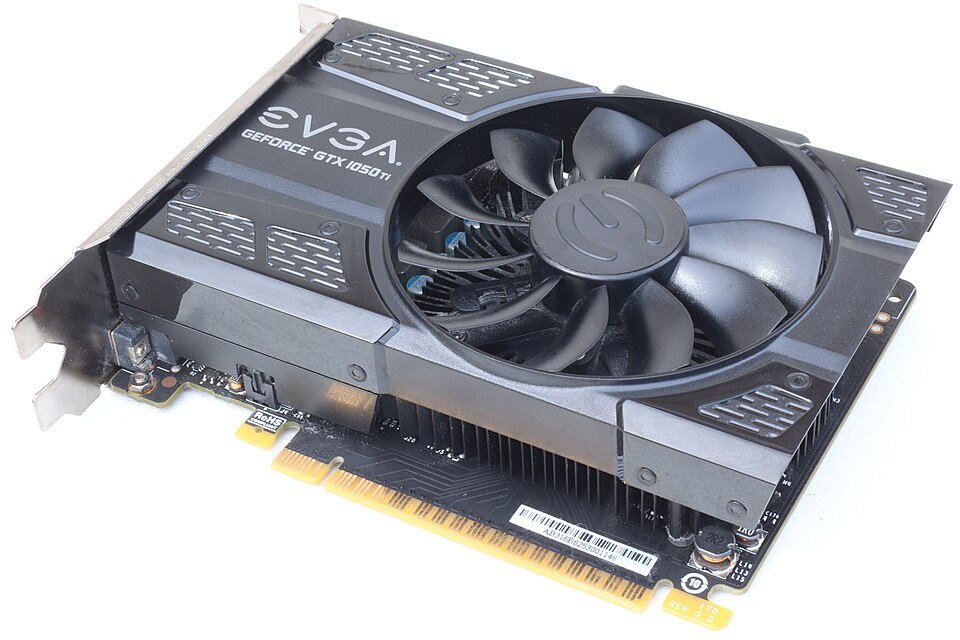
Building a mid-range gaming PC once cost around $1,000. Today, that same budget barely covers a graphics card. Over the past nine months, a convergence of tariffs, AI-driven component demand, and memory shortages has pushed retail electronics prices to levels that would have been unthinkable in early 2025.
The numbers tell a stark story. A leaked industry roadmap published by TechPowerUp in late December 2025 revealed that both AMD and NVIDIA intend to “gradually and permanently increase GPU prices” over the coming years. By February 2026, the NVIDIA GeForce RTX 5090, a consumer graphics card with a manufacturer’s suggested retail price of $1,999, was selling for a median price of $3,634 on the open market, an 82 percent scalper premium according to GPU market tracker GPU Poet. Even the best deals came in around $2,933.
The price surge extends well beyond the flagship tier. Mid-range cards that once anchored the $300 to $500 segment have crept upward across successive generations. AMD’s Radeon RX 9070 XT, positioned as a value competitor, launched at $599 in March 2026, roughly $100 more than the equivalent tier from the previous generation. Memory, storage, and power supplies have all followed suit.
The tariff trigger
The first domino fell in August 2025, when President Trump announced a proposed 100 percent tariff on imported semiconductors. The policy was framed as a lever to force chip fabrication back onto American soil, but its near-term effect was immediate: component distributors and retailers began pricing in the uncertainty. By late 2025, the effective average tariff rate on goods entering the United States had risen to 7.7 percent, according to the Tax Foundation, up from 2.4 percent at the start of the year.
In June 2026, the Information Technology and Innovation Foundation warned that Section 232 semiconductor tariffs, a separate national security mechanism, would “raise prices for consumers across a wide range of products,” from laptops to medical devices. Chips that cost pennies to manufacture carry tariffs that cascade through every product they touch.
AI demand is eating the wafer supply
While tariffs raised the floor, artificial intelligence raised the ceiling. The same TSMC wafers that produce consumer GPUs also produce the H200 and B200 accelerators that power data centers. With hyperscalers placing orders measured in the hundreds of thousands of units, NVIDIA and AMD have every incentive to allocate their limited advanced packaging capacity toward enterprise silicon, where margins are an order of magnitude higher.
The consumer GPU market has become a residual, fed by whatever wafer allocation remains after enterprise demand is satisfied. GDDR7 memory, the high-bandwidth video RAM used in the RTX 5090 series, faced its own supply crunch. In January 2026, German retailer Notebooksbilliger reported that GDDR7 supply constraints were directly limiting RTX 5090 availability, with shipments arriving weeks behind schedule.
What this means for buyers
The practical effect on the ground is that building a PC in mid-2026 costs substantially more than it did a year ago, across nearly every component category:
- Graphics cards carry 50 to 80 percent premiums over MSRP at the high end, and the MSRPs themselves have risen generation over generation.
- DDR5 system memory, once a premium option, is now the baseline, but prices have not fallen as adoption scaled, partly because the same fabrication lines that produce DRAM also serve the insatiable HBM3e memory market for AI accelerators.
- High-capacity NVMe SSDs have seen smaller but steady increases as NAND flash contracts tightened through early 2026.
- Power supplies and cases, affected more by steel and aluminum tariffs than silicon shortages, have risen 10 to 15 percent since late 2025.
The budget-conscious PC builder of 2024, who could assemble a capable gaming machine around a $300 GPU and a mid-range CPU for under $1,000 total, now faces a market where that same build costs closer to $1,400 or $1,500, and the GPU alone consumes more than half the budget.
Industry analysts do not expect relief in the second half of 2026. TSMC’s new Arizona fabs will not reach volume production for consumer silicon until 2027 at the earliest. GDDR7 supply is projected to remain tight through at least early 2027, and the semiconductor tariff regime shows no sign of easing. The era of the sub-$1,000 gaming PC may be over, not because the technology cannot be built at that price, but because the economics of fabrication, trade policy, and AI demand no longer allow it.