

What if you could get some of the restorative benefits of sleep without actually sleeping?
It sounds like a pitch from a wellness startup, but the question has genuine scientific weight. Sleep consumes roughly a third of our lives. If the brain’s essential housekeeping functions can be decoupled from the behavioral state of sleep — the closed eyes, the lost consciousness, the vulnerability — then we might fundamentally rethink what sleep is for and how to treat disorders that disrupt it.
A study published June 8 in Nature Neuroscience provides the most direct evidence yet that at least some of sleep’s core functions can be triggered in the awake brain. Researchers at the University of Wisconsin-Madison used optogenetics to artificially reproduce the rhythmic neural firing pattern that characterizes deep sleep, and found that it was sufficient to reduce sleep pressure and restore memory consolidation, even while the animals were wide awake and moving around.
“It suggests that the crucial element for these restorative functions is not sleep per se, but the specific pattern of neuronal activity that occurs during sleep,” said Chiara Cirelli, professor of psychiatry at UW-Madison and co-senior author of the study alongside Giulio Tononi.
The on-off rhythm at the heart of sleep
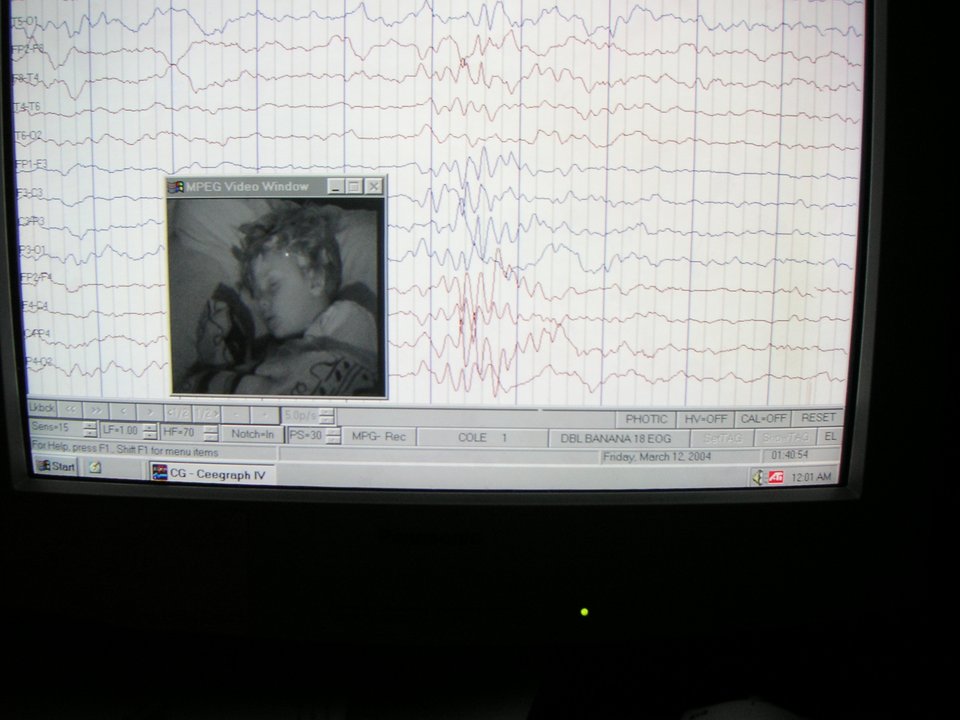
During non-rapid eye movement (NREM) sleep — the deep, slow-wave sleep that makes up about 80% of adult sleep — cortical neurons behave in a strikingly coordinated way. They alternate between periods of intense synchronized firing (on periods) and periods of collective silence (off periods), cycling every few hundred milliseconds. This bistable rhythm produces the slow waves visible on an EEG, and the intensity of slow-wave activity (SWA) is the most reliable marker of how much sleep pressure the brain has accumulated. After a long wakeful period, SWA is high; it declines across the night as sleep need dissipates.
Decades of work from the Tononi and Cirelli lab and others have linked this synchronized on-off activity to two key sleep functions: synaptic down-selection, a pruning of excitatory connections that prevents the brain from saturating with new information, and memory consolidation, the stabilization of learned experiences.
The question the team set out to answer was whether the on-off pattern itself drives these effects, or whether they require the full behavioral state of sleep.
Engineering sleep patterns in the awake brain
First author Kort Driessen, with Fabio Squarcio and colleagues, used two complementary optogenetic strategies to induce NREM-like on-off periods in the cortex of mice that were otherwise awake and behaving. In one line of mice, they expressed channelrhodopsin-2 (ChR2) in somatostatin-expressing interneurons, a class of inhibitory cells known to play a key role in generating sleep slow waves. Activating these interneurons with light pulses reliably triggered a brief suppression of all nearby neurons — an artificial off period — followed by a rebound of firing (the on period). In a second line, they directly inhibited excitatory pyramidal neurons using a soma-targeted anion channel (stGtACR1) under the CaMKIIα promoter.
Both approaches produced the same rhythmic on-off pattern, albeit with slightly different field potential shapes, and both were applied for the final 30 minutes of a 5-hour sleep deprivation period, while the mice continued to stay awake.
Relieving local sleep pressure
The first major result was that inducing these off periods during wakefulness locally reduced sleep pressure. In the first hour of NREM sleep following the protocol, slow-wave activity on the stimulated side of the cortex was significantly lower than on the contralateral control side. The effect was specific to slow frequencies and recovered over a few hours of subsequent sleep.
This reduction was accompanied by a measurable decrease in neural synchrony — the degree to which nearby neurons fire in lockstep — as assessed by spike time tiling coefficients and features of the local field potential including the slope of off period initiation and the amplitude of slow wave peaks.
Crucially, the effect depended on the rhythmic on-off alternation, not simply on reducing overall firing. In a control experiment using halorhodopsin to tonically inhibit the same cortical region without generating an on-off rhythm — achieving an equivalent reduction in firing rate — none of the sleep-pressure-relieving effects were observed. “It’s the bistable pattern that matters, not just less firing,” Driessen said.
Molecular signatures of synaptic reset
Beyond the electrophysiological markers, the team looked for molecular evidence of synaptic down-selection. They measured two established markers of excitatory synaptic strength in cortical synaptoneurosomes: the expression level of GluA1-containing AMPA receptors and the phosphorylation of GluA1 at serine 845.
In both SOM+ and ACR mice — but not in wildtype controls — the cortical hemisphere that had undergone off-period induction showed significantly lower levels of both markers. The magnitude and direction of these changes mirror what occurs after natural NREM sleep. And because the mice were sacrificed immediately after the induction period without being allowed any subsequent sleep, the molecular changes must have been triggered by the artificial on-off activity alone.
Restoring memory after sleep deprivation
The most behaviorally striking result involved memory. The team used a floor texture recognition task, in which mice are exposed to an arena with identical floor textures on both sides, then tested 24 hours later with one side replaced by a novel texture. Mice that are allowed to sleep after the initial exposure perform better on the recall test than mice that are sleep deprived for one hour.
The Wisconsin team replicated this — and then showed that mice that were sleep deprived for one hour while receiving bilateral optogenetic off-period induction over motor and sensory cortices performed as well as the mice allowed to sleep naturally. The on-off pattern had rescued memory consolidation that would otherwise have been lost to sleep deprivation.
This experiment used SOM+ mice and targeted secondary motor cortex (M2) and primary sensory cortex (S1), regions known to be involved in the task. “The memory benefit was specifically tied to the induction of off periods during the deprivation period, not to the deprivation itself,” the authors note.
What this means for humans
The study is a clean demonstration that some of sleep’s core functions — local sleep homeostasis, synaptic down-selection, and memory consolidation — can be achieved by artificially reproducing the brain’s sleep rhythm in an awake animal. But the translational gap is wide.
Optogenetics requires genetic modification and viral delivery of light-sensitive proteins, making it unsuitable for human use. The New Scientist article reporting the study notes that researchers “plan to test the approach in humans,” but this would almost certainly involve non-invasive brain stimulation techniques — transcranial magnetic or electrical stimulation — that attempt to entrain cortical rhythms rather than directly control individual neurons. Whether such methods can achieve the same precision as optogenetic induction of individual off periods remains unknown.
The study also leaves open which other sleep functions — metabolic clearance, endocrine regulation, emotional processing — might or might not be captured by on-off activity alone. “We’ve shown that key restorative functions can be triggered in awake mice,” Cirelli said. “Whether the same applies to all functions of sleep is an open question.”
Source: Driessen, K., Squarcio, F., Tononi, G. & Cirelli, C. “Induction of cortical on/off periods in awake mice fulfills sleep functions.” Nature Neuroscience (2026). DOI: 10.1038/s41593-026-02318-9. Published 08 June 2026. Open access.
Funding: Supported by the National Institutes of Health (NIH). The authors declare no competing interests.