

Ukraine is striking deep into occupied Crimea, hitting Russian airbases, radar stations, and military infrastructure. For Vladimir Putin, the peninsula was supposed to be untouchable. For Kyiv, that is exactly the point.
The target
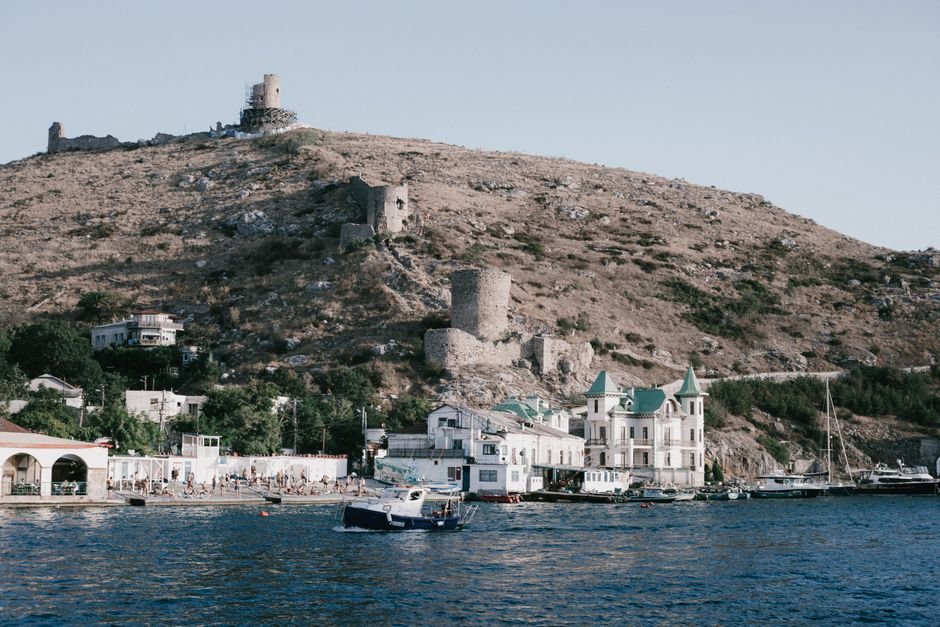
Crimea is not just another piece of occupied territory. It is the crown jewel of Putin’s project. He annexed it in 2014, built the Kerch Bridge to connect it to Russia, stationed the Black Sea Fleet in Sevastopol, and turned the peninsula into a launchpad for the 2022 invasion. In Moscow’s telling, Crimea is “historically Russian land,” the annexation was presented as a restoration of justice, not an act of war.
Ukraine sees it differently. Crimea is Ukrainian territory under illegal occupation. The war, as President Zelensky has said, “began with Crimea and must end with Crimea, with its liberation.”
The strikes
In recent weeks, Ukrainian forces have intensified attacks on Russian military facilities across the peninsula. The Saky airbase, home to Russian warplanes that bomb Ukrainian cities, has been hit repeatedly. Satellite imagery shows destroyed aircraft, scorched runways, and craters in fuel storage areas. Reports from Ukrainian military sources claim seven Russian warplanes were destroyed in the latest strike alone.
The attacks are not symbolic. They degrade Russia’s ability to project air power over southern Ukraine and the Black Sea. They force the Russian military to redeploy air defenses away from the front lines to protect Crimean assets. And they demonstrate that no part of the occupied territory is safe.
For the Kremlin, the embarrassment is compounded by the loss of a narrative. Putin spent a decade presenting Crimea as Russia’s inviolable red line. The peninsula was to be the permanent achievement of his rule, the territory that proved Russia had restored its great-power status. Every Ukrainian strike on a Crimean airbase is a refutation of that claim.
Time for payback
The timing of the intensified strikes is not accidental. They come as Russia has escalated its bombardment of Ukrainian cities, 68 ballistic missiles and cruise missiles and 351 drones in the single July 6 attack on Kyiv alone. For Ukraine, hitting Crimea is a direct response: you bomb our cities, we hit your bases.
This is warfare stripped of euphemism. Russia attacks Ukrainian civilians. Ukraine attacks Russian military infrastructure. The word “retaliation” is not used in official statements, but the pattern is clear.
The strikes also serve a political purpose. As the NATO summit convenes in Ankara, Ukraine is demonstrating that it can take the fight to Russia, that it is not a passive victim waiting for rescue. The message to allies is: give us the weapons, and we will use them.
Putin’s dilemma
For Putin, the attacks on Crimea present a strategic problem with no easy solution. He can reinforce the peninsula with more air defenses, but that means stripping defenses from elsewhere. He can escalate the war further, but the cost in casualties and economic damage is already mounting. He can acknowledge that Crimea is now a war zone, but that would shatter the domestic narrative of the peninsula as a peaceful Russian haven.
The Kremlin’s official response has been to downplay the damage and threaten retaliation. Dmitry Medvedev, the former president now serving as deputy chairman of the Security Council, has warned that an attack on Crimea would trigger “Judgment Day.” But the strikes keep coming, and the retaliation he promised has not stopped them.
What it means
The Ukrainian strikes on Crimea represent a shift in the war’s geometry. For two years, the fighting was concentrated in the east and south of the mainland. Now Kyiv has demonstrated the ability to reach every corner of the occupied territory, including the peninsula that Moscow considered its sovereign soil.
For Putin, the stakes could not be higher. He built his political identity around the restoration of Russian greatness, and Crimea was the symbol of that restoration. Every plume of smoke rising from a Crimean airbase is a direct challenge to that identity.
“Time for payback” is not just a slogan. It is the logic of a war that has entered its fifth year, where the distinction between offense and defense has blurred, and where each side’s escalation is met with the other’s. Ukraine is striking Crimea because it can, because Russia struck Kyiv, and because the alternatives have been exhausted.